Barkly West
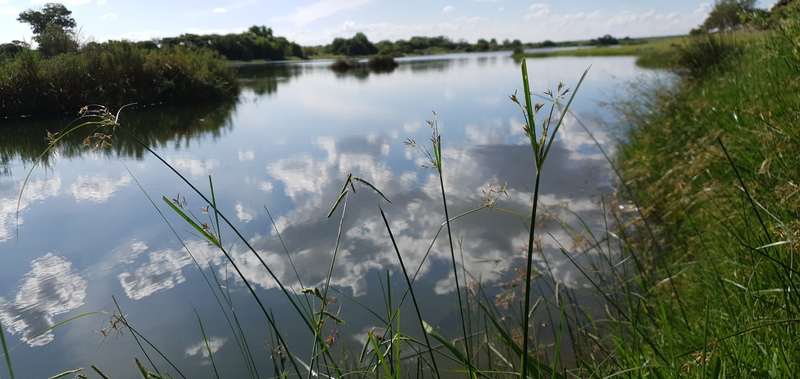
The Vaal River settlements: Barkly West, Pniel, Delportshoop, Longlands, Gong-Gong
The Kimberley-Barkly West region was the centre of the diamond revolution in South Africa in the 1870s. The diamonds were spewed up from the depths of the earth in the early Jurassic to late Cretaceous times (around 70-200 million years ago).
By the early 1800s, a Korana clan led by the brigand German refugee, Jan Bloem (senior) settled at Dikgatlhong, as the area near the Vaal-Harts confluence was then known. His son, Jan Bloem (junior) took over the leadership of the clan, after his father’s violent death in 1799. By the 1820s, the area fell under the control of the Griqua leaders based in Campbell (Cornelis Kok), located about 100 km to the south-west.
In the 1830s, the Thlaping leader, Jantje Mothibe, settled along the river, under the protection of the Griqua at Campbell. Chief Jantje’s community flourished by raising cattle and growing crops.
Jan Bloem was eager to have a local missionary. In 1845, the Berlin Mission Society established a station at Pniel, just over the river from the modern town of Barkly West. This was one of the most successful mission stations of the Berlin society, with a permanent church built in 1851.
For many years, the local Tlhaping and Koranna knew about diamonds, and used it in their tools. A significant diamond was found at Pniel in 1868, which led to a frantic diamond rush into the area, and the town of Barkly West was born. The diggers’ focus was Canteen Koppie, east of Barkly West. Eventually, about 10 000 diggers were bustling in the vicinity. Many local indigenous people participated in this new trade.
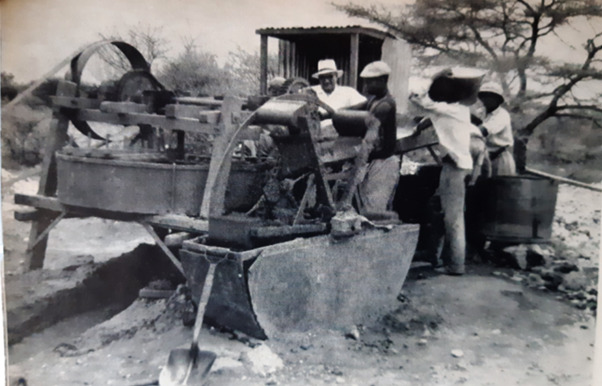
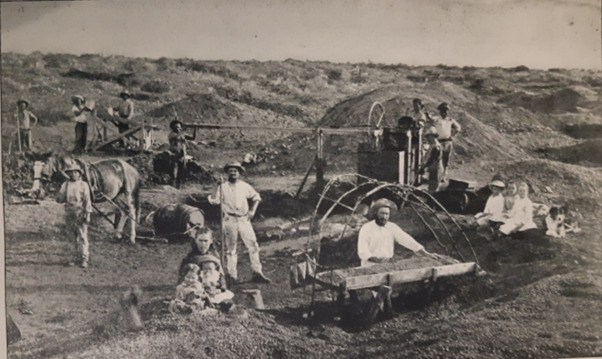
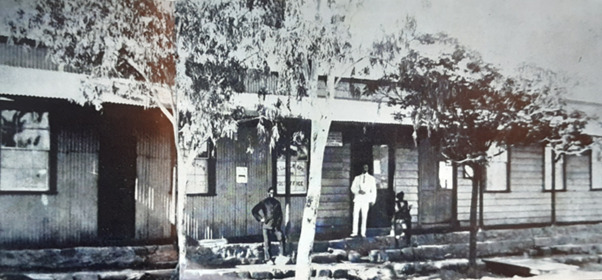
New tent encampments became villages – Delportshoop, Gong-Gong, Longlands, Winter’s Rush, Forlorn hope, Cawood’s Hope, Niekerk’s Rush, Robinson’s Koppie, and many others. Today, small-scale “artisanal” miners still frequent the banks of the Vaal River.
Today, these towns form part of the Dikgatlong Local Municipality, based in Barkly West.