Data
Data collection
The data collection unfolded in two phases. The first was a pilot study for the Survey of SASL Place Names by the Department of South African Sign Language and Deaf Studies (2021-2022). In 2022, the Department entered a collaborative project with the Interdisciplinary Centre for Digital Futures, Advancing SASL for 4IR Technological Development Using Place Names (UFS-AGR22-000115), funded by the Department of Sport, Arts and Culture (April 2022 – June 2025). The Department remained responsible for the sociolinguistic component of the project, which entailed the collection, documentation, and analysis of SASL place names. Ethical clearance was obtained from the University of the Free State’s General and Human Research Ethics Committee as a phased application: UFS-HSD2023/1614/4/5.
Research team
The research team comprised of staff from the Department of South African Sign Language and Deaf Studies. To circumvent the shortage of Deaf academics, Deaf fieldworkers were trained to assist with the data collection in their local communities.
The data collection process was as follows:
STEP 1: Community gatekeepers
Schools for the Deaf can serve as contact points with the local Deaf community, even for studies that do not involve minors. Our contact at the school facilitated the venue (at the school) and assisted to identify a potential Deaf fieldworker. One of the research sites was identified through a personal contact, who then fulfilled the same function as the other fieldworkers. In the case of the pilot study, the Deaf staff member fulfilled the same function and acted as the fieldworker as well.
Research sites
| OUTREACH | RESEARCH SITE | CONTACT POINT | DATE |
|---|---|---|---|
| Site 1 (Pilot study) | Bloemfontein | Local community | April/May 2022 |
| Site 2 | Thaba ‘Nchu | Bartimea School for the Deaf & Blind | November 2023 |
| Site 3 | Bloemfontein | Local community | March 2024 |
| Site 4 | Kimberley | Re Tlameleng Special School | March 2024 |
| Site 5 | Phutidjathaba | Tiboloha School for the Deaf & Blind | March 2024 |
STEP 2: Deaf fieldworkers
The local fieldworker were people who are well-known and respected in the local Deaf community. Preferably they would also have some experience in collaborating with the hearing, to assist in bridging the cultural gap. Another requirement is a sufficient level of literacy to navigate the questionnaire.
STEP 3: Site visit and train fieldworker
During the site visit, the researchers evaluated the setup and trained the fieldworker. This entailed a detailed explanation of the rationale and design of the study, as well as their role and responsibilities. Basic interview techniques were explained, and the questionnaires thoroughly explained. One of the researchers then interviewed the fieldworker. This allowed them to familiarise themselves with the questionnaires, and to experience what the interview is like for participants.
STEP 4: Invite the local Deaf community
The fieldworker circulated the pre-recorded invitation video to the local Deaf community. The invitation video explained the rationale and design of the study, and invited the community to the information session. They also provided details about the date, time and location of the information session.
STEP 5: Information session
The research team introduced themselves. When they preferred to do so, the Deaf individuals introduced themselves in turn. The video was displayed again, and further information provided – either in SASL if the particular researcher had sufficient proficiency, or via an interpreter (one of the project assistants). Potential participants were invited to ask any questions they might have on any aspect of the study. The fieldworkers assisted to clarify any uncertainties. The consent form was explained in full, and the potential participants allowed time to consider and consult. At some sites the community preferred to proceed directly after the information session.
STEP 6: Informed consent
The consent form was checked with the participants to ensure that they fully consent to all the conditions. The consent was two-part: that the background information may be used (anonymously), and that the place-name signs they provided may be entered into the dataset. Consent forms were signed in duplicate so participants could keep a copy.
STEP 7 and 8: Conduct interviews
Two types of interviews were conducted. Participants could choose to participate in both or just one.
A GROUP INTERVIEW preceded the individual interviews. This was to stimulate conversation and hopefully elicit some background information on place-name signs. It also allowed participants to correctly identify the place by conferring with their community members. Supporting materials included a picture depicting a characteristic image of the place, a map indicating its location, and a strip of text with the spoken name typed out.
The INDIVIDUAL INTERVIEWS were structured, guided by a two-part questionnaire:
- Background information. This was used to identify the sociolinguistic variables that may influence sign use, such as current age, the language used in their homes, and in what town they live. This section also included questions to elicit spontaneous place-name use, such as, “Where did you go to school?”.
- List of places that are commonly well-known, such as provinces, capitals and main towns, and attractions like the OR Tambo International Airport and Kruger National Park. Places that might of interest to the Deaf community, such as towns where schools for the Deaf are located, were included. The participants were asked if they have a sign for each place, with the interviewer providing the written name as well as fingerspelling it. For context, a characteristic picture of each place as well as the associated number plate (motor vehicle registration plate) was provided.
Interviewer(s)
Response bias (where participants try to give answers they think researchers want) was a concern on two fronts. Beyond the usual social desirability effect, university researchers are considered to be of higher social status in some communities. Additionally, there is a gap in terms of lived experience between hearing and Deaf individuals. Unfortunately, it is usually the Deaf person that has to concede to the demands of hearing world, instead of being suitably accommodated. It is therefore possible that Deaf participants might want to oblige the researcher instead of providing authentic responses. To mitigate this, local Deaf fieldworkers were trained to conduct the interviews. A research assistant fluent in SASL attended the session to assist with the cameras as well as the materials (questionnaires, maps, etc.), but did not participate in the interview itself. For the pilot study, the Deaf staff member conducted the interviews.
We did not provide reimbursements or inducements. However, a meal was catered on the day of the interviews. Participants were also given a token of appreciation in the form of a voucher (R50) to the local supermarket.
The final phase of the data collection would be a participant verification (or member checking). This is dependent on sufficient processing of the data. We have not conducted this phase at the time of this report.
Data processing
Data management
Upon return to the office, the video recordings were transferred to:
- A dedicated external hard drive that is locked in a safe.
- Password-protected cloud space provided by the University.
The cameras’ memory cards were wiped clean. Upon completion of the project, the raw data will be deleted from the hard drive as well as the cloud space.
The videos are processed using ELAN, an annotation system. The video is included in during processing, but the results (glosses, translations, and annotations) will be exported and the video files destroyed.
Translation
Translation from SASL to standard written English is a two-part process:
- Glossing: An English word equivalent is attached to each SASL sign.
- Translation: The sentences are written in standard English grammatical structure.
An obstacle to accurate translation is the range of dialectical variation in SASL. Assistance from our Department’s supporting team members is invaluable in overcoming this challenge.
Place-name annotation
Each place-name sign found in the translations is fully linguistically annotated. Meaning, the parameters of each sign are indicated. To include the full annotation in a spreadsheet in a sensible manner, and to make the information machine-readable, we created a shorthand.
The place-name signs are replicated (i.e., mimicked and recorded) by Deaf signers who consented to having their image used. These videos are entered into the dataset. The original raw video footage will be destroyed at the end of the project.
Sociolinguistic variables
The sociolinguistic variables are extracted from the background information of the individual interviews.
Ethical considerations
For a detailed discussion, refer to the report Ethical Considerations for Data Collection and Management: Research in South African Deaf Communities as well as our published article on the topic (Sibanda, Loth & Siyavoshi 2025).
In South Africa, research with human participants is regulated by the National Health Research Ethics Council. Their guidelines, published as the South African Ethics in Health Research Guidelines: Principles, Processes and Structures (NHREC 2024), provide the framework within which discipline-specific best practices should be applied. Below we briefly highlight some of the key issues specific to research with Deaf communities; against the backdrop of what we had learned (or confirmed) during the course of our study.
The existing frameworks tend to view Deafness from a pathological perspective, describing deafness as a disability and Deaf people as vulnerable. We prefer "inherently vulnerable" to just "vulnerable." Deaf individuals often face challenges such as limited literacy, education, and employment opportunities, which contribute to their vulnerability. However, our perspective is that these issues stem from marginalisation by the hearing community, rather than being inherent to deafness. On this basis, we oppose the notion of Deaf people as a disabled or vulnerable group. Even when deafness is not considered a disability, researchers and participants still find themselves inevitably connected to the concept of disability (Park, Fitzgerald & Legge 2015: 6). Regulations, ethical codes, and legally or policy-mandated accommodations are all based on a disability framework. Some deaf individuals do feel comfortable with the disability- or even charity-based view held by the hearing community. This is because in legal and social contexts, government and private sector resources often align with this perspective, helping them access the necessary support. Therefore, it falls on the researcher to navigate this system, balancing institutional guidelines and available resources with the specific needs and practices of the particular community.
Linguistic competency
Communication between the research team and the Deaf community should be conducted in South African Sign Language (SASL). All documentation should be accompanied by an accurate SASL translation (via an interpreter or pre-prepared videos). If the researcher is not proficient in SASL, or in the particular variation used, interpreters should be present. However, the delays and circumvention do hinder fluent interaction, both between hearing researcher and Deaf participant; and between hearing researcher and Deaf researcher. Researchers should therefore make genuine attempts to learn the language.
Cultural competency
Deaf and hearing people have different lived experiences, including access to certain types of knowledge and services. This is pronounced enough that a cohesive ‘Deaf Culture’ is observable beyond ethno-cultural categories. It is imperative for hearing researchers to develop cultural competency. Beyond including Deaf team members at various levels of the study, researchers should ideally have a passion for Deaf culture to develop sufficient in-depth understanding of the Deaf experience.
Informed consent
Linguistic and cultural competency should be considered during the recruitment process. It is imperative that Deaf participants fully understand what the purpose of the research is and how results are going to be utilised. Researchers must provide all information in SASL, and beyond that, ensure that explanations are provided within the frame of reference of the particular Deaf community.
Confidentiality
SASL is a manual-gestural mode, in which the face plays an integral part in meaning-making. This makes it almost impossible to guarantee anonymity. In addition, the Deaf community tends to be close-knit. Even when identifying information is removed, it might still be possible to at least partially infer the identity of another participant. Researchers therefore have to be exceedingly clear on how confidentiality will be handled.
Deaf ownership
From a research perspective, it is possible to design a study and get sufficient results without the Deaf community’s full input. However, it is highly likely that such data will not be properly contextualised, will not make useful scientific contributions, and will not truly benefit the Deaf community. A challenge is that there are not many trained Deaf academics or researchers. Currently most research in Deaf Studies and Sign Languages are still conducted by hearing researchers. However, there are other ways to promote the inclusion of Deaf team members, and to cultivate some of those individuals to become competent researchers themselves. Strategies to improve Deaf ownership of research include:
- The Deaf community is diverse. Ensure adequate representation of different sub-groups of Deaf people.
- Assign a Deaf person to a key position in the research team.
- Identify Deaf individuals who are willing to act as consultants. A committee can be set up for this.
- Include Deaf students and support their scholarly development.
- Employ Deaf people for certain tasks, like assisting with translations or data processing.
- Approach various stakeholders in the Deaf community.
- Engage with the community gatekeepers.
- Train local Deaf fieldworkers.
- Ensure that the results from the study are shared with the Deaf community in an accessible format. For example, video summaries in SASL of scholarly publications could be distributed to the community.
Scientific integrity
Research should always be relevant, be designed to have valid outcomes, and make a real contribution to knowledge generation. The onus is on the researcher to balance community input and scholarly advancement.
Selected readings:
- Golos D, Moses A, Gale E & Berke M. 2021. Building Allies and Sharing Best Practices: Cultural Perspectives of Deaf People and ASL Benefit All. Learning Landscapes, 14(1): 97-110. DOI: 10.36510/learnland.v14i1.1028
- Harris R, Holmes H & Mertens D. 2009. Research Ethics in Sign Language Communities. Sign Language Studies, 9(2): 104-131. DOI: 10.1353/sls.0.0011
- Knight J. 2019. The need for improved ethics guidelines in a changing research landscape. South African Journal of Science, 115(11/12): 1-3. DOI: 10.17159/sajs.2019/6349 target=">Knight J. 2019. The need for improved ethics guidelines in a changing research landscape. South African Journal of Science, 115(11/12): 1-3. DOI: 10.17159/sajs.2019/6349
- Krawczyk T, Piasecki J, Wasylewski M & Waligora M. 2024. Ethics of research engagement with Deaf people. A qualitative evidence synthesis. Journal of Deaf Studies and Deaf Education. DOI: 10.1093/jdsade/enae024.
- NHREC (National Health Research Ethics Council). 2024. South African Ethics in Health Research Guidelines: Principles, Processes and Structures, 3rd edition. National Department of Health of the Republic of South Africa. Pretoria: NDoH.
- Orfanidou E, Woll B & Morgan G. 2015. Research Methods in Sign Language Studies: A Practical Guide. John Wiley-Blackwell.
- Park J, Fitzgerald R, & Legge M. 2015. The Predicament of d/Deaf: Towards an Anthropology of Not-Disability. Human Organization, 74(2): 154–163. DOI: 10.17730/0018-7259-74.2.154.
- Pollard RQ. 2019. Cross Cultural Ethics in The Conduct of Deafness Research. JADARA, 27(3).
- Sibanda P, Loth C & Siyavoshi S. 2025. Ethical Practices for Gaining Access for Research with Deaf Communities in South Africa: A Case of South African Sign Language. Journal of Empirical Research on Human Research Ethics, 20(4): 222-232. DOI: 10.1177/15562646251353471.
- Singleton J, Jones G & Hanumantha S. 2017. Deaf community involvement in the research process. In: S Cawthon & CL Garberoglio (eds). Research in Deaf Education: Contexts, Challenges, and Considerations. Oxford Scholarship. DOI: 10.1093/oso/9780190455651.001.0001.
Data processing
The interviews were processed in ELAN, a video transcription software that enables analysts to gloss (word-for-word direct translation) and translate the language(s) used in videos into other languages. For our project, the source language is South African Sign Language (SASL) used by Deaf interviewees and the target language is standard English. First, each sign is marked and glossed. Then standard English sentences are constructed as translations. Because SASL and English employ different sentence structures, including both glossing and translation facilitates a more complete capturing of the meaning of the original dialogue in SASL.
To accommodate the unique features we found in the place-name signs (parameter configuration), we adapted existing linguistic annotation systems. The aim was also to increase the potential for machine readability. This endeavour was further supported by the development of a unique annotation shorthand.
Annotation in ELAN
ELAN Tiers
Within ELAN, analysts can create different tiers, i.e., categories for analysis. The tiers appear as lines underneath the video with time stamps and run on the same time axis as the video. In other words, as the video is playing, so are the filled-in tiers. Simply put, it is a readable explanation of what is happening in the video while the participant is signing.
Tiers can be filled with different types of information, such as glosses and translations, but also the parameters that give meaning to individual signs. Therefore, analysts must determine the appropriate tiers to meet their objectives.
Our study includes group interviews (semi-structured), structured individual interviews, and responses to word lists. The interviews elicit spontaneous place name use, but also provide i) demographic information, from which the sociolinguistic variables that influence sign variation are determined, and ii) etymological information about place names. We are specifically interested in place-name signs and how variation presents in them. Therefore, our analysis includes:
- Glosses, to ensure accurate translation but also to tag place names in the video.
- Translations, to enable the researchers to follow the discussion and isolate sociolinguistic factors.
- A detailed annotation of place-name signs according to the selected parameters, i.e., handshape, movement, palm orientation, location, contact, and mouthing.
Below is a 16-second extraction from one of our analyses. All videos are processed using the same list of tiers:
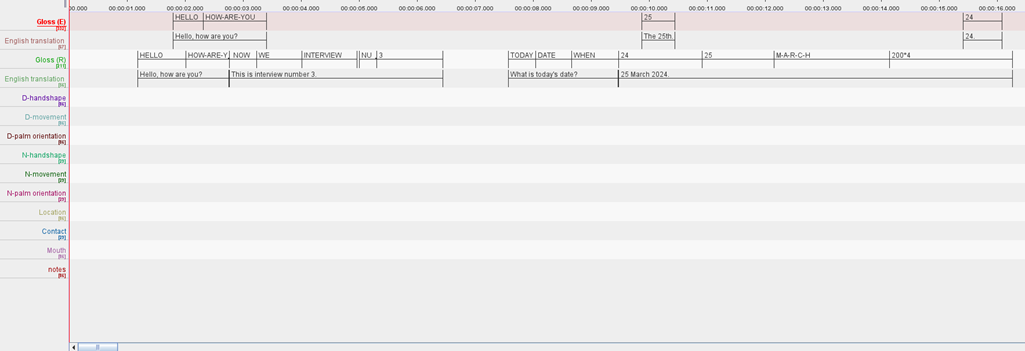
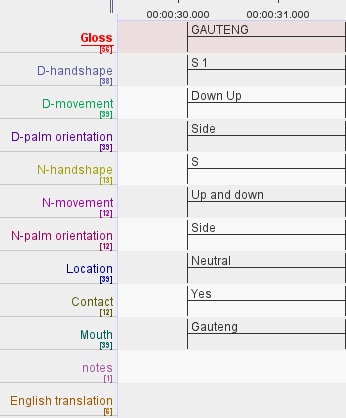
Here is an example of an annotated two-handed place-name sign in ELAN:
>
Our Selected Tiers
Gloss (E). Sign-for-sign annotation of what is communicated by the interviewee in the video. Meaning, every sign that is produced by the signer is marked up and accounted for with the chronological entries in the respective tier. These are the signs as they stand alone, not yet in sentence structure.
English translation (E). The English translation constructed from the glosses from the interviewee’s communication. The aforementioned glosses (Gloss (E)) is rearranged into standard English sentence structure to enable comprehension of the discussion for non-sign users. This conveys the information that is gathered from the interviewee based on the discussion and the questions asked by the interviewer.
Gloss (R). Sign-for-sign annotation of what is communicated by the interviewer in the video. Meaning, every sign that is produced by the signer is marked up and accounted for with the chronological entries in the respective tier. These are the signs as they stand alone, not yet in sentence structure.
English translation (R). The English translation constructed from the glosses from the interviewer’s communication. The afore-mentioned glosses (Gloss (R)) are rearranged into standard English sentence structure to enable comprehension of the discussion for non-sign users. This conveys the questions, prompts, and explanation from the interviewer.
The following tiers are applied only to place-name signs provided by the interviewee. See the description of SASL parameters for a detailed explanation of each, and the annotation shorthand for our application of this analysis.
- D-handshape. Handshape of the dominant hand.
- D-movement. Movement of the dominant hand.
- D-palm orientation. Palm orientation of the dominant hand.
- N-handshape. Handshape of the non-dominant hand.
- N-movement. Movement of the non-dominant hand.
- N-palm orientation. Palm orientation of the non-dominant hand.
- Location. Where the production of the place-name sign took place in relation to the body. Most of the place-name signs in this dataset are produced in the neutral signing space, which is the space right in front of the signer’s torso. Signs can also be placed in other locations, such as the signer’s chest or forehead.
- Contact. Generally, this parameter indicates contact between the hand(s) and any other part of the body. For our research purposes, we restricted the definition to contact between the two hands in a two-handed place-name sign. This is only recorded if the two hands touched during production of a place-name sign. Contact made to the body is not noted for the purpose of this study. For machine readability, it’s essential to code the features that significantly contribute to the form of signs. When the location of a sign is somewhere other than neutral space (e.g., the shoulder or forehead), contact is not a distinguishing feature, as the location itself provides sufficient distinctiveness for computationality. However, contact between the hands is crucial for defining the specific three-dimensional form of a sign, regardless of its location.
- Mouth. Mouthing is a non-manual feature. This refers to any mouth movement the signer executes while producing the place-name sign. Mouthing is specific to the different signers - some participants mouth and others do not. Most of the mouthing constitutes the interviewee mimicking either the full name of the place in a spoken language, or the initialisation of the spoken place name. Initialisation is when the beginning letter or the main letter of a place name is taken to represent the place. For example, ‘Northern Cape’ can be initialised as ‘NC’ (i.e., signing the SASL alphabet letter 'N' followed by 'C').
- Notes. To record any notes from the researcher, analyst, or translator. This includes marking the time stamp of the place-name signs in the video, as well as any signer errors (such as spelling mistakes or pronunciation errors) or other interesting information gleaned from the discussions or interaction with the data.
ELAN (Version 6.9) [Computer software]. 2024. Nijmegen: Max Planck Institute for Psycholinguistics, The Language Archive. Retrieved from https://archive.mpi.nl/tla/elan.
Annotation shorthand
Place-name signs are analysed according to their unique parameter configuration. Below are the parameters as we applied them in our analysis. Download our SASL linguistic annotation shorthand including media from Figshare, or download just the file directly.
- Handedness – whether both hands or just the dominant hand is used.
- Contact – between the two hands. For machine readability, it’s essential to code the features that significantly contribute to the form of signs. When the location of a sign is somewhere other than neutral space, such as the shoulder or forehead, contact is not a distinguishing feature as the location parameter provides sufficient distinctiveness for computationability. However, contact between the hands is crucial for defining the specific three-dimensional form of a sign, regardless of its location.
- Mouthing – in the case of place-name signs, the only non-manual feature we considered were mouthing, i.e., the movements of the lips, as no additional discourse-related meaning is relevant for the inherent meaning of the lexical unit.
- Location – of the hands relative to the body.
- Handshape – usually a letter of the signed alphabet, a number, or a common object.
- Palm orientation – the direction in which the palm(s) faces.
- Movement – the direction, speed and change of position of the hand(s).
- Repetition – whether or not the sign is repeated.
The process of describing, defining, and naming these characteristics is called linguistic notation. There are several established notation systems for signed languages, each developed for different purposes such as linguistic analysis, transcription, or teaching. Some of the most widely recognised systems are:
- Stokoe Notation. It represents handshape, location, and movement using a combination of symbols and letters. However, it is limited in capturing complex nonmanual signals.
- HamNoSys (Hamburg Notation System). This is a phonetic transcription system designed to be universal, capable of describing any signed language in detail, including nonmanual features.
- SignWriting. It is a visually iconic system that represents signs using pictographic symbols. It is widely used in sign language education, literature, and documentation.
Most of the established notation systems make use of various symbols and graphics, which are not suitable for use in Excel spreadsheets (where we recorded our analyses) or for coding with ease. Therefore we developed a simple, straightforward annotation system that is suitable for adaptation to machine-readable formats.
Categories
All relevant parameters are indicated with a keyboard symbol (special character or typographic symbol). The symbols are selected to not trigger commands in Excel. For example, using the arroba (aka commercial 'at' sign - @) activates a hyperlink function, while using the short dash (-) enforces a formula or equation. Each symbol in the shorthand is indicated as a ‘category’ in the shorthand:
| CATEGORY | SYMBOL |
|---|---|
| Handedness | # |
| Contact | { |
| Mouthing | ? |
| Dominance | * |
| Location | ! |
| Handshape | [ |
| Palm orientation | ^ |
| Movement | ~ |
| Repetition | & |
Values
Each category is directly followed by a value. The values are indicated with either a number or a letter of the alphabet. Each category and value together form a meaningful unit. For example, #1 means the sign is one-handed, [B that the hand is in the shape of the sign alphabet for the letter 'B', and ~2 that the hand moves down. (See end of document for the complete list of values.)
Static versus dynamic signs
Static signs contain only one value per category. In dynamic signs, there is a transition from one value to another. The transition is indicated with a short dash ( - ) between values without any spaces. For example, [O-B indicates that the hand is in the shape of the sign alphabet for the letter 'O' followed by the letter 'B'.
Sequence
The categories are indicated in a specific sequence, with units separated by commas with no spaces in between. The main stand-alone categories that apply to the whole sign commence the sequence, namely, Handedness, Contact and Mouthing. They are placed in order of the significance of the impact they have on the meaning of the sign. Thereafter the sequence is split into two subsets: first the dominant hand and then the non-dominant hand. The categories are repeated in the same order for each: Handshape, Palm orientation, Movement, and Repetition. For one-handed signs, the categories in the second subset (for the non-dominant hand) are assigned a value of 0. This ensures that the sequence has a consistent number of units and enhances suitability for machine-readability.
#{?*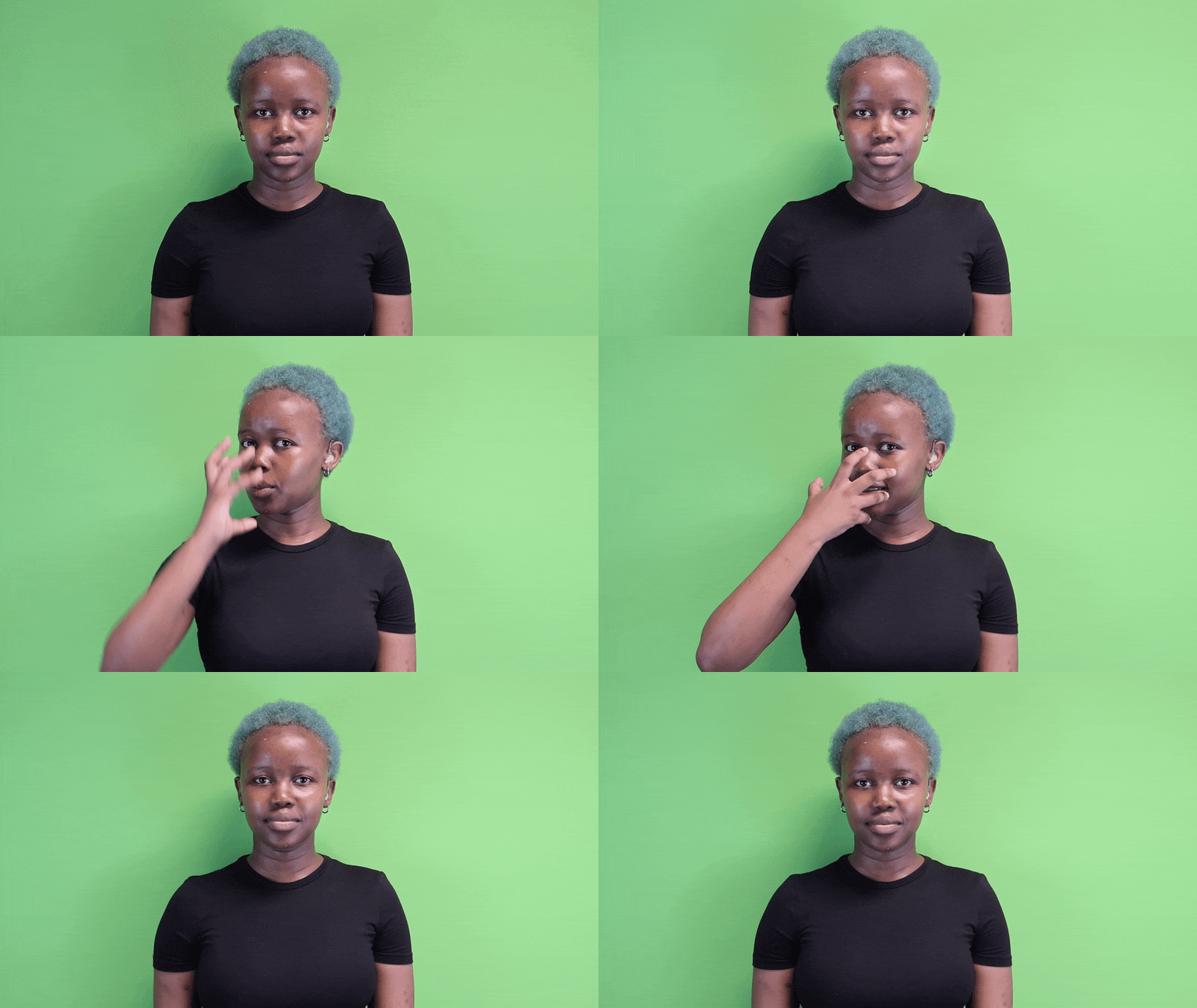 |
| 2= Two handed | 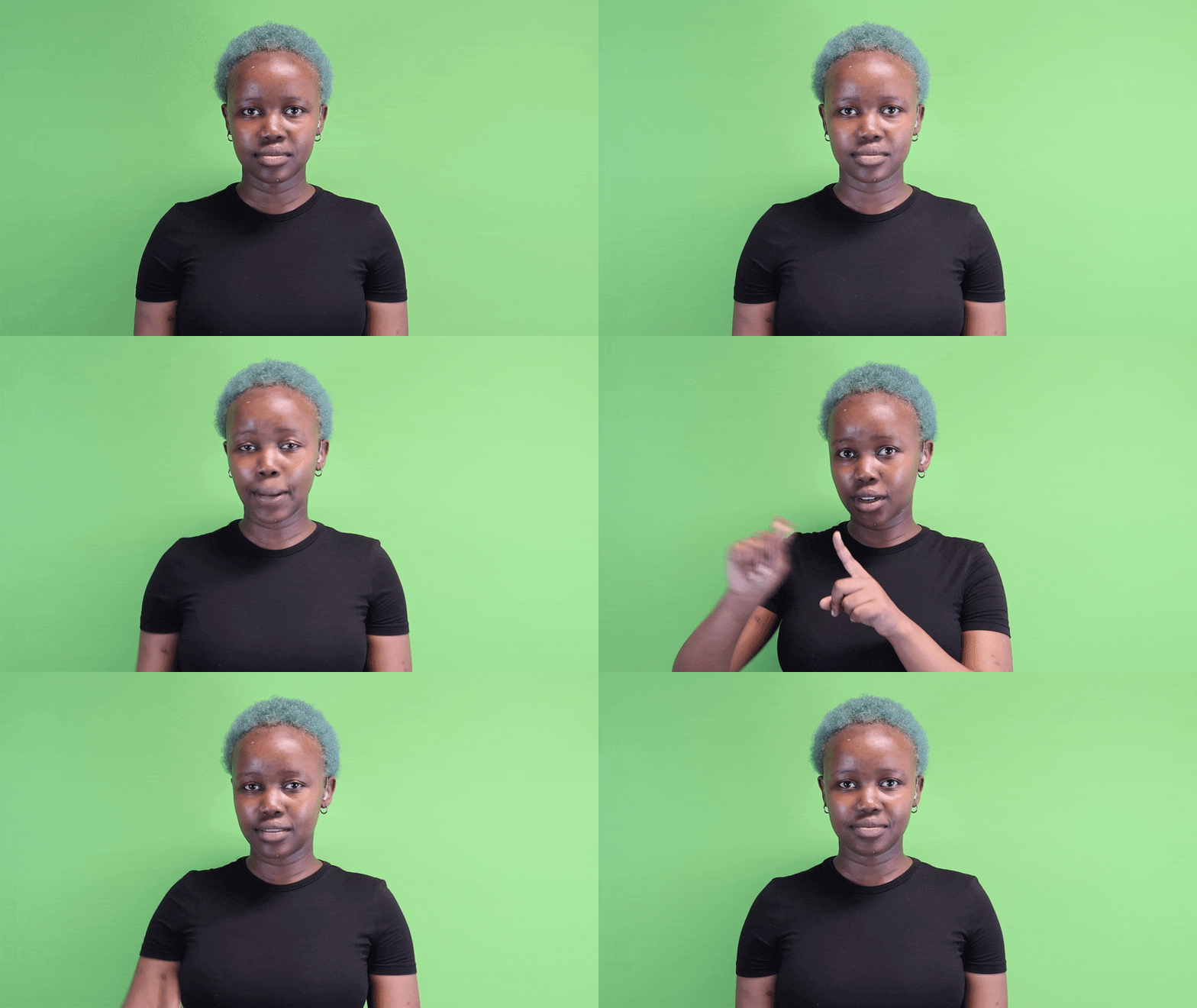 |
||
| Contact | { | 0= No contact | 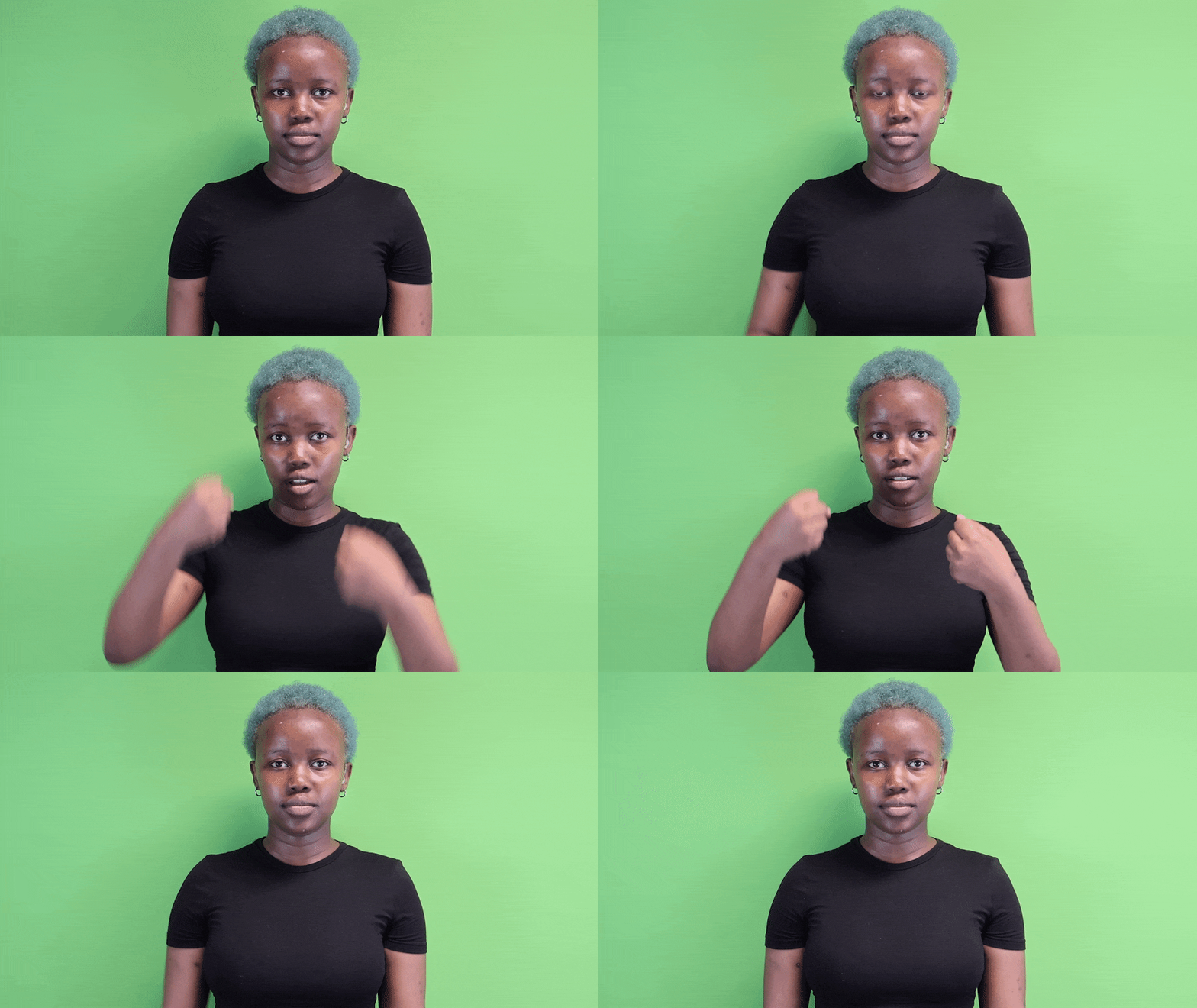 |
| 1= Contact | 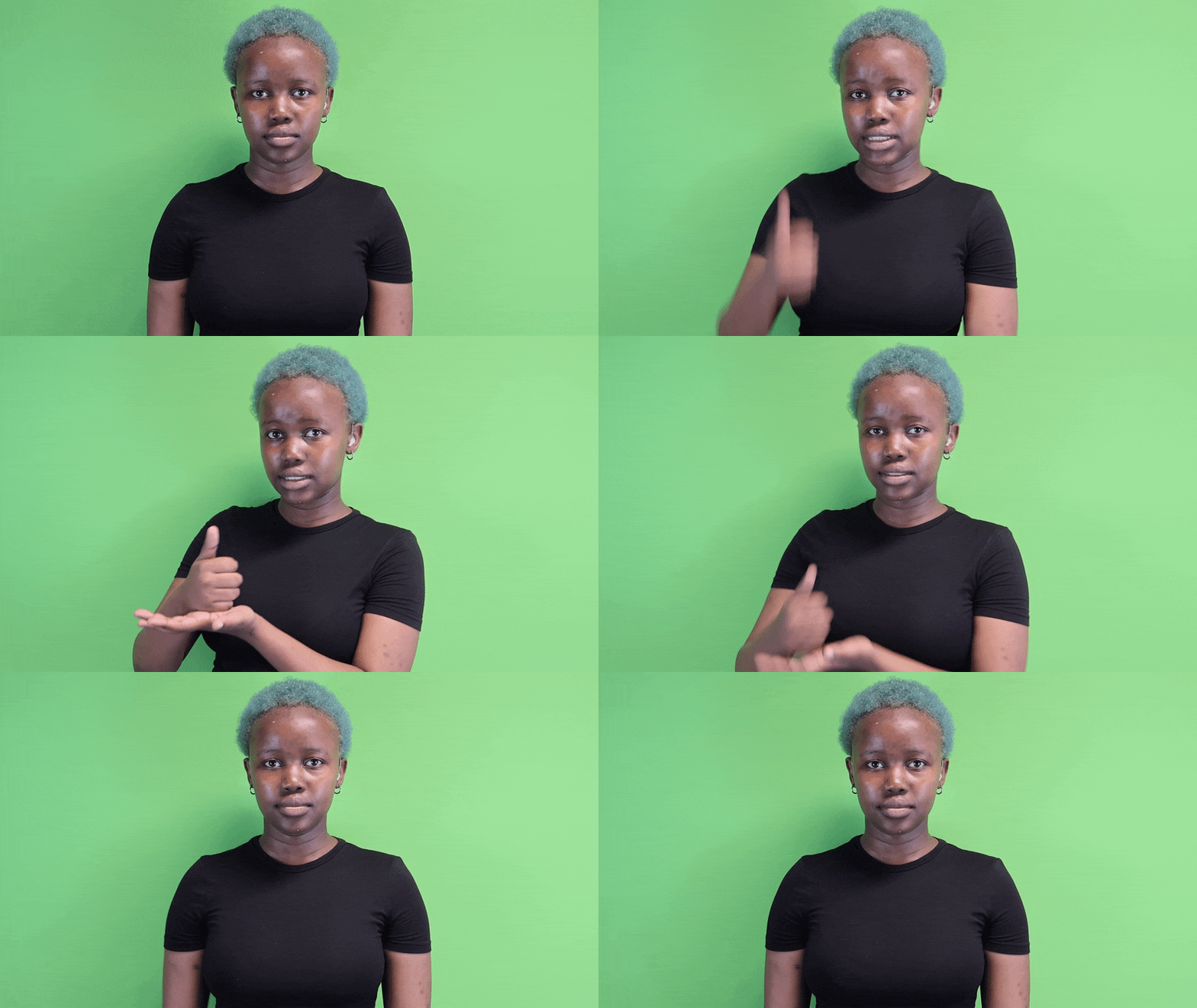 |
||
| Mouthing | ? | 0= No Mouthing | 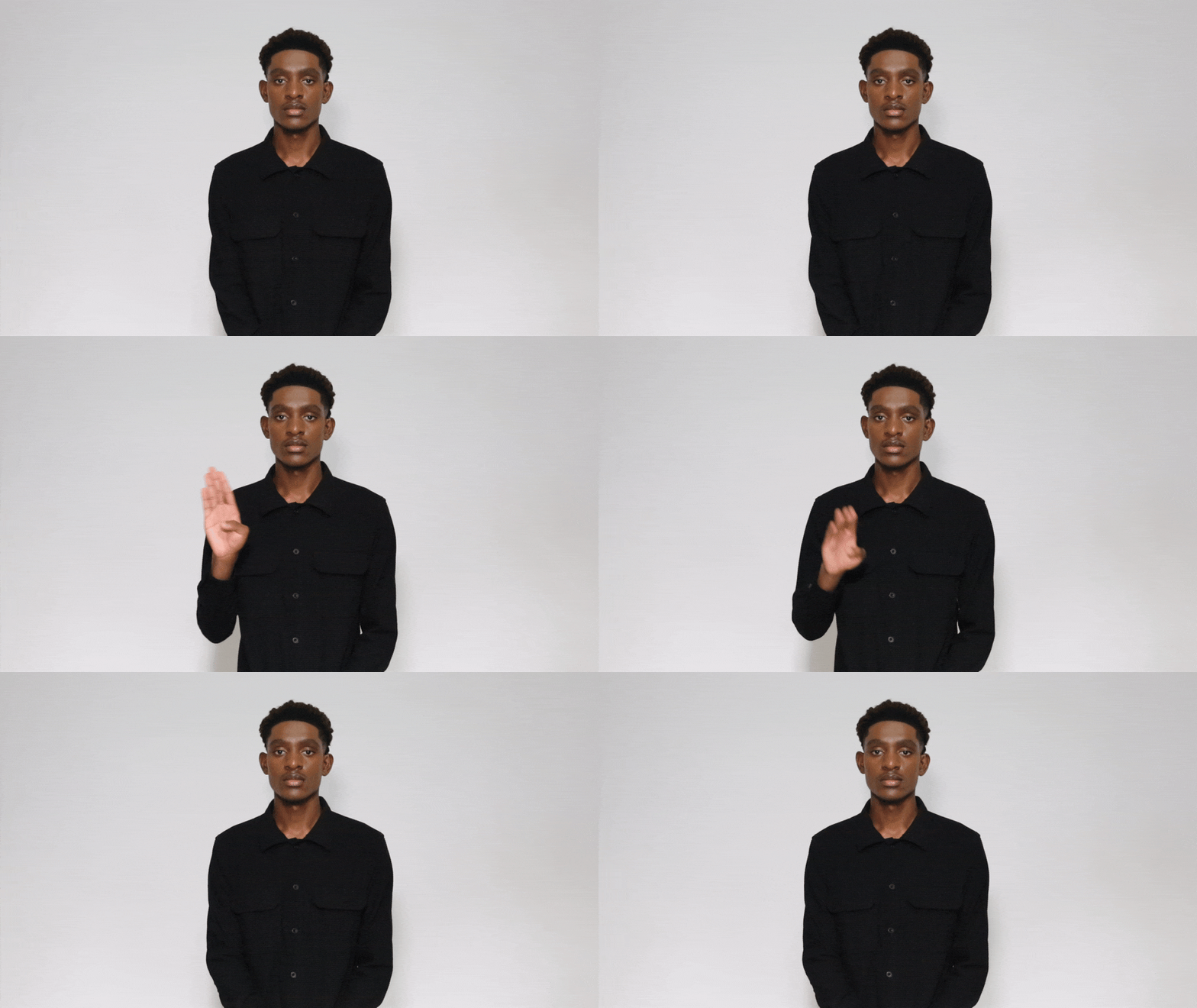 |
| 1= Word | 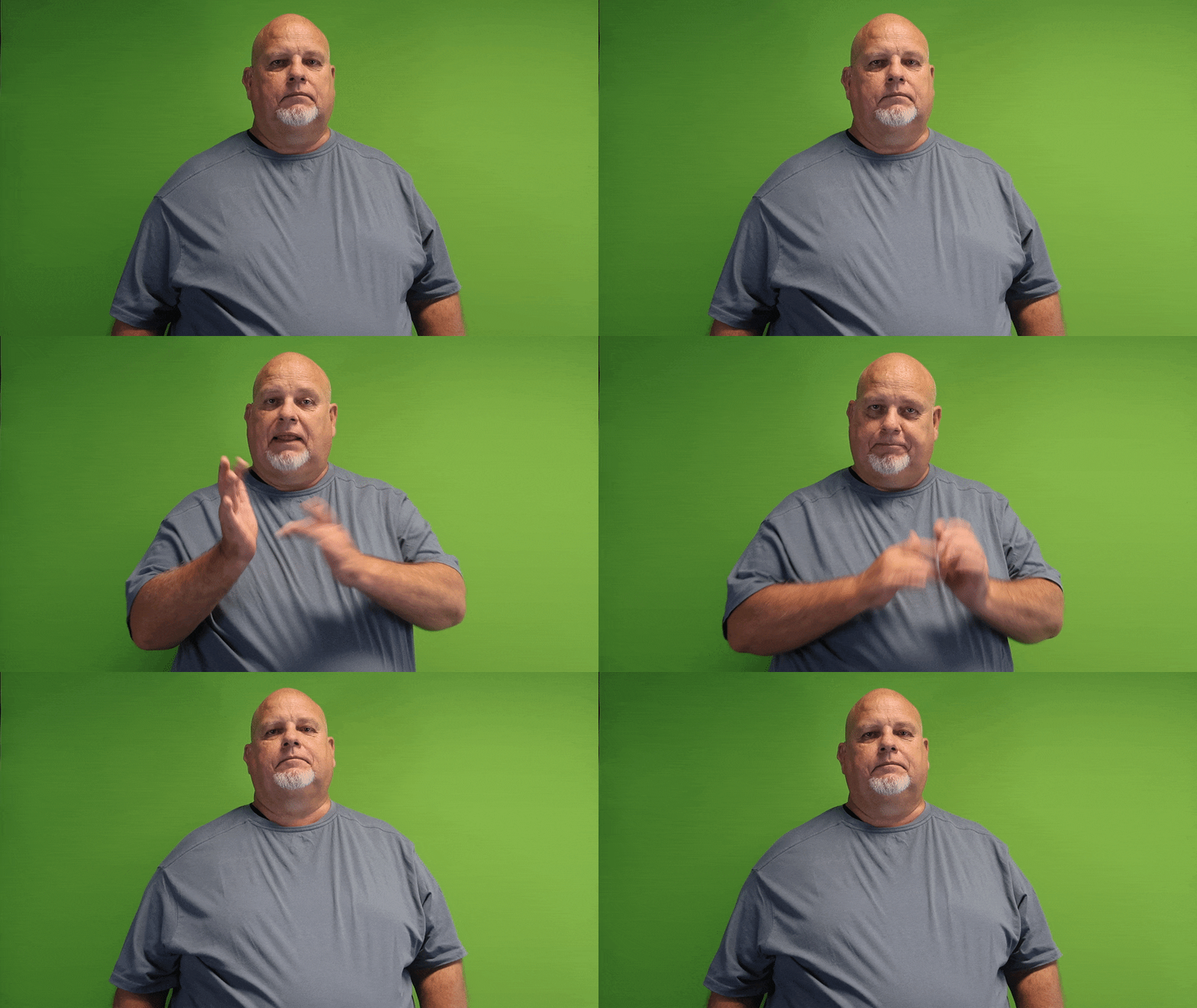 |
||
| 2= Letter | 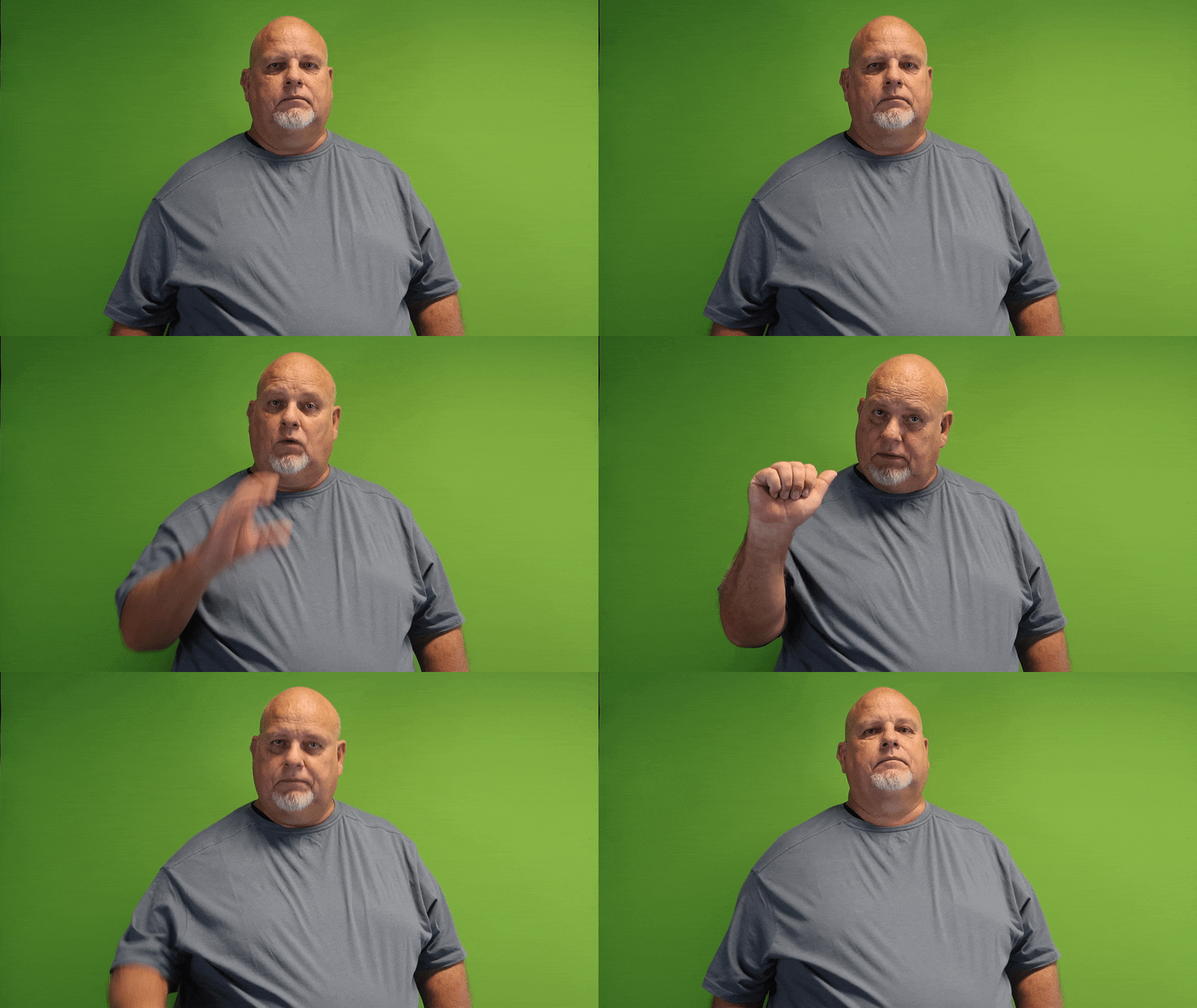 |
||
| Dominance | * | 1= Dominant hand | |
| 2= Non-dominant hand | |||
| Location | ! | 1= Neutral | 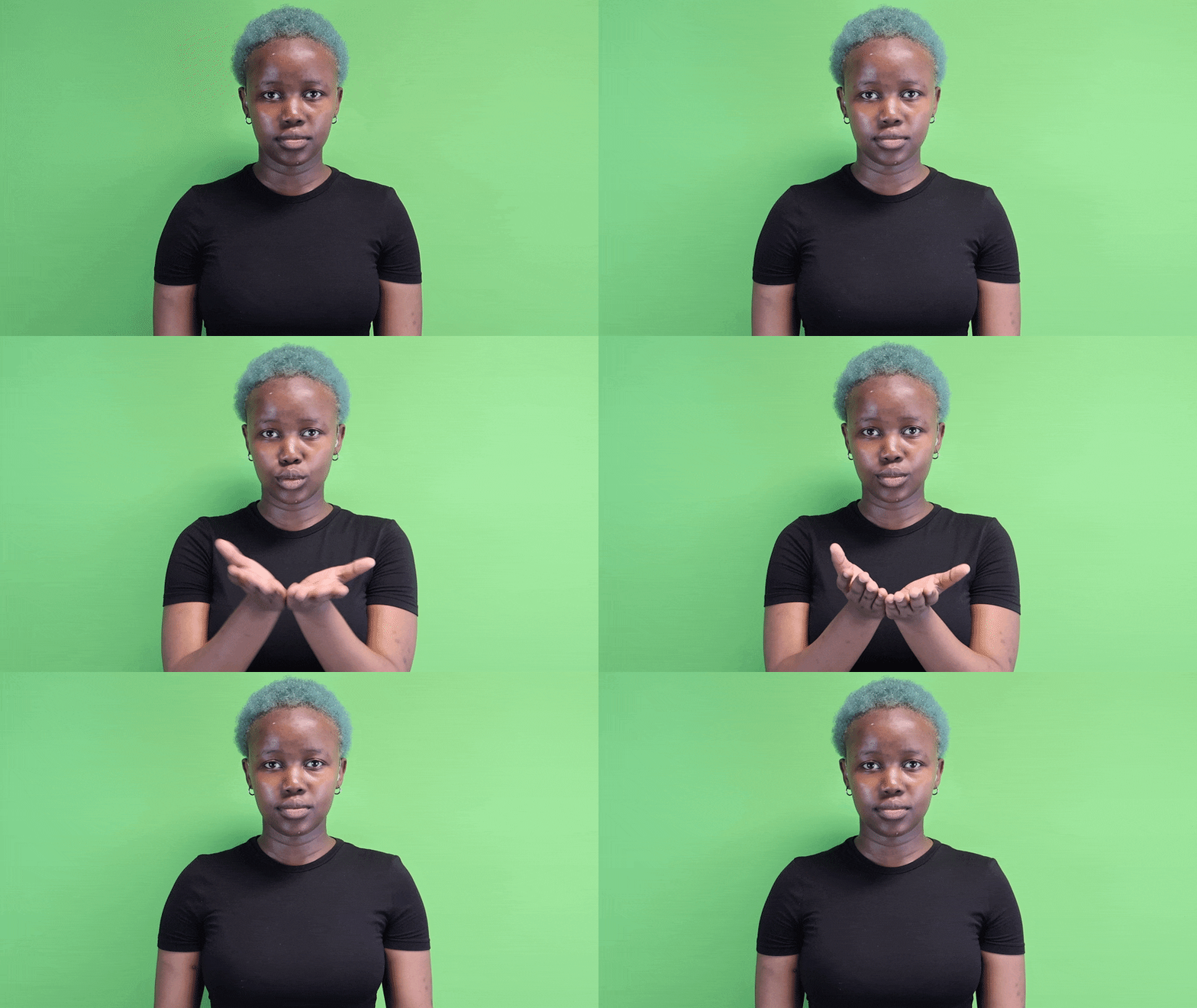 |
| 2= Forehead | 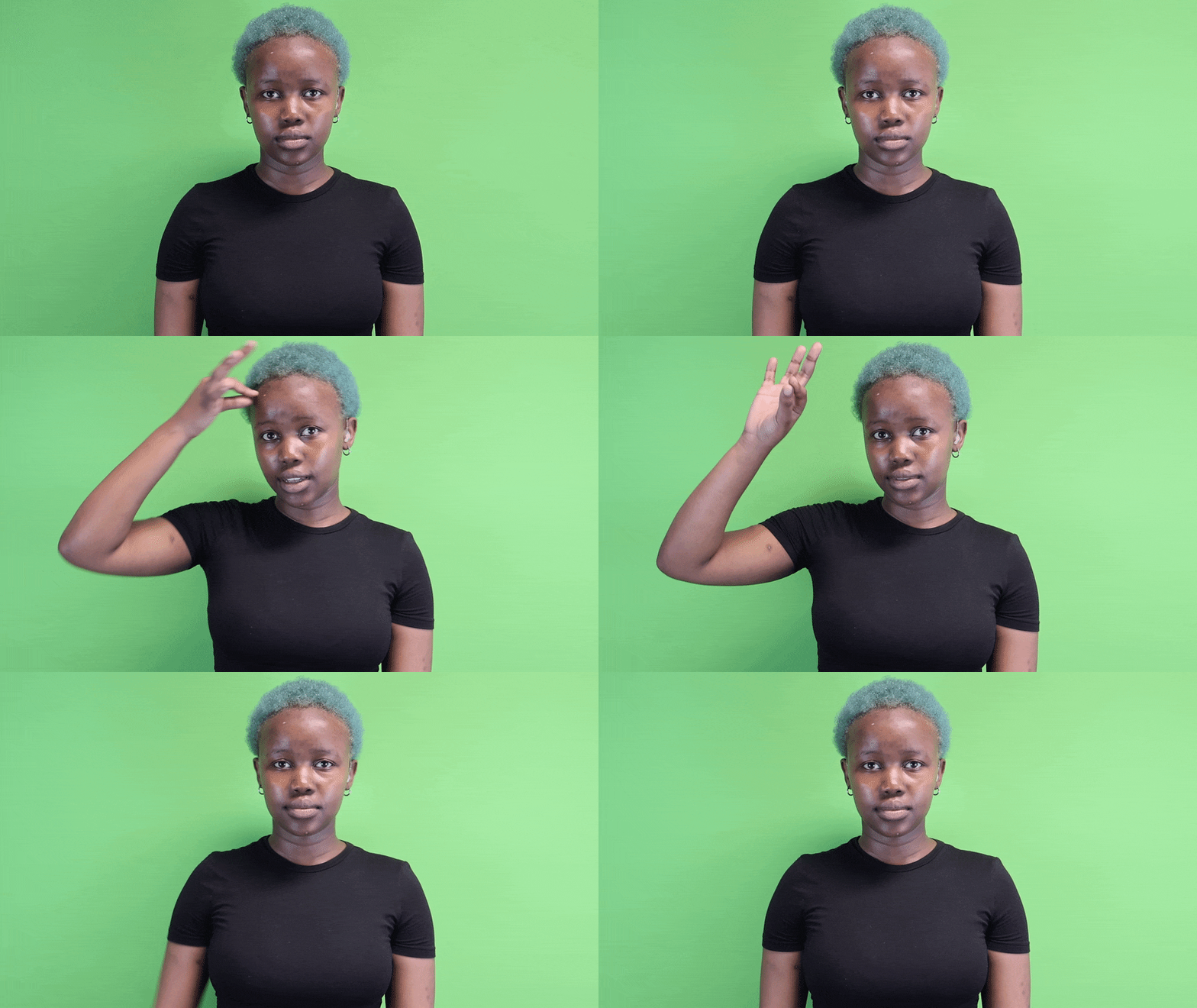 |
||
| 3= Shoulder | 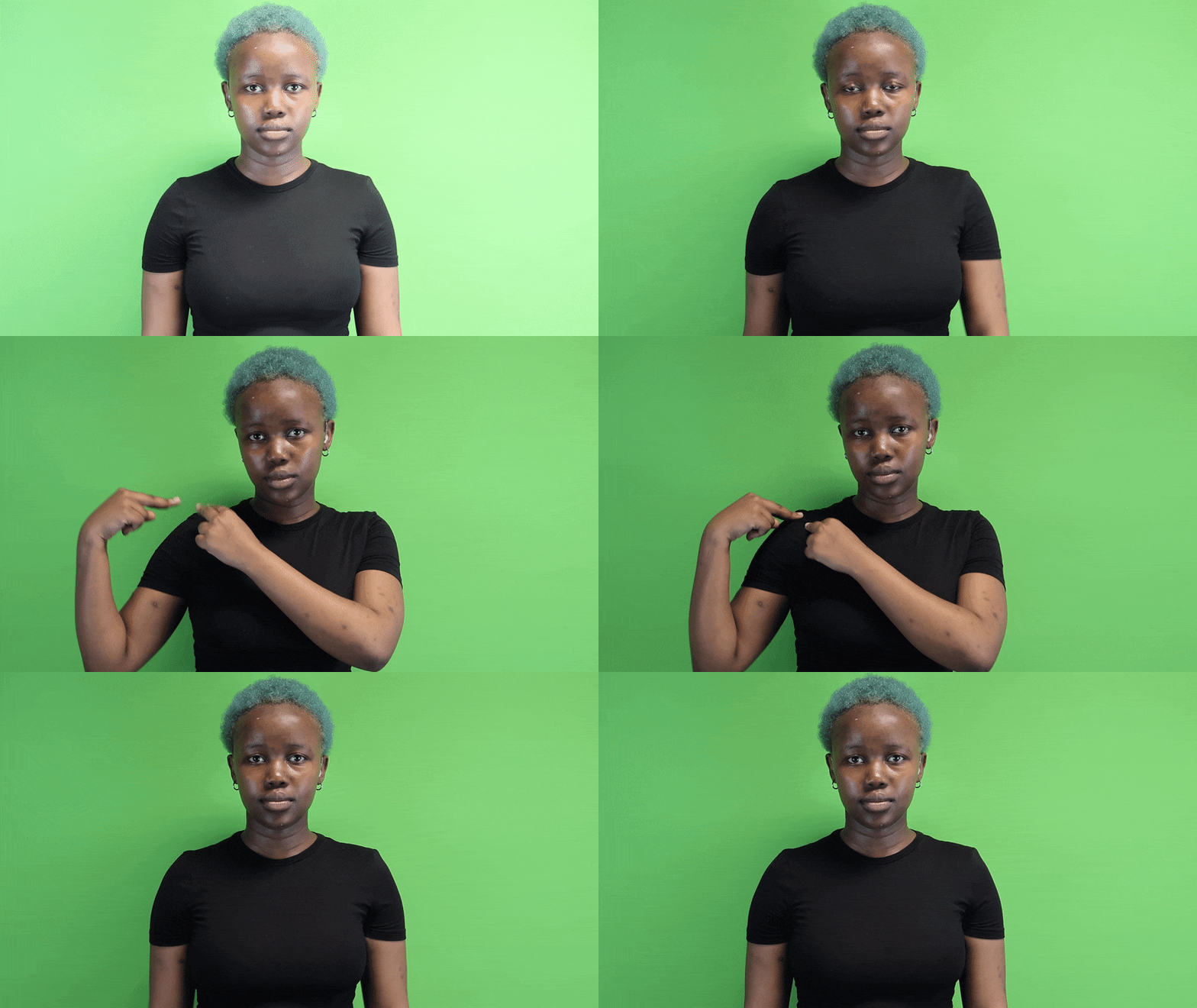 |
||
| 4= Chest | 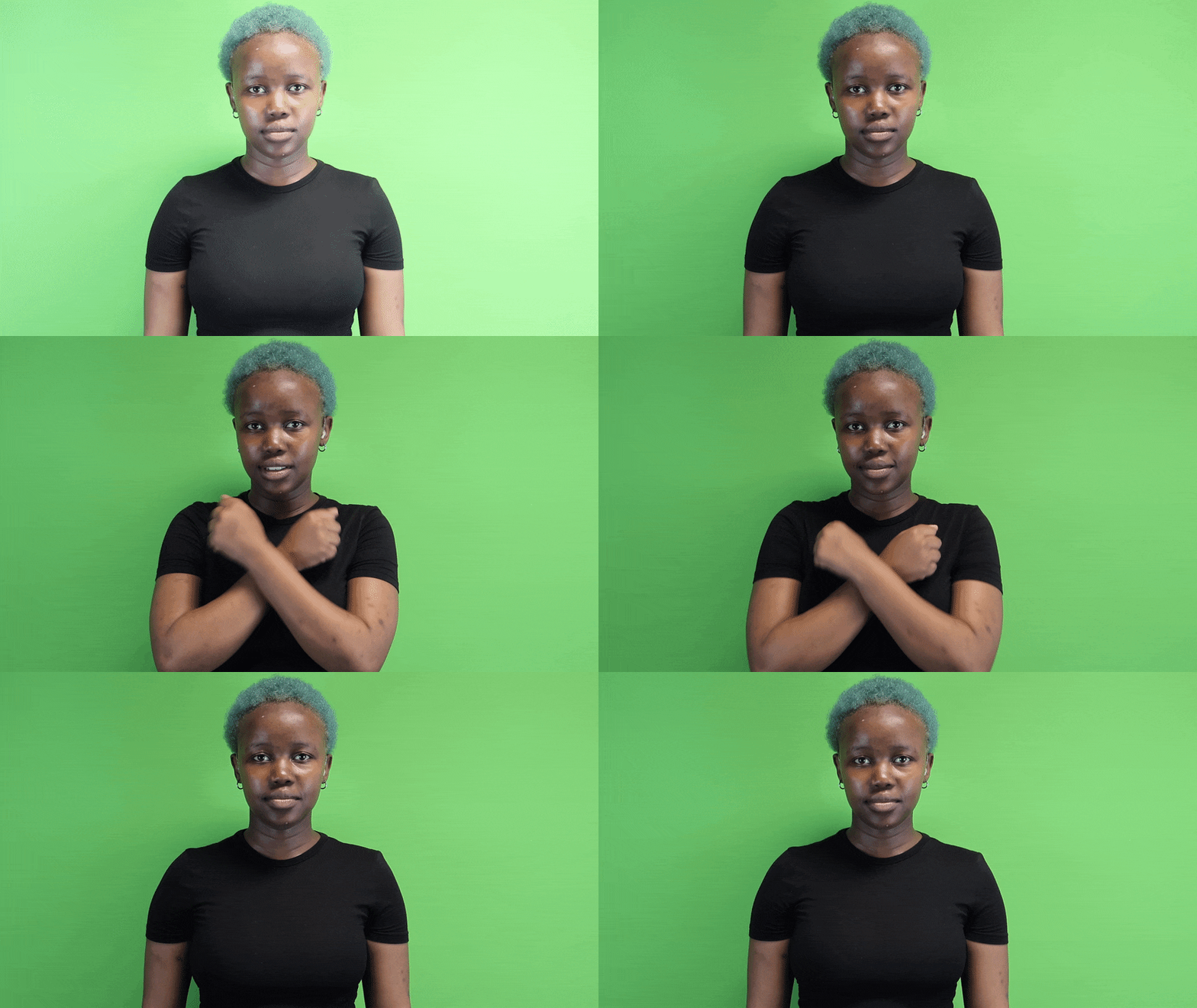 |
||
| 5= Head | 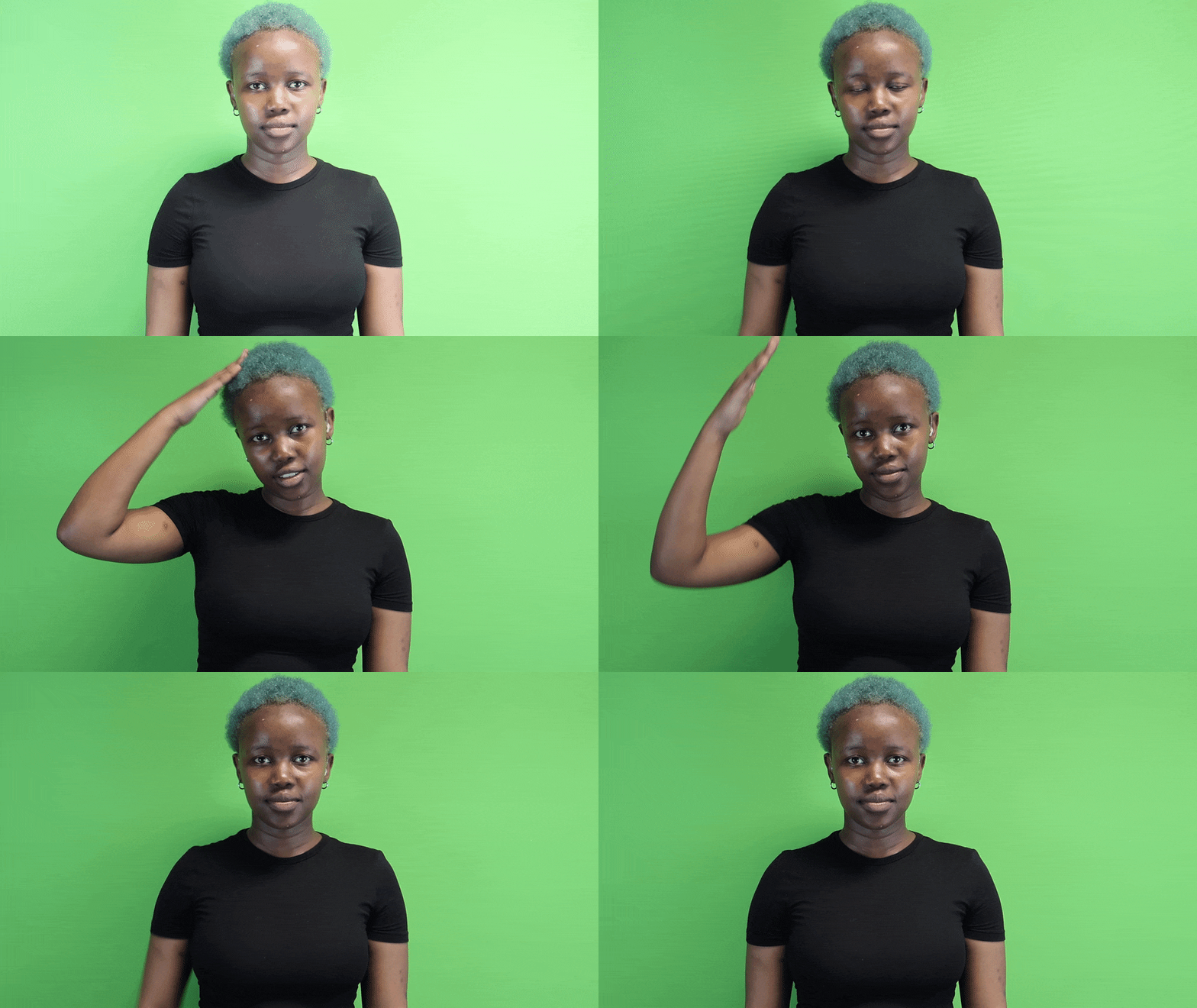 |
||
| 6= Neck | 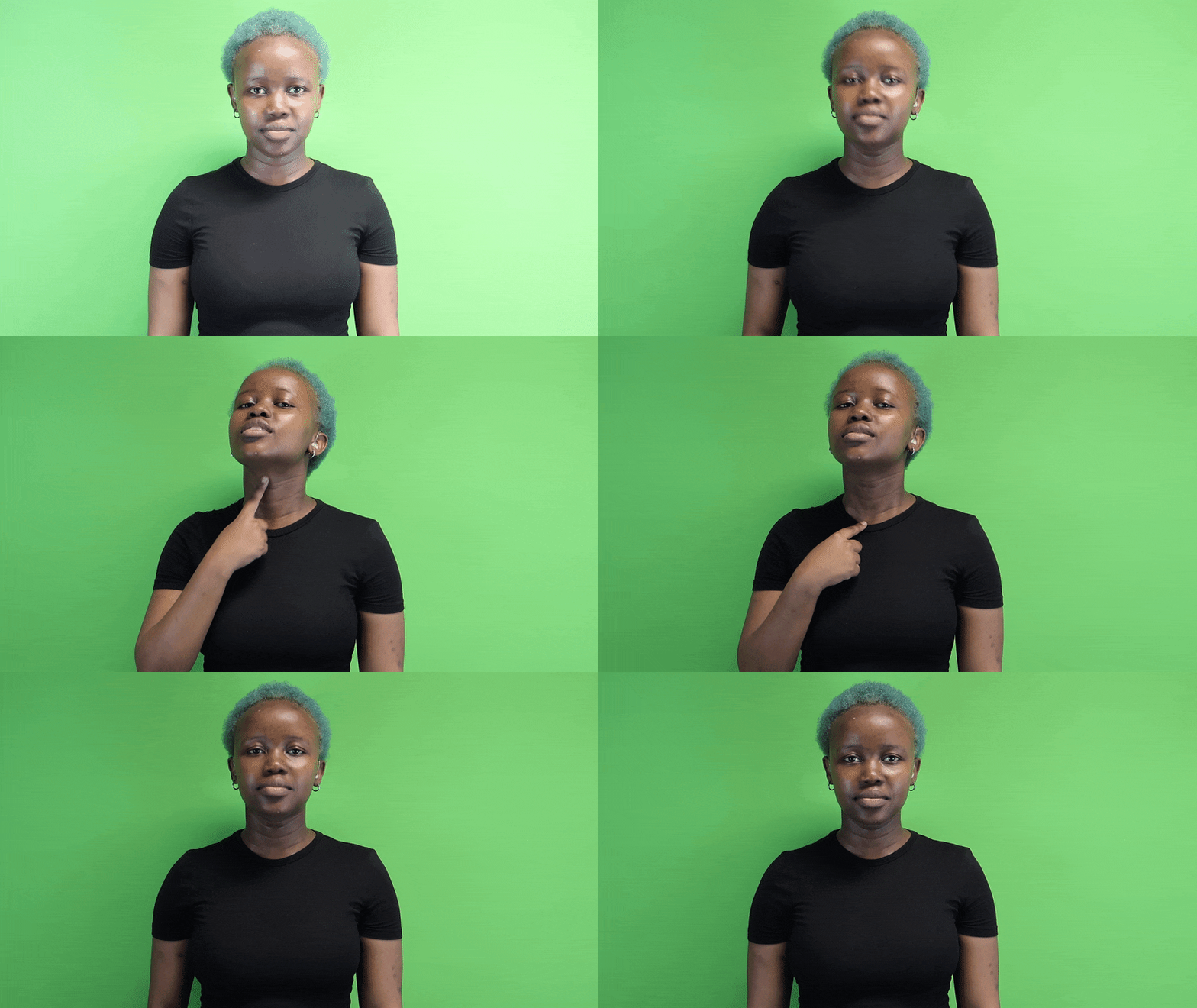 |
||
| 7= Temple | 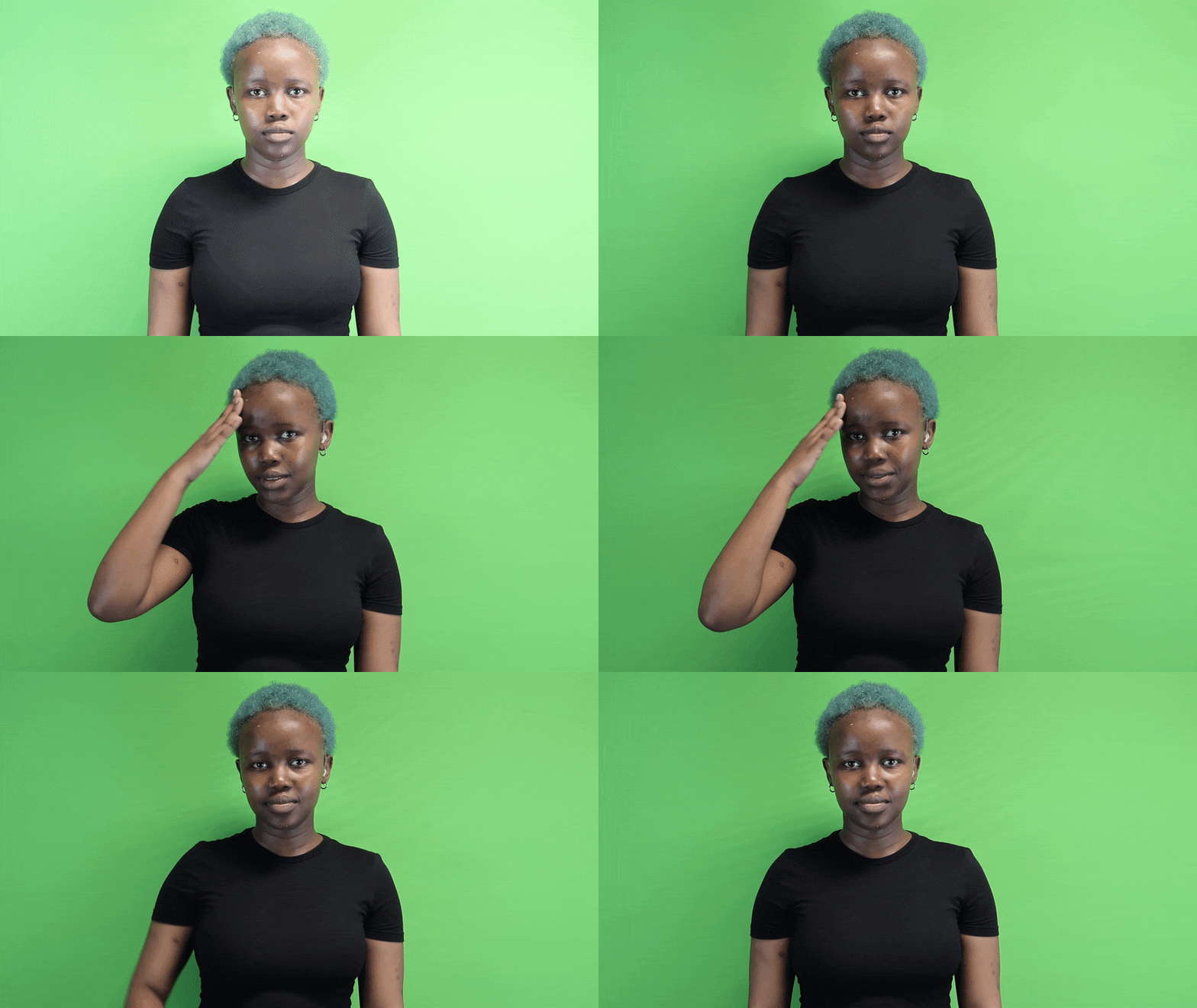 |
||
| 8= Nose | 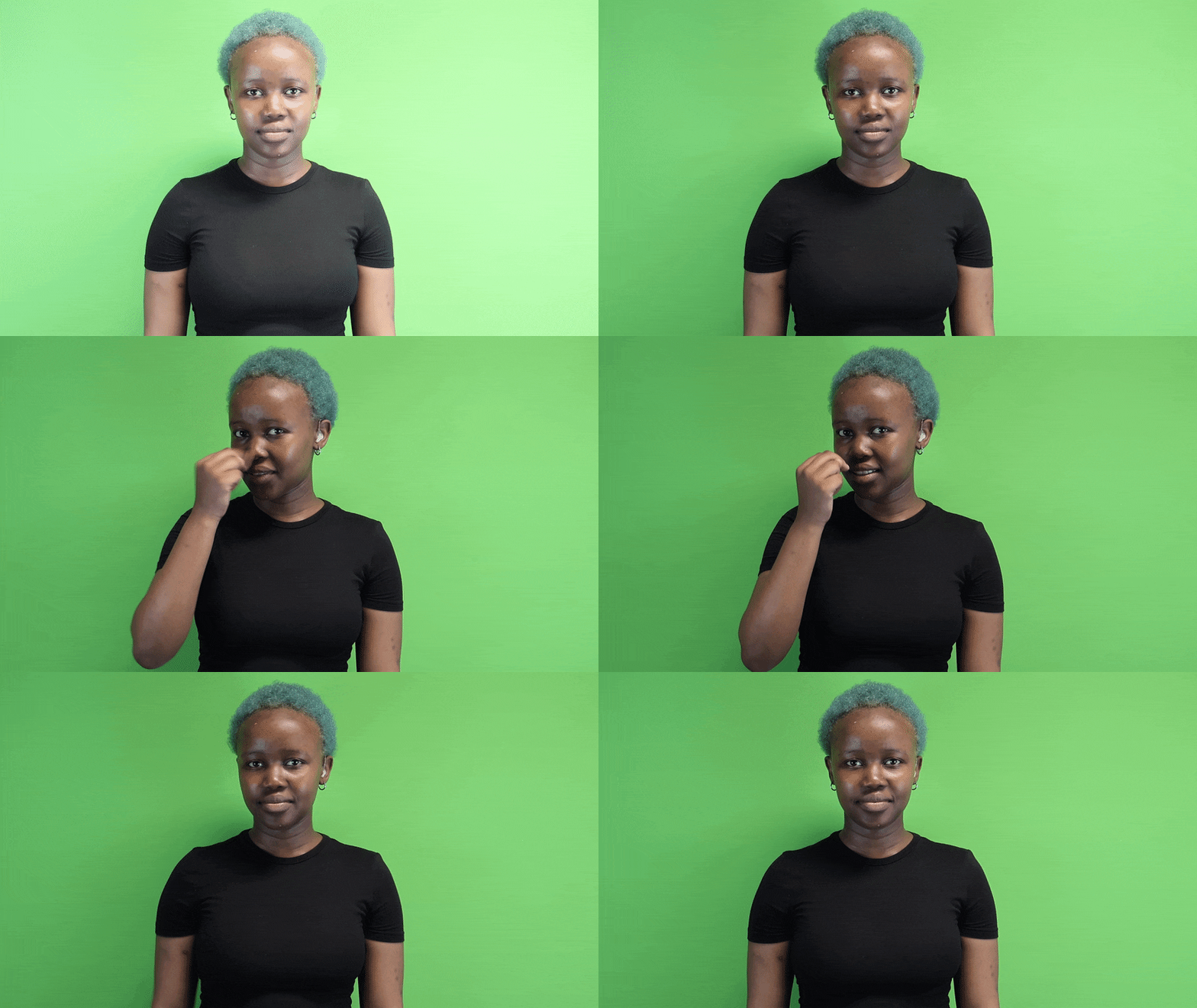 |
||
| 9= Mouth | 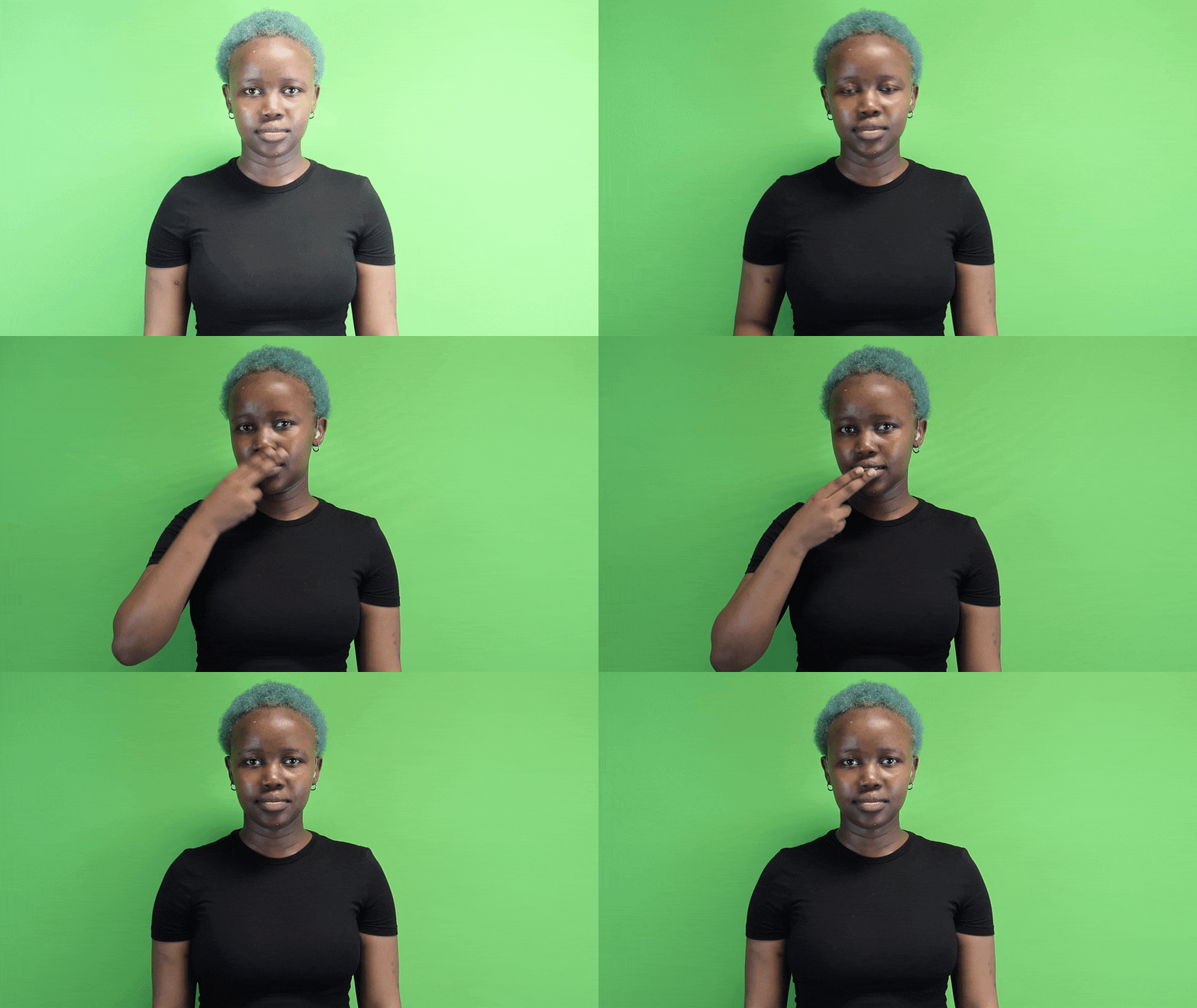 |
||
| 10= Ear | 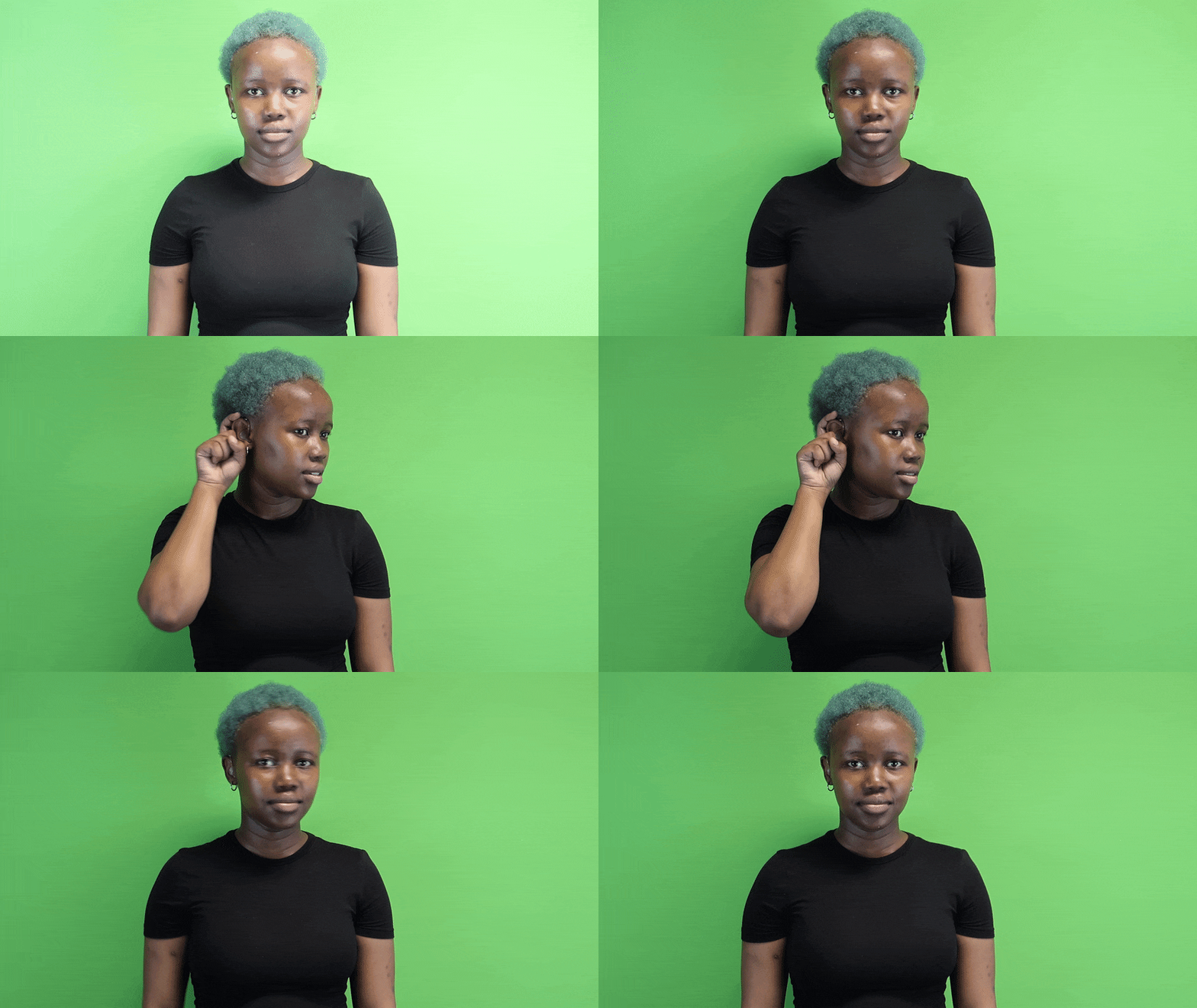 |
||
| 11= Chin | 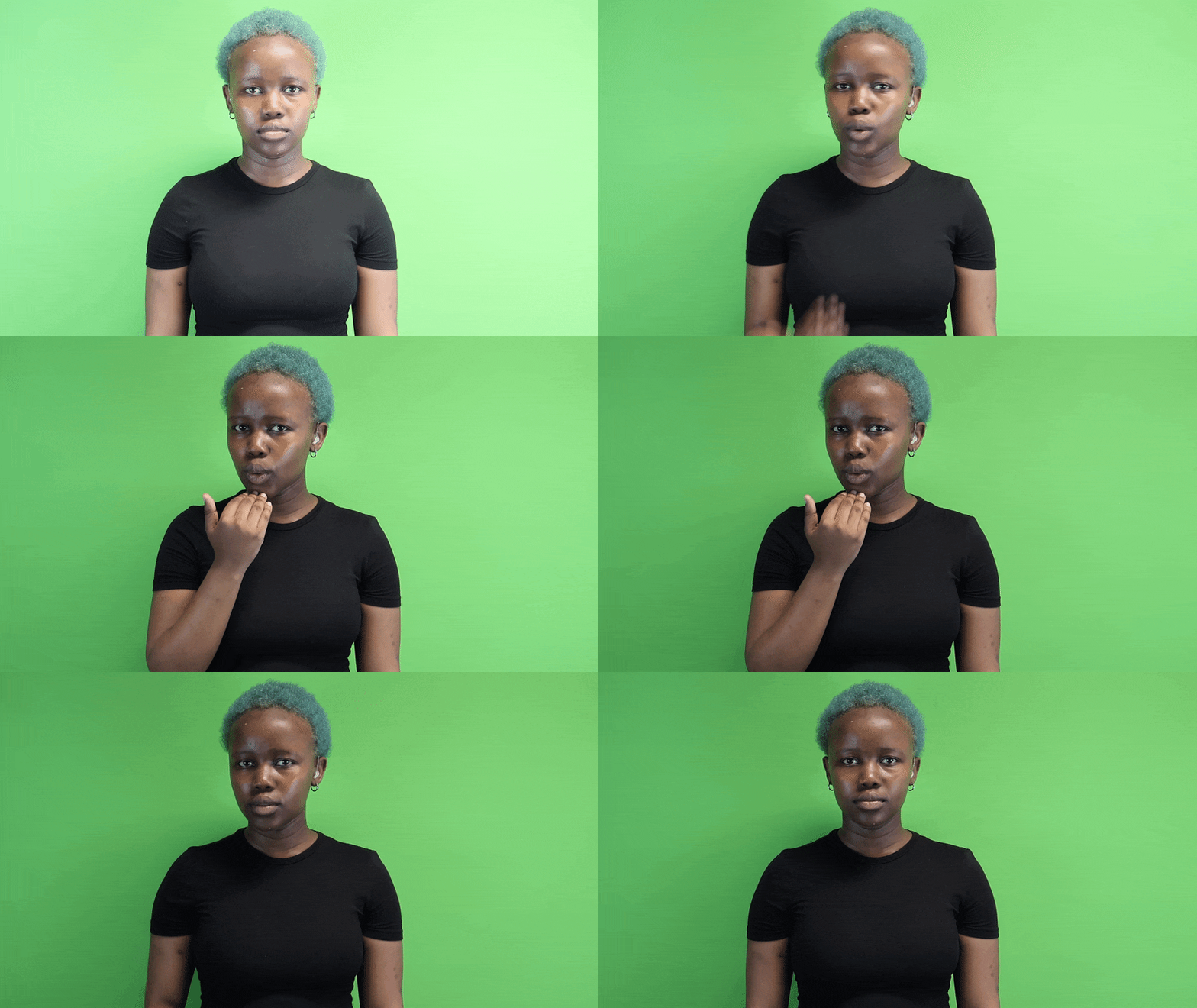 |
||
| 12= Mouth corner | 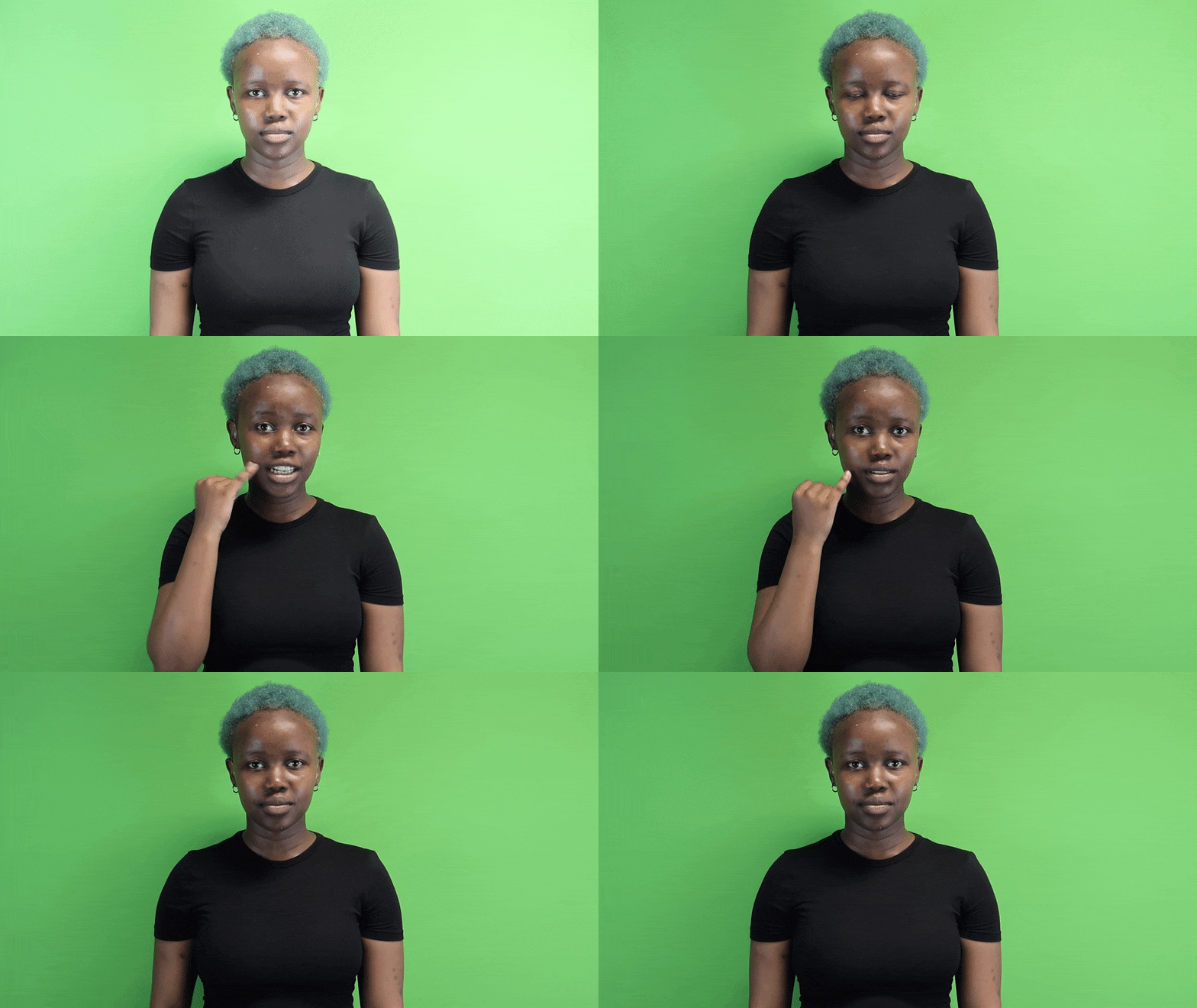 |
||
| 13= Forearm | 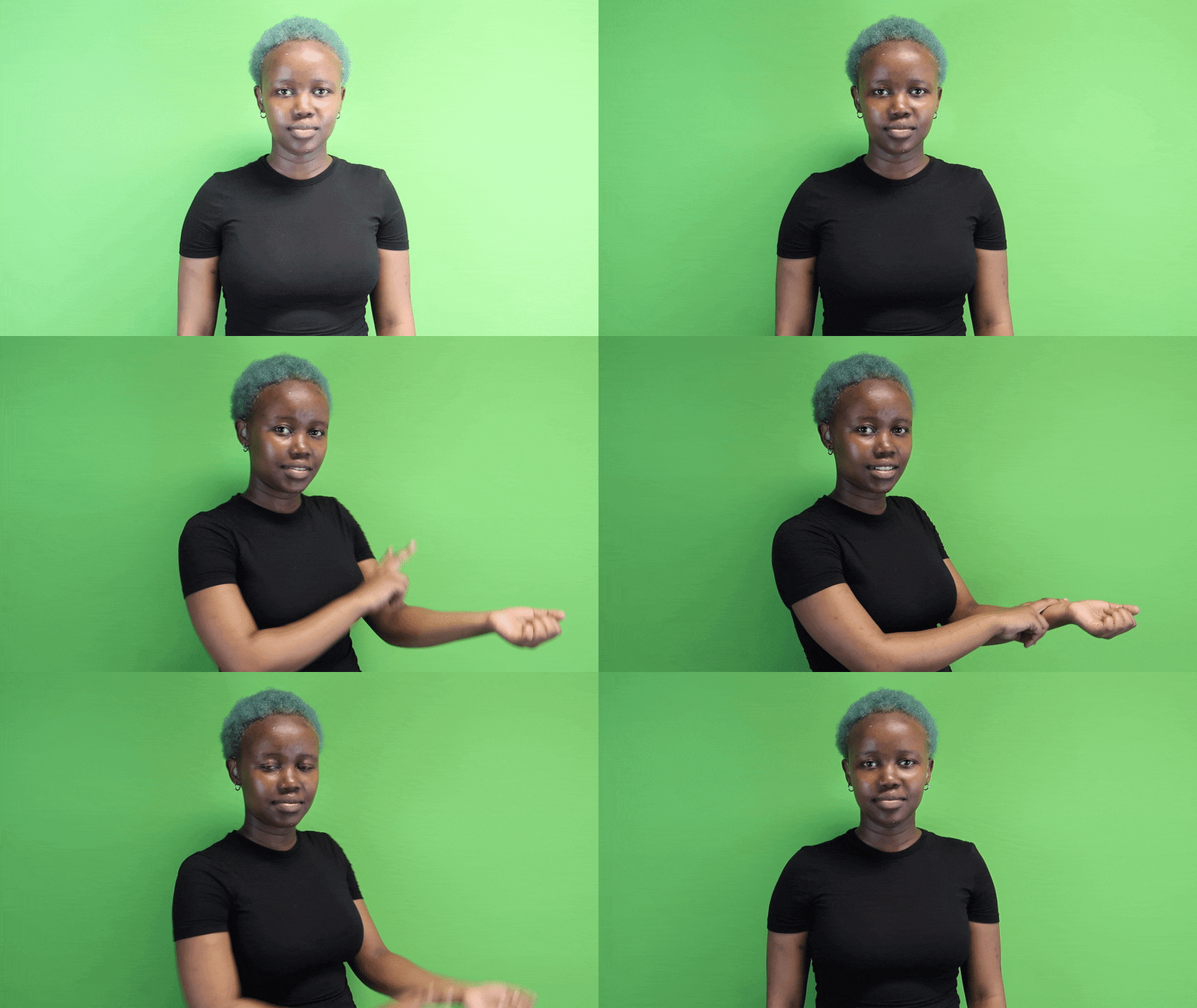 |
||
| 14= Cheek | 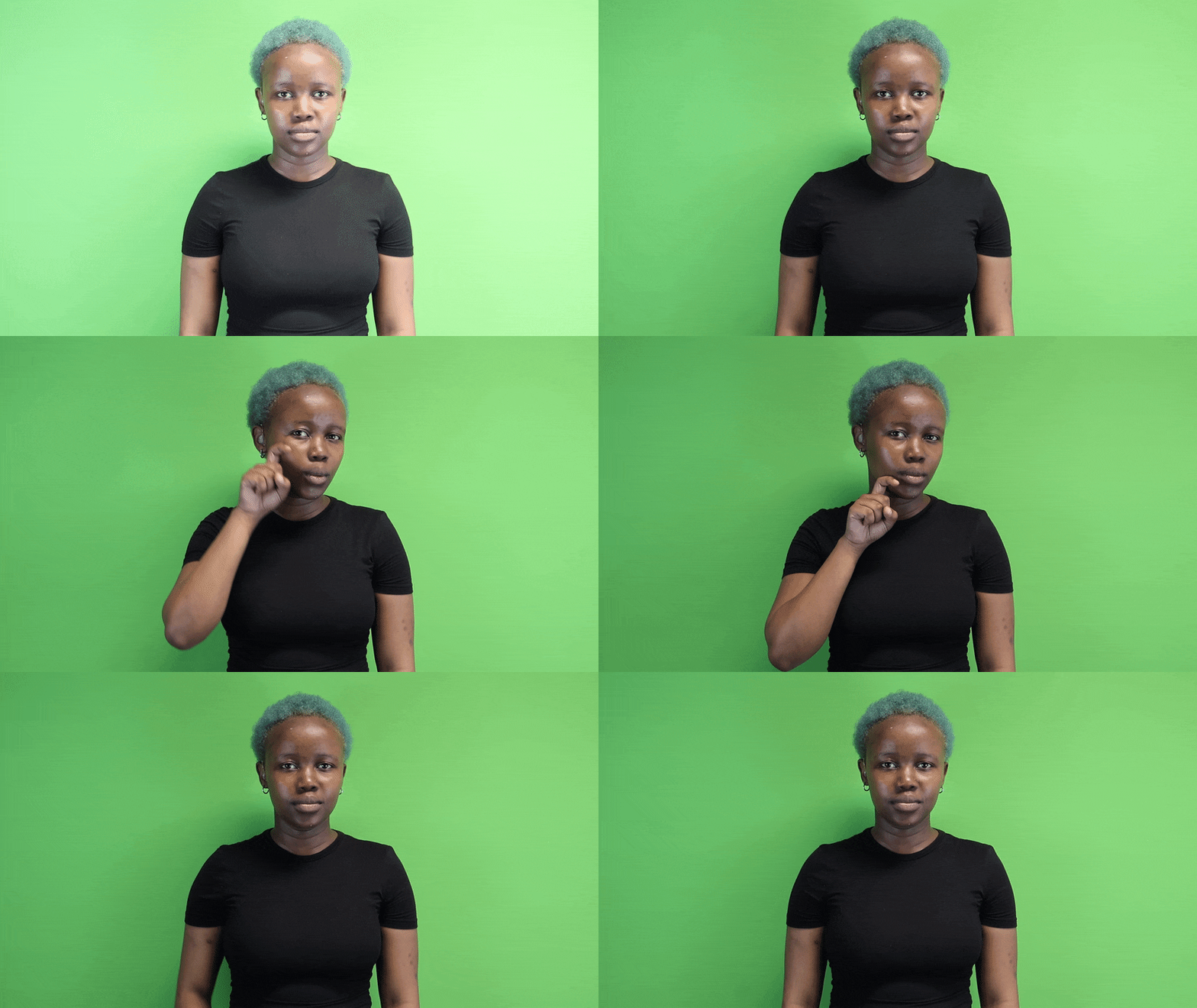 |
||
| Handshape | [ | A= SASL alphabet A | 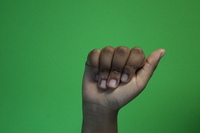 |
| B= SASL alphabet B | 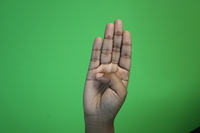 |
||
| C= SASL alphabet C | 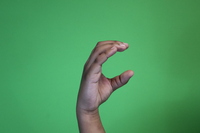 |
||
| D= SASL alphabet D | 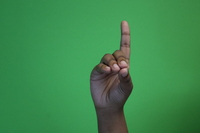 |
||
| E= SASL alphabet E | 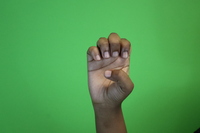 |
||
| F= SASL alphabet F | 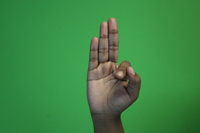 |
||
| G= SASL alphabet G | 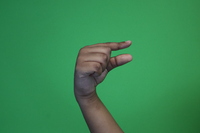 |
||
| H= SASL alphabet H | 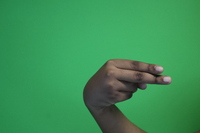 |
||
| I= SASL alphabet I | 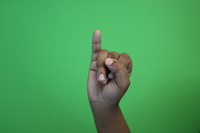 |
||
| J= SASL alphabet J | 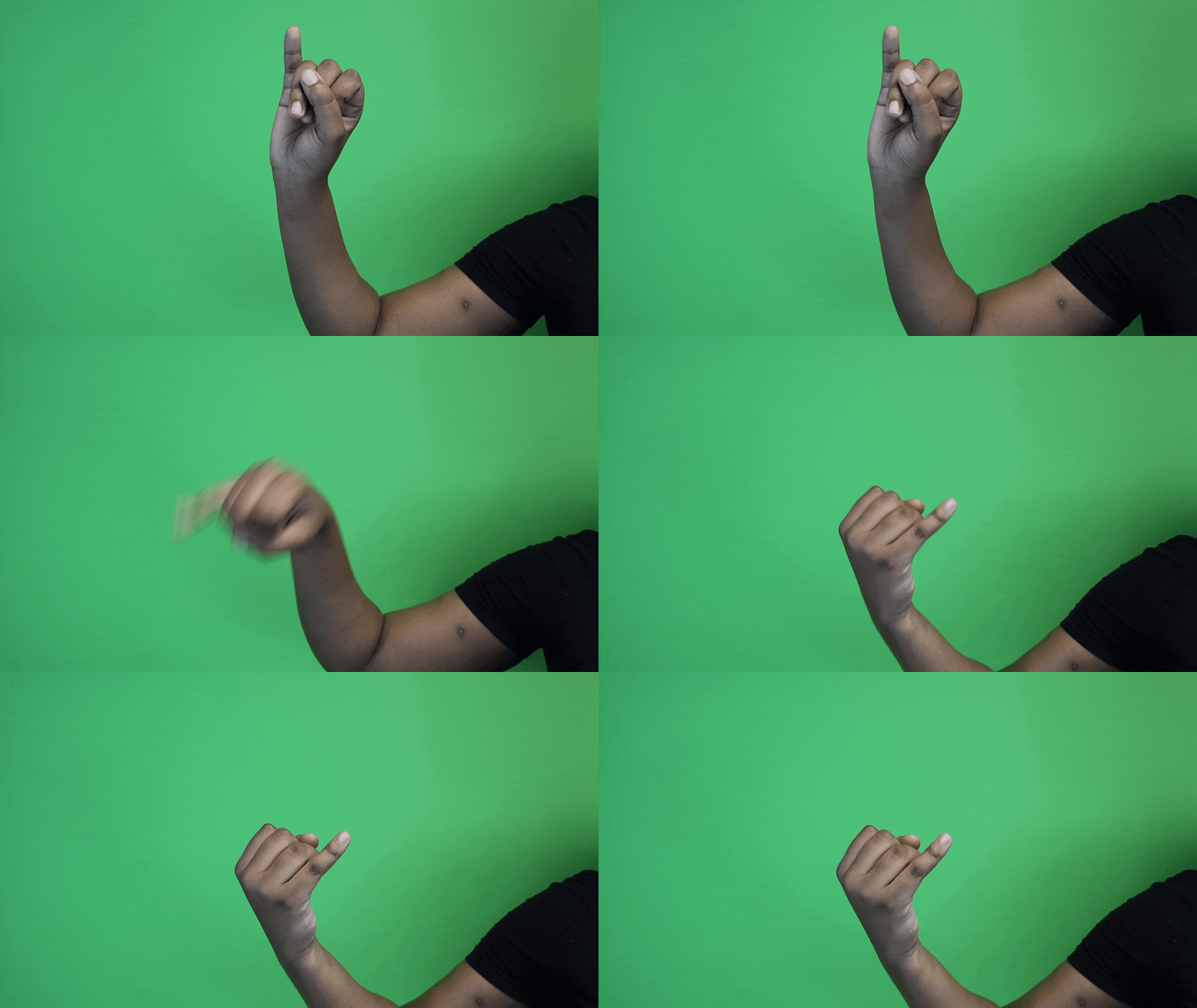 |
||
| K= SASL alphabet K | 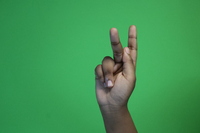 |
||
| L= SASL alphabet L | 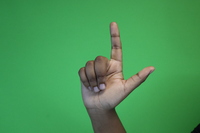 |
||
| M= SASL alphabet M | 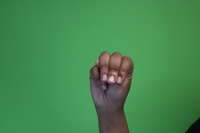 |
||
| N= SASL alphabet N | 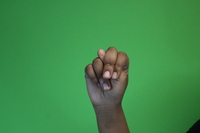 |
||
| O= SASL alphabet O | 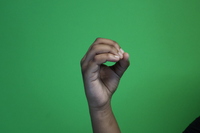 |
||
| P= SASL alphabet P | 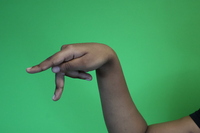 |
||
| Q= SASL alphabet Q | 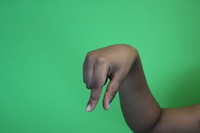 |
||
| R= SASL alphabet R | 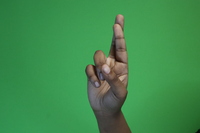 |
||
| S= SASL alphabet S | 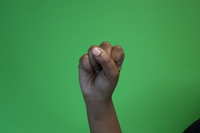 |
||
| T= SASL alphabet T | 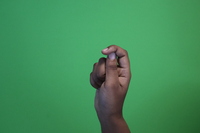 |
||
| U= SASL alphabet U | 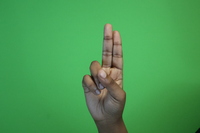 |
||
| V= SASL alphabet V | 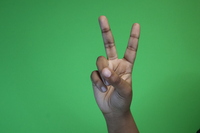 |
||
| W= SASL alphabet W | 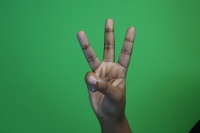 |
||
| X= SASL alphabet X | 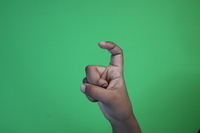 |
||
| Y= SASL alphabet Y | 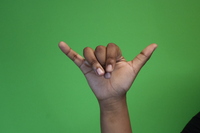 |
||
| Z= SASL alphabet Z | 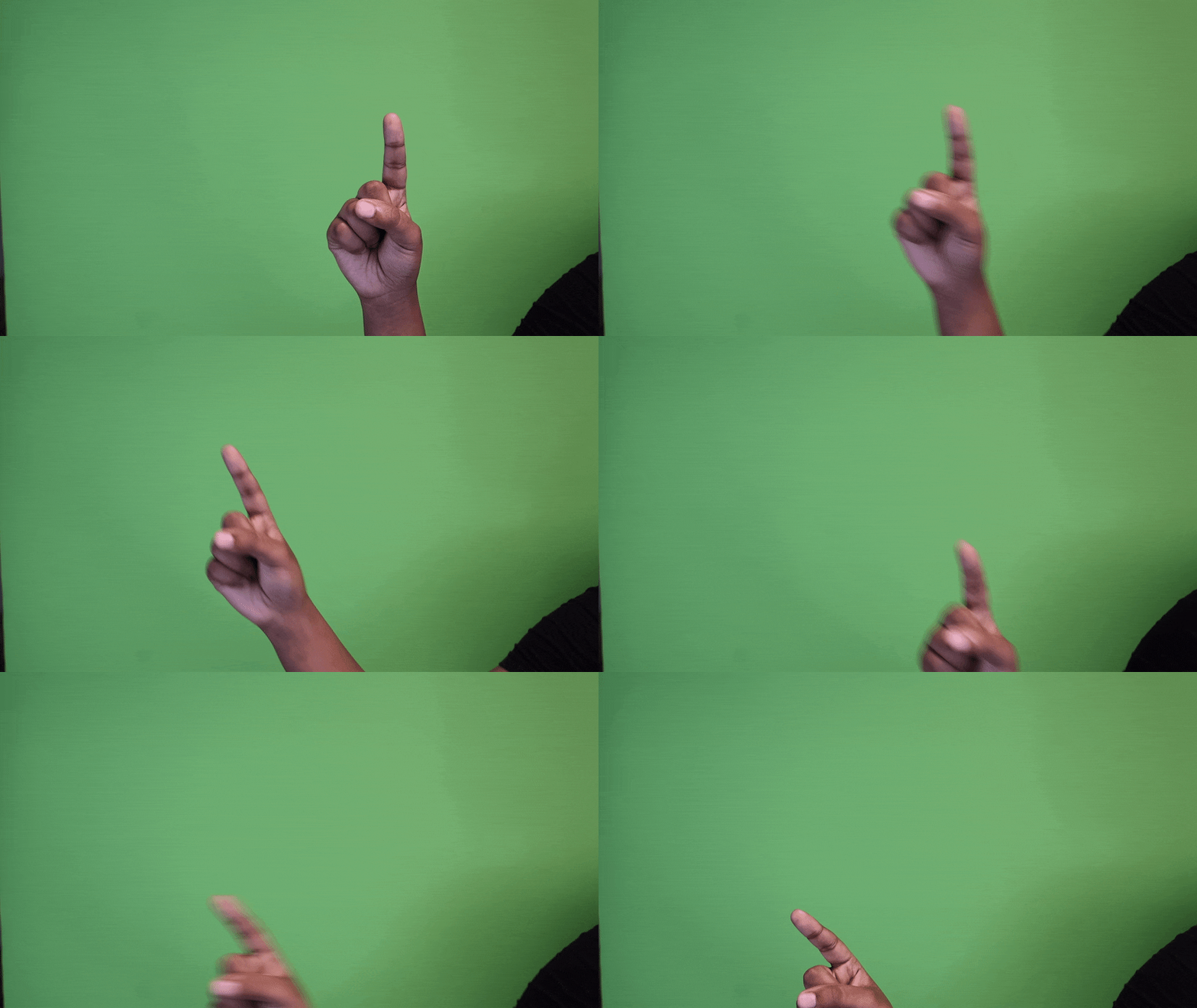 |
||
| 1= Index finger | 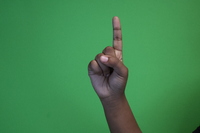 |
||
| 2= Index and middle finger | 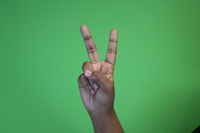 |
||
| 3= Pinky, ring and middle fingers | 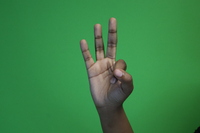 |
||
| 4= Pinky, ring, middle and index fingers | 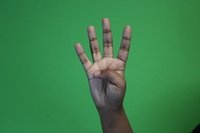 |
||
| 5= 5 finger hand open | 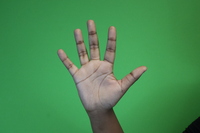 |
||
| 6= Claw- 5 finger hand bent | 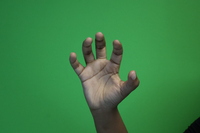 |
||
| 7= Flat- Open hand fingers together | 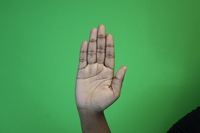 |
||
| 8= Bent L- Index finger and thumb, both bent | 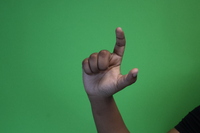 |
||
| 9= Bent G- Index finger and thumb, rounded facing down | 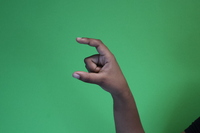 |
||
| 10= Closed G- Index finger and thumb touching | 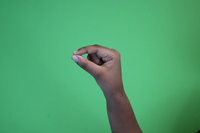 |
||
| 11= Closed bent G- Index finger and thumb touching, fingers bent | 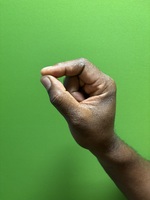 |
||
| 12= Corna- Animal- middle, ring and thumb together; index and pinky fingers pointing up | 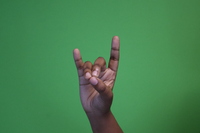 |
||
| 13= Irish K- 5 hand, thumb and middle finger touch | 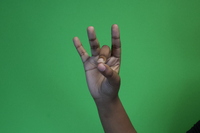 |
||
| 14= Irish H- Thumb covering middle and ring finger, pinky and index fingers pointed | 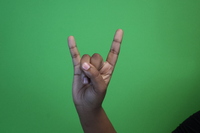 |
||
| 15= Old D- ND index finger, D bent G 1 9 | 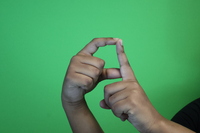 |
||
| 16= Old P- middle 3- ring, middle and index finger | 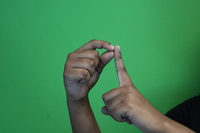 |
||
| 17= Closed 5- all fingers touching, flat O | 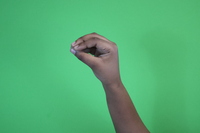 |
||
| 18= Bent 5- 4 fingers bent down, thumb extended to the side | 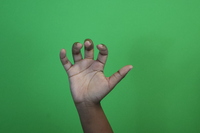 |
||
| 19= E extended thumb- E hand, thumb extended to the side | 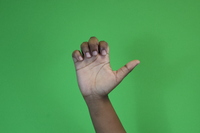 |
||
| 20= T extended- T base handshape, index finger pointed | 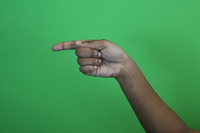 |
||
| 21= Open B- Flat hand with thumb to the side | 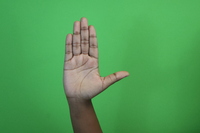 |
||
| 22= Bent B- B hand, 4 fingers rounded | 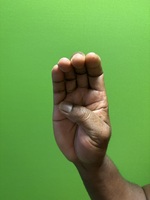 |
||
| 23= Bent H- Index and middle fingers bent | 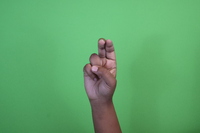 |
||
| 24= Bent F- F hand- pinky, ring and middle finger curled | 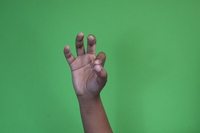 |
||
| 25= I-Love-You- 5 hand, ring and middle finger bent down | 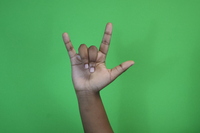 |
||
| 26= 5 hand, bent down middle finger | 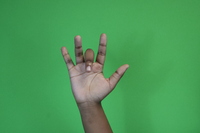 |
||
| 27= Good- 4 fingers tucked into hand, thumb extended up | 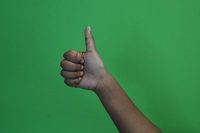 |
||
| 28= Flat hand, thumb moved in to make L shape | 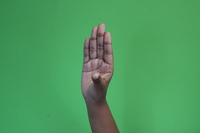 |
||
| 29= Index, middle finger and thumb touch | 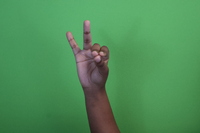 |
||
| 30= Flat hand, 4 fingers rounded | 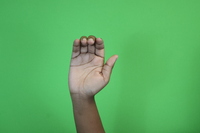 |
||
| 31= Rounded flat hand | 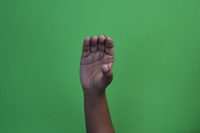 |
||
| 32= 5 hand, bent pinky | 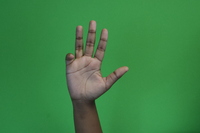 |
||
| 33= Irish H, bent index finger | 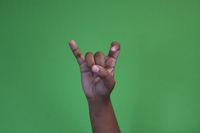 |
||
| 34= F hand, index and thumb closed open closed | 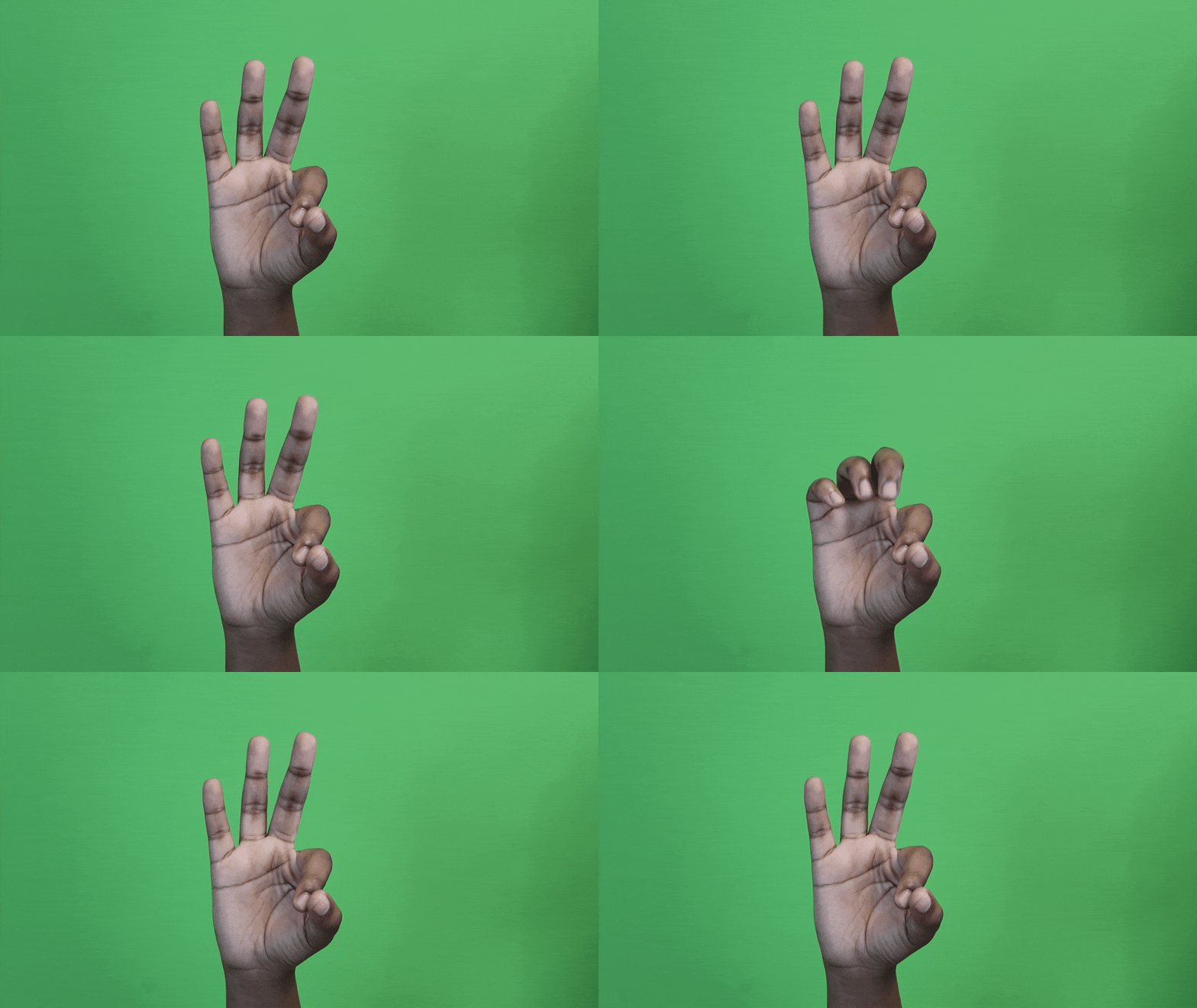 |
||
| 35= I hand, bent pinky | 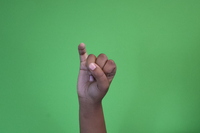 |
||
| Palm orientation | ^ | 1= Out | 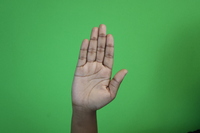 |
| 2= In | 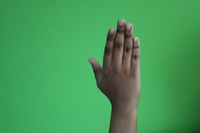 |
||
| 3= Side | 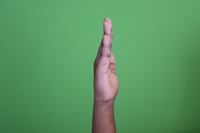 |
||
| 4= Down | 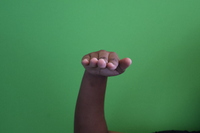 |
||
| 5= Up | 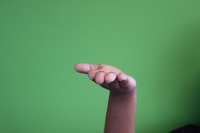 |
||
| Movement | ~ | 0= No movement | |
| 1= To the side | 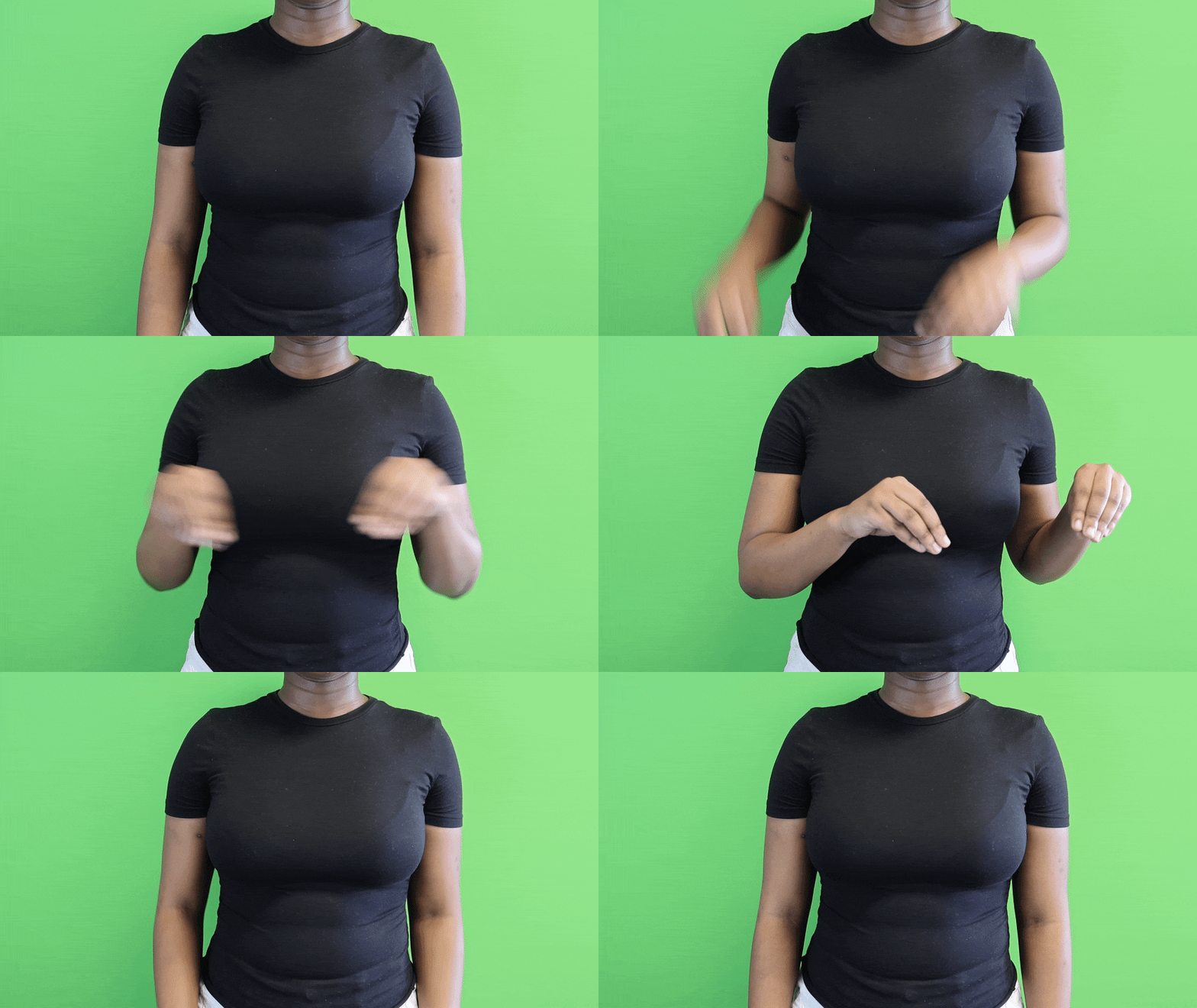 |
||
| 2= Down | 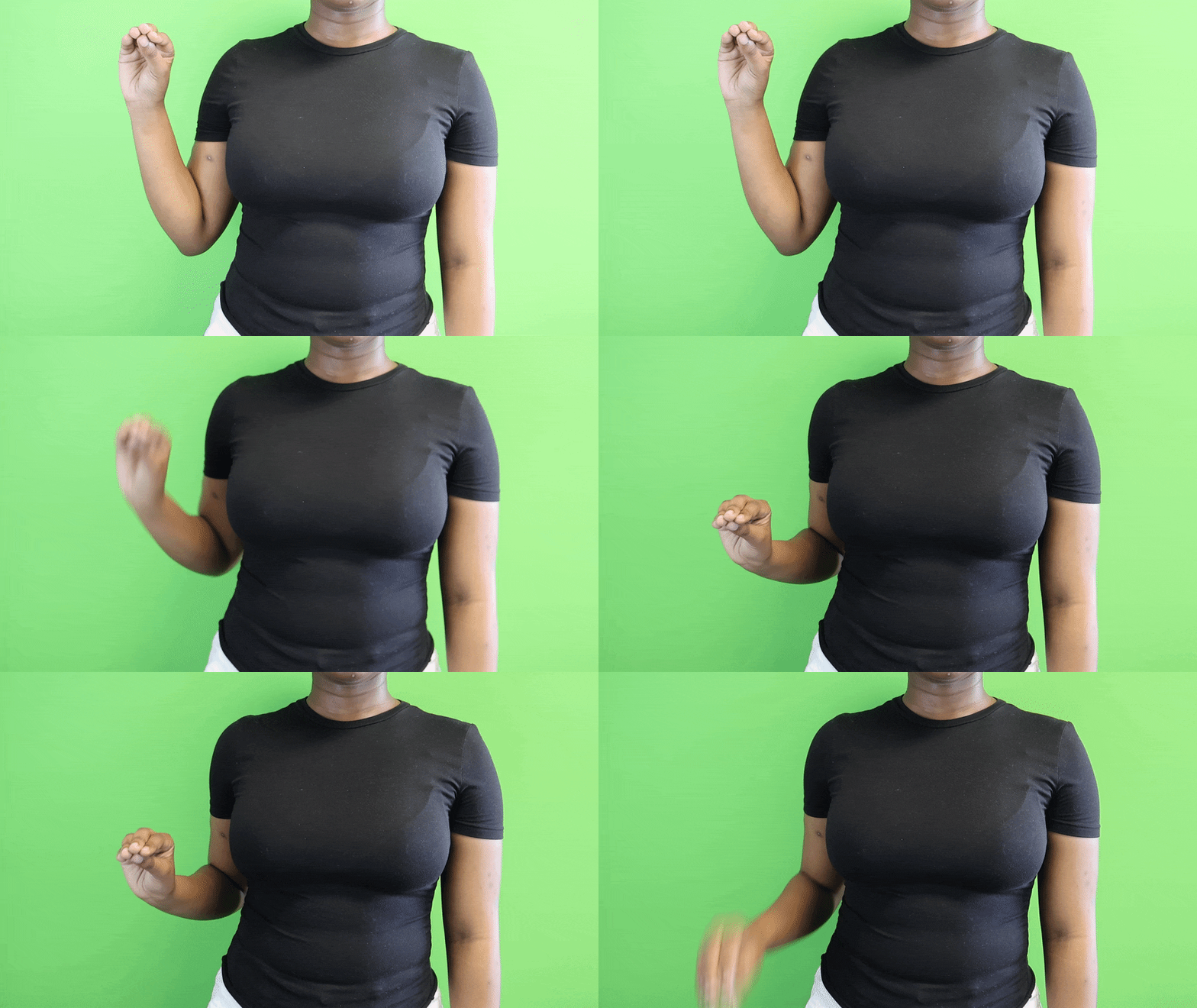 |
||
| 3= Up | 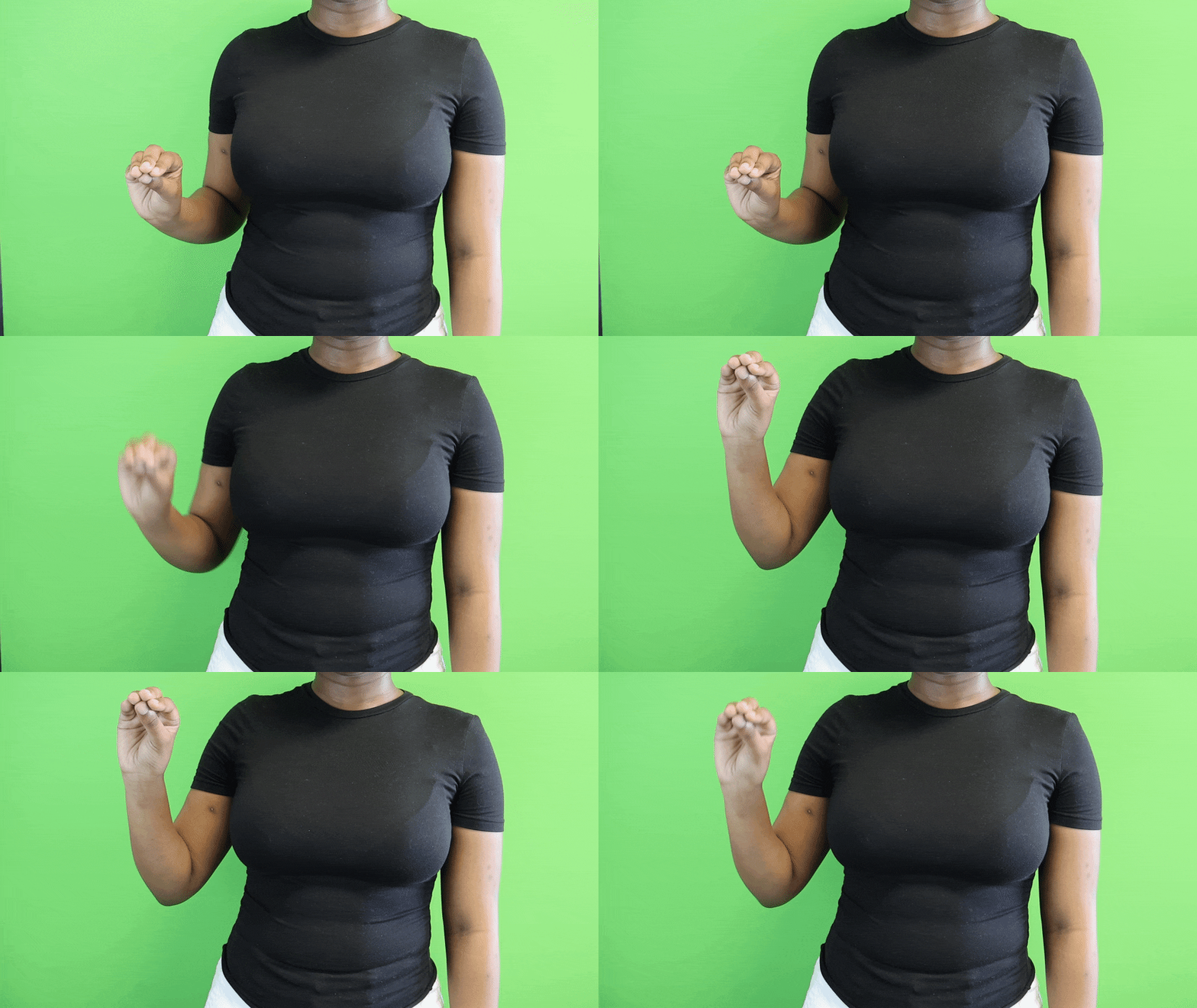 |
||
| 4= Circle | 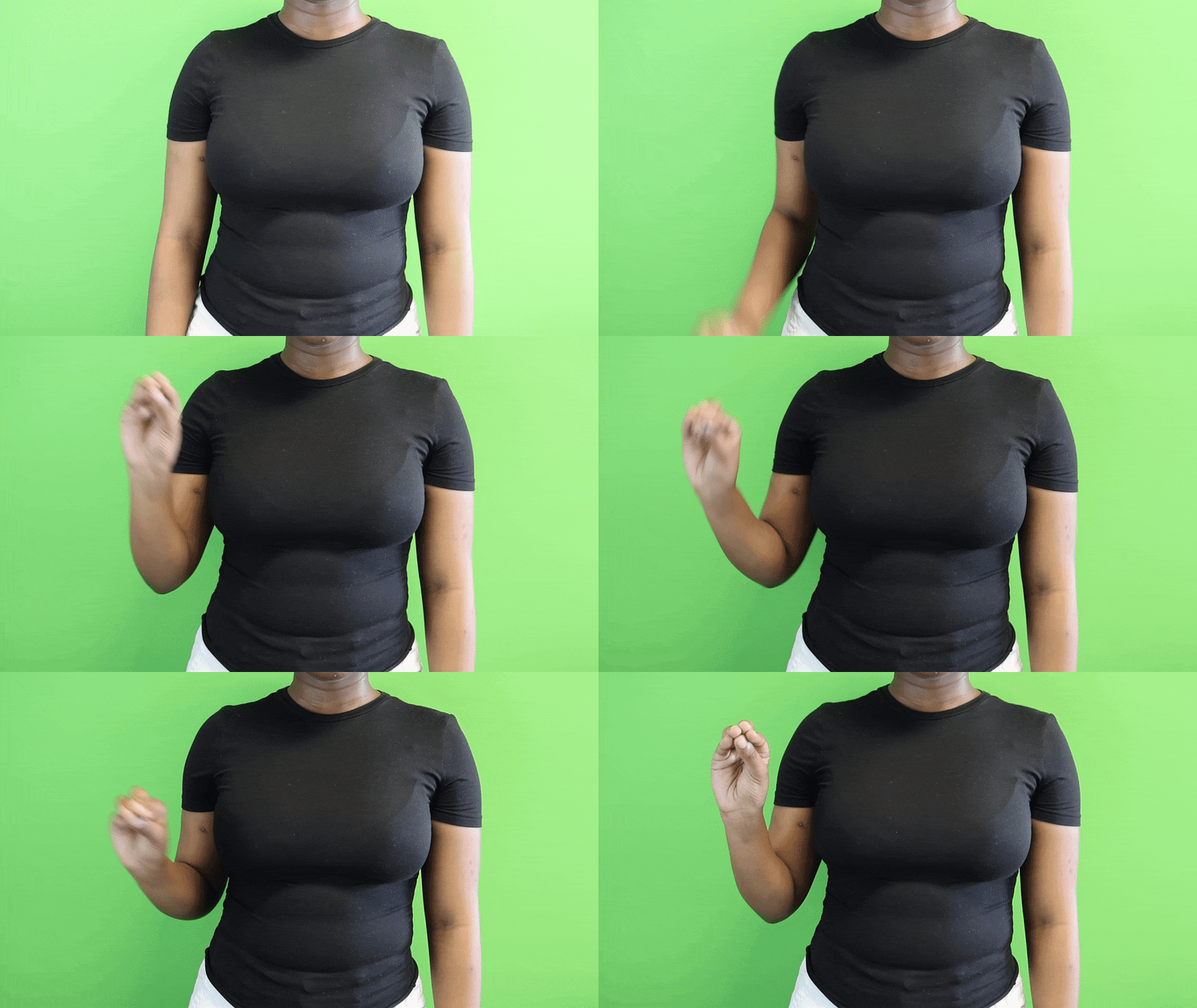 |
||
| 5= Down In | 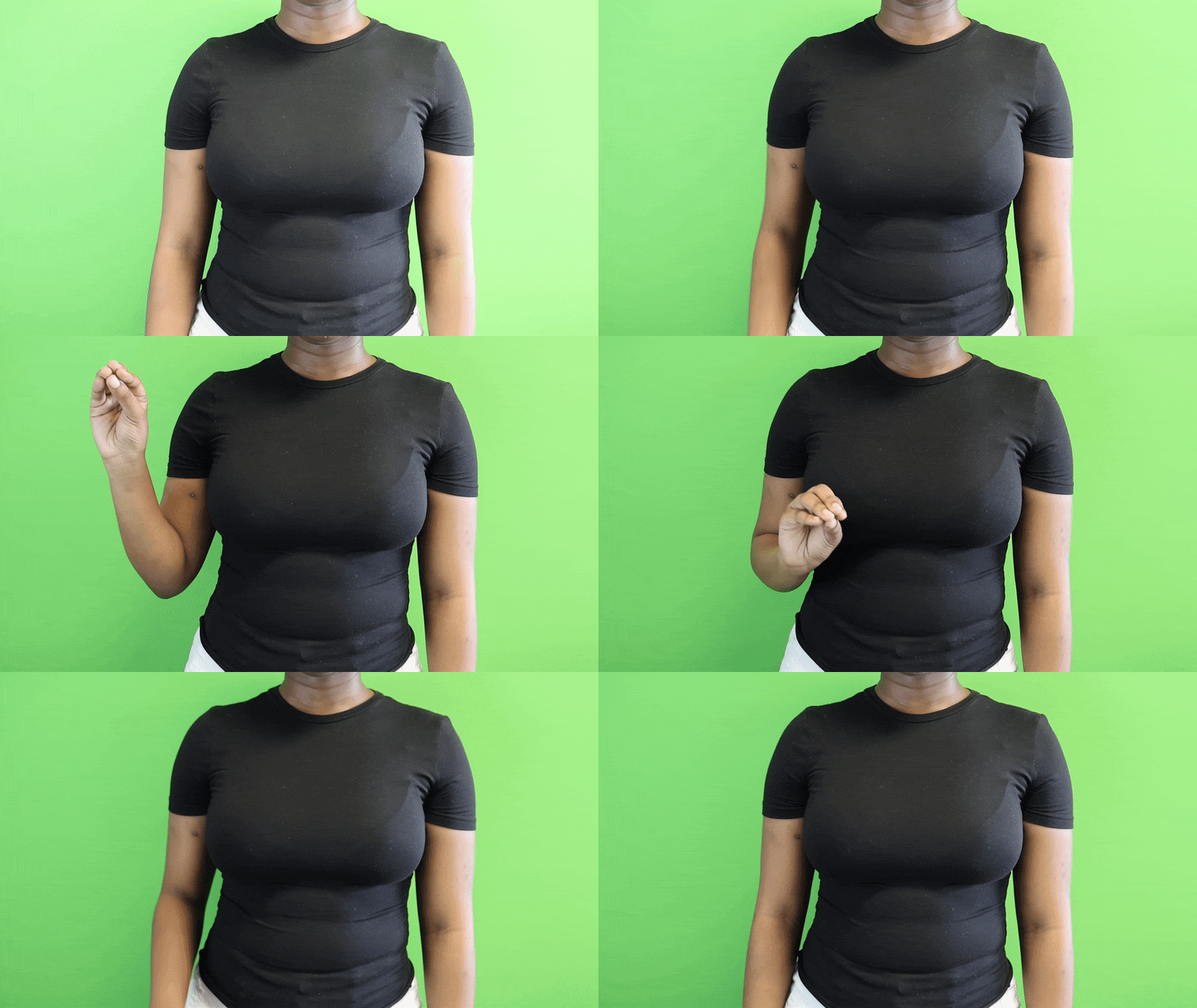 |
||
| 6= Down, to the side up | 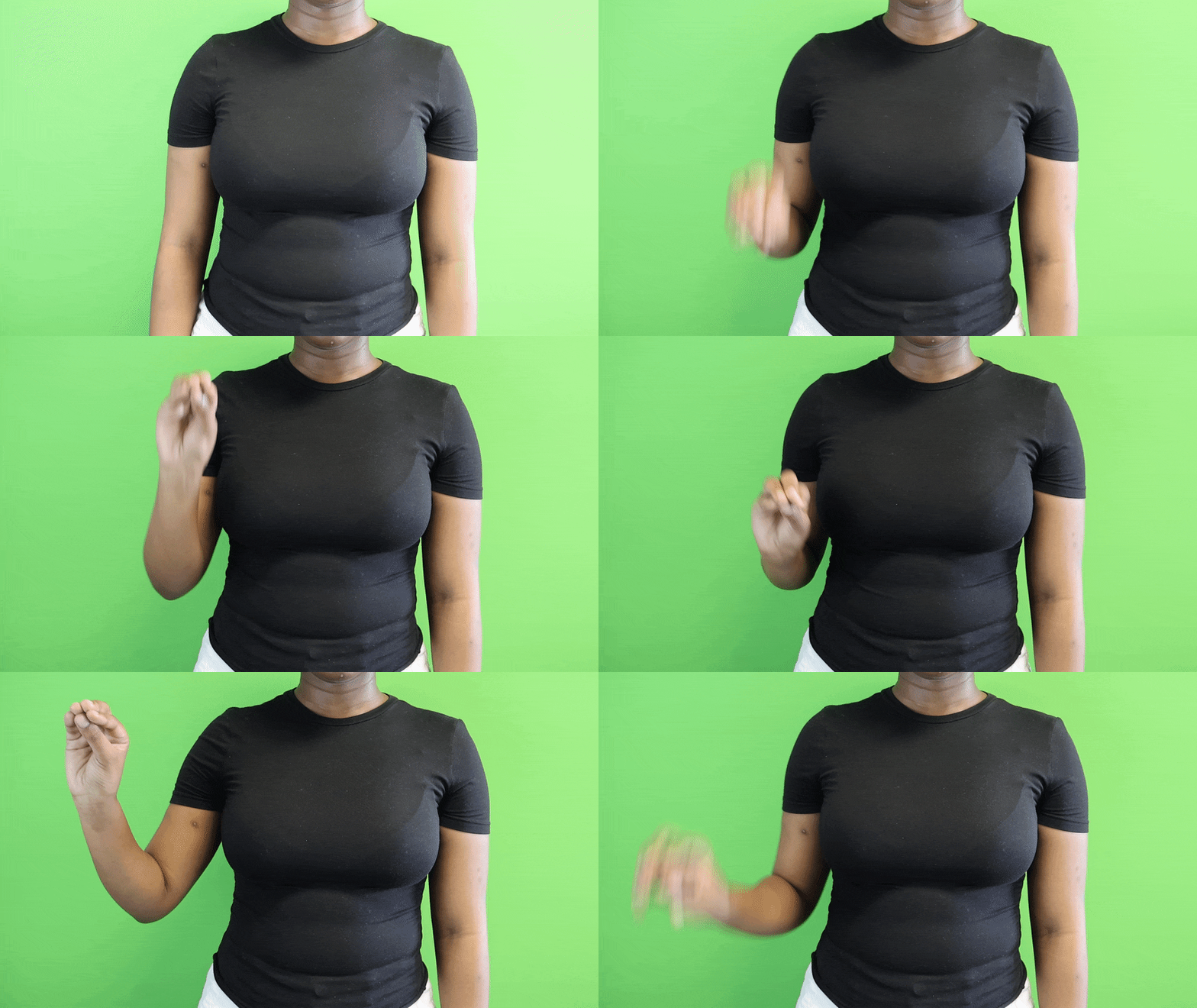 |
||
| 7= Up, to the side | 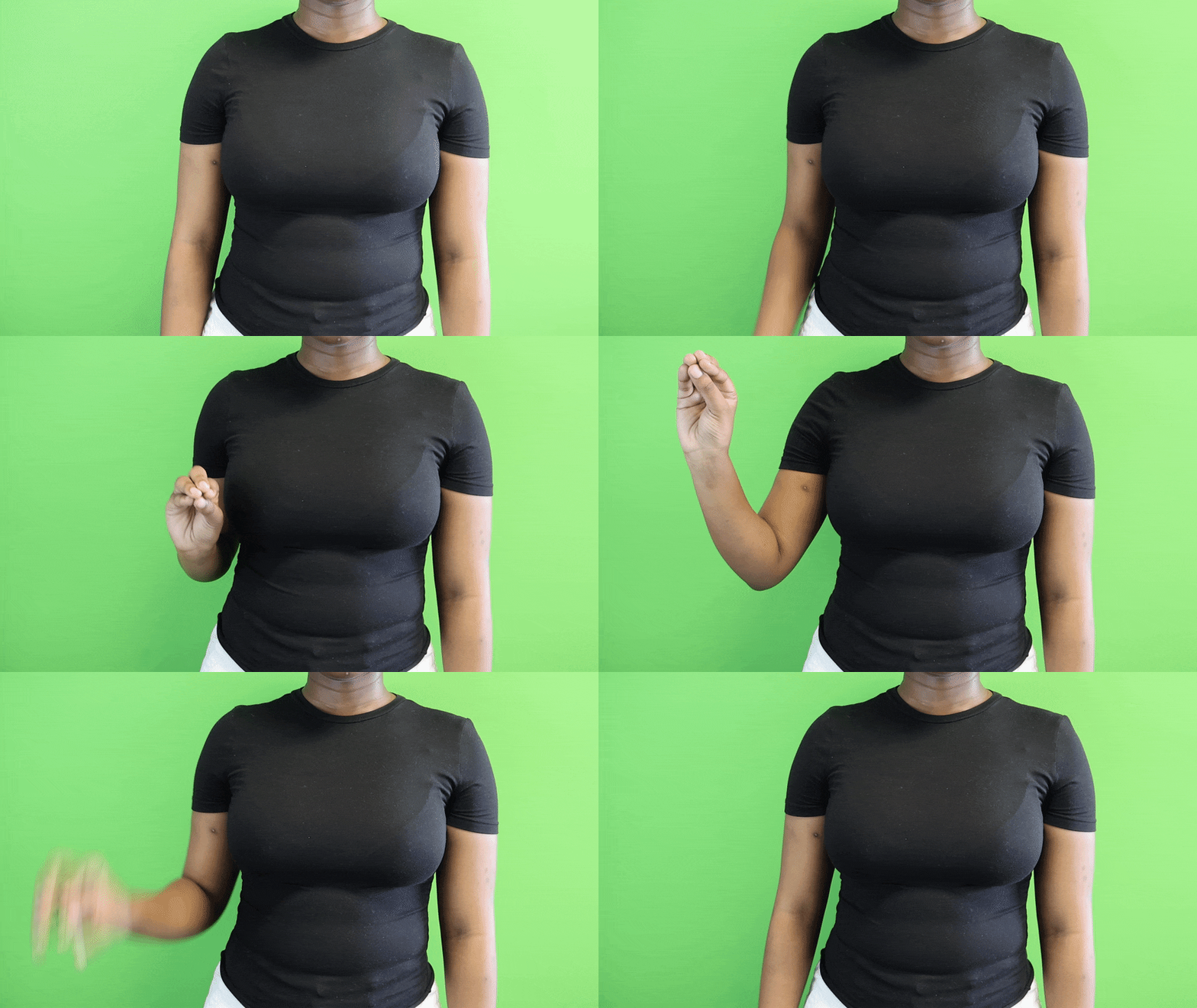 |
||
| 8= Semi-circle to the side | 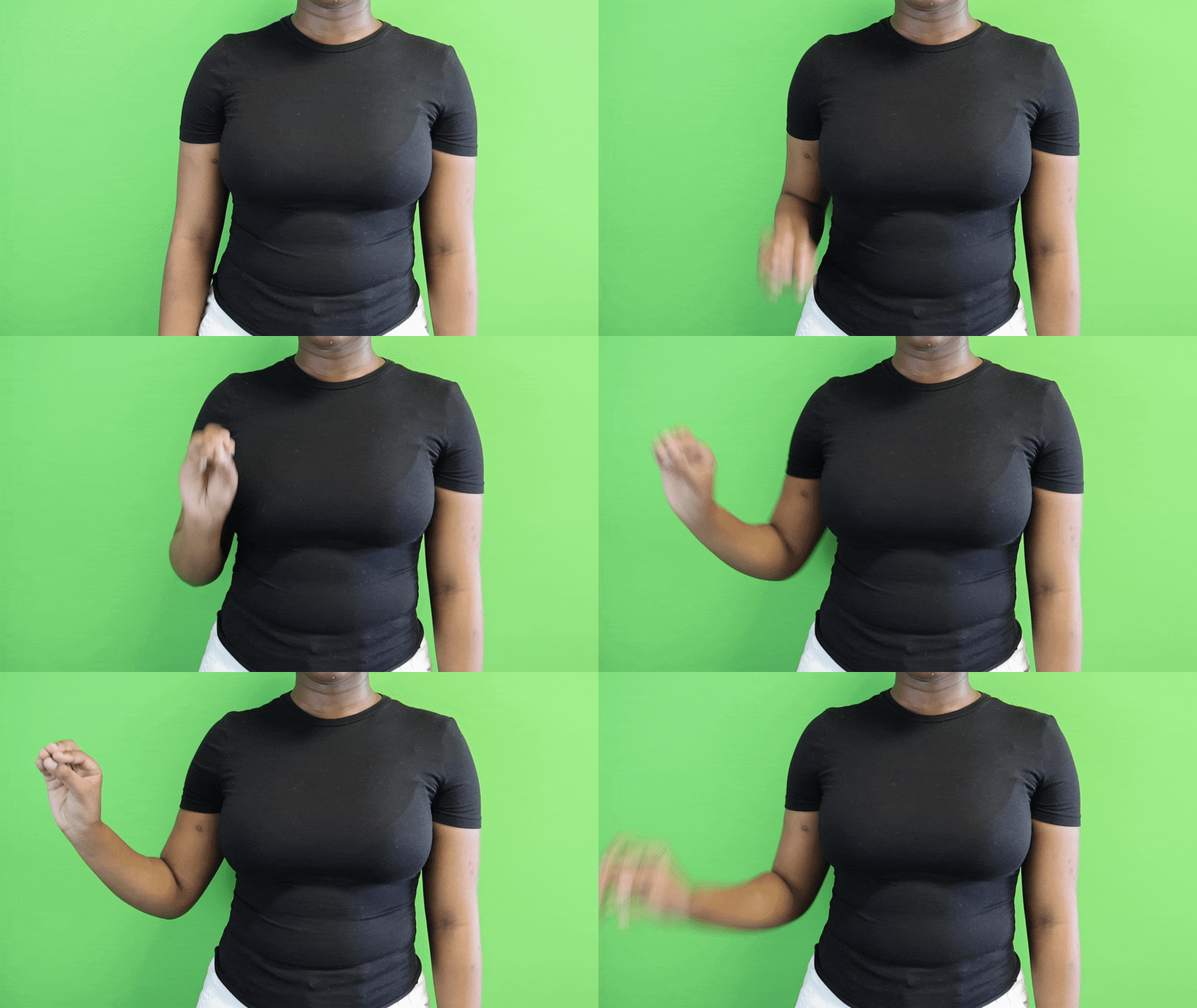 |
||
| 9= Tap | 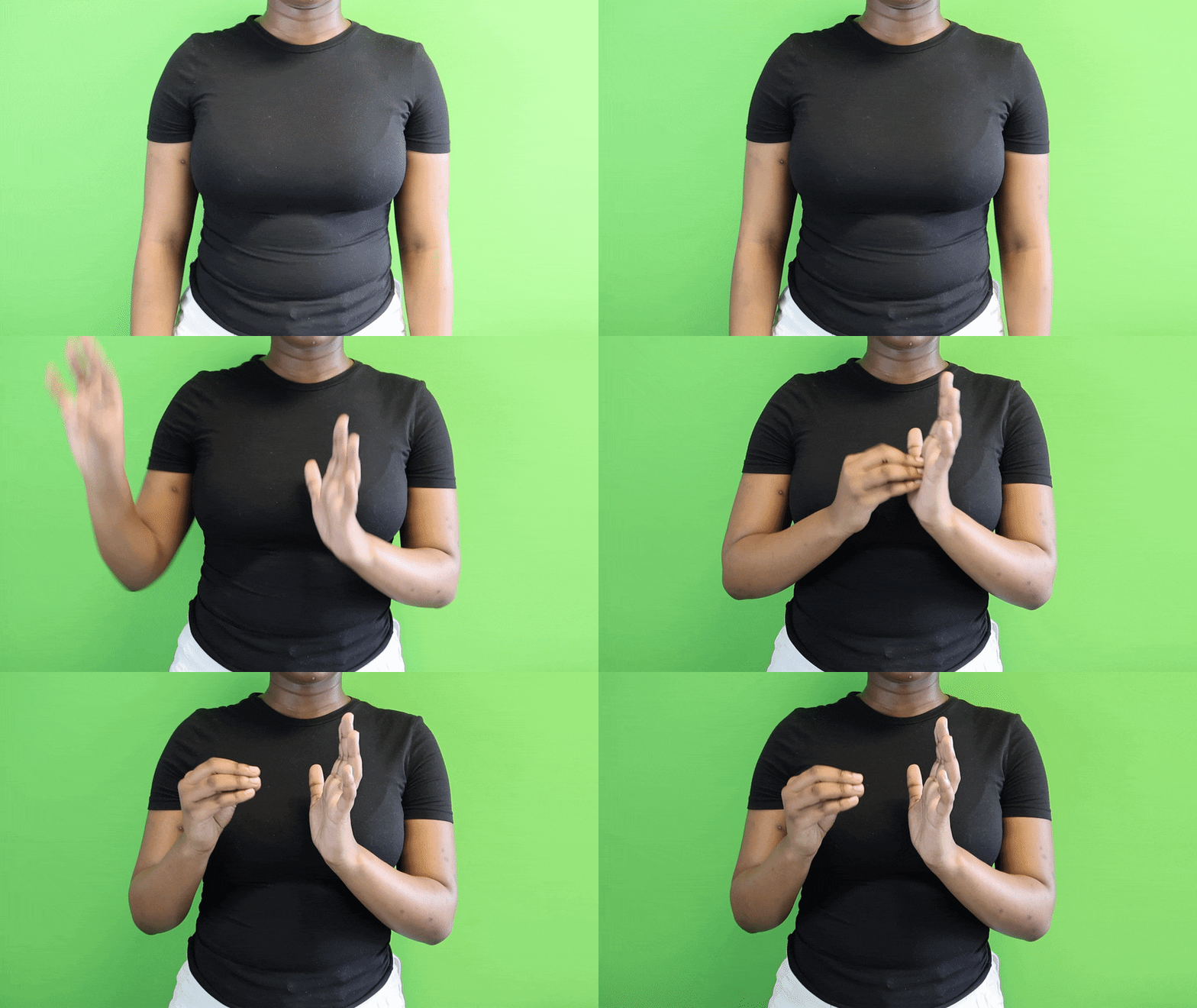 |
||
| 10= Wrist side to side | 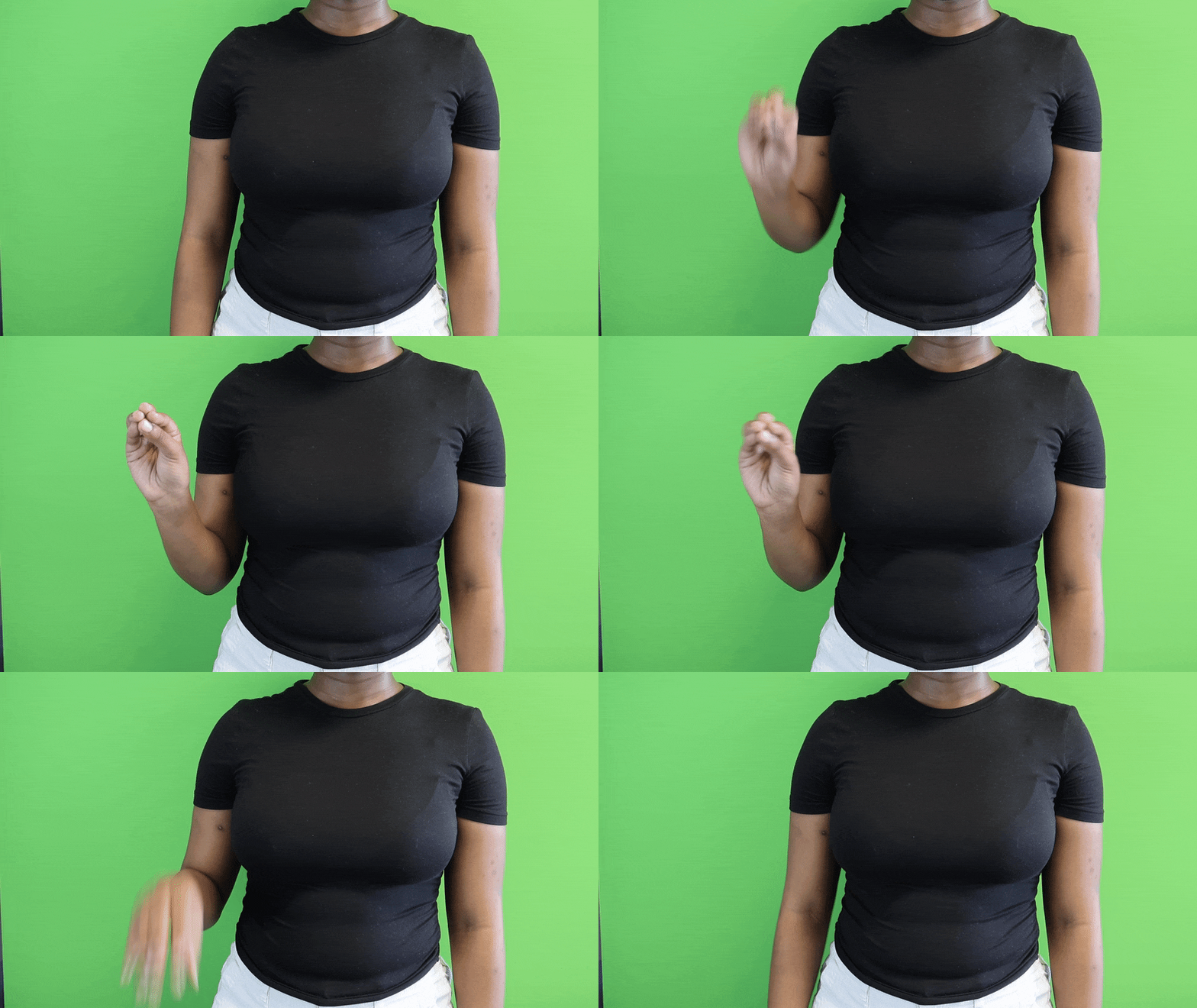 |
||
| 11= Side to side | 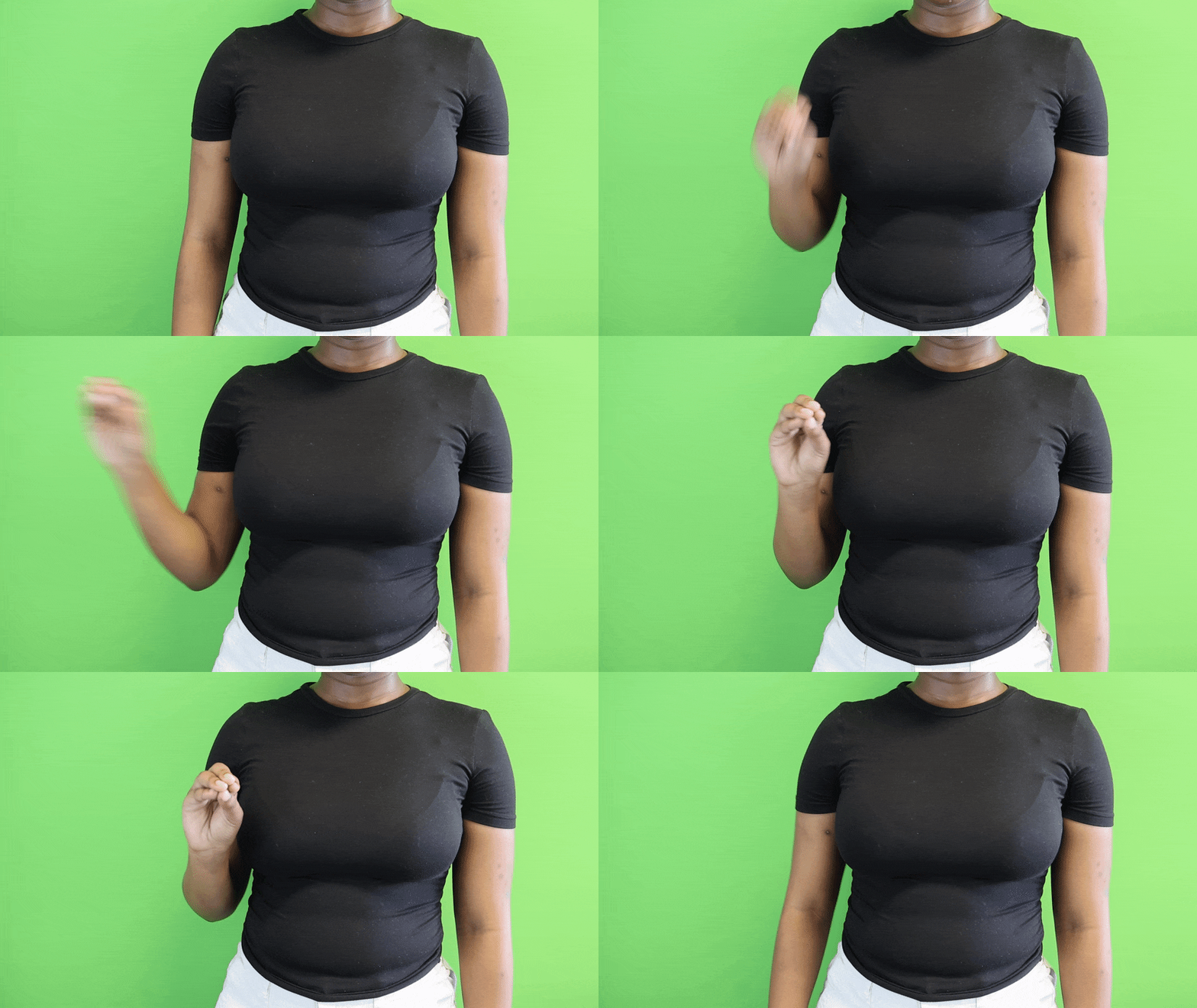 |
||
| 12= Backwards and forwards | 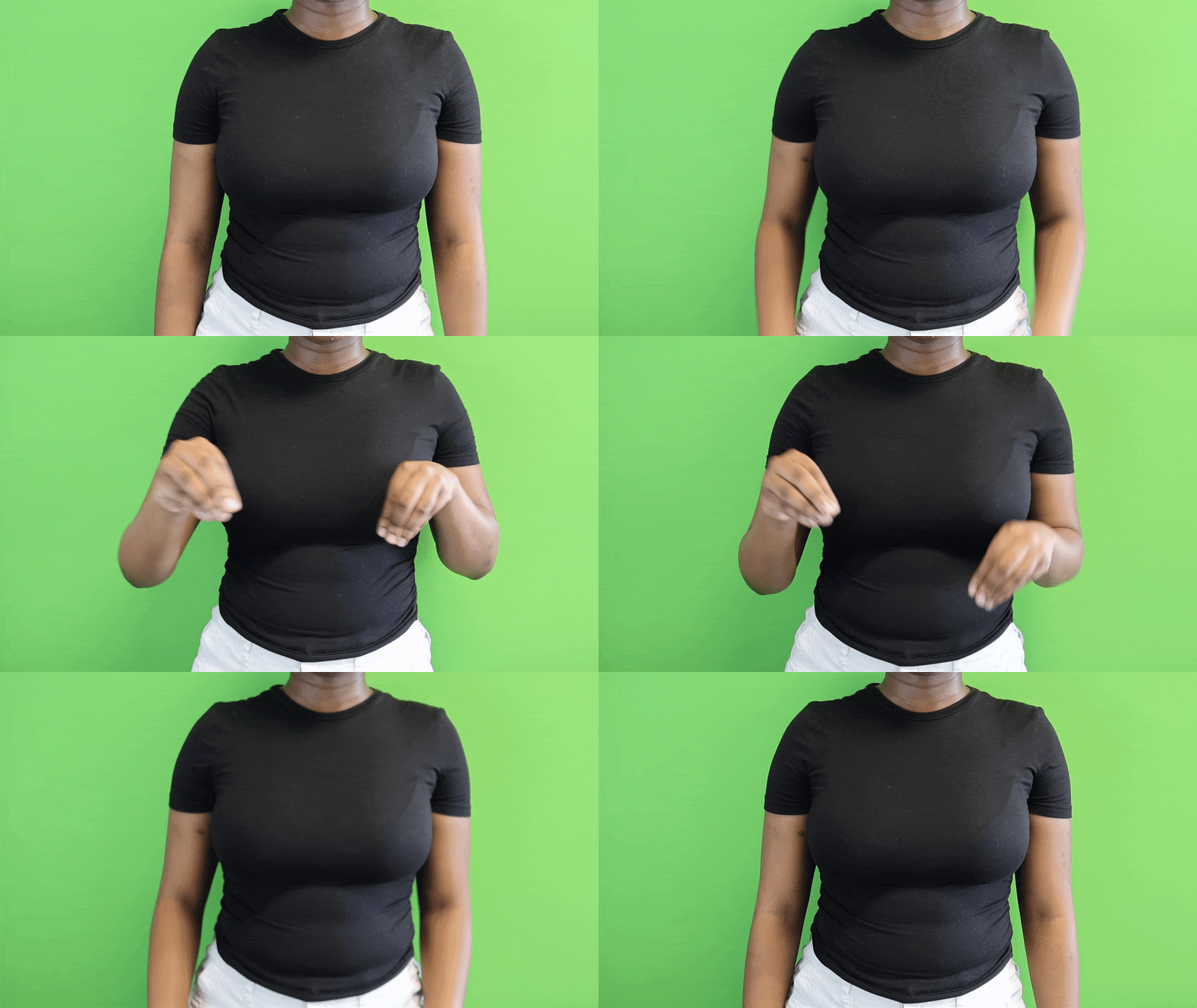 |
||
| 13= Wrist circle side to side | 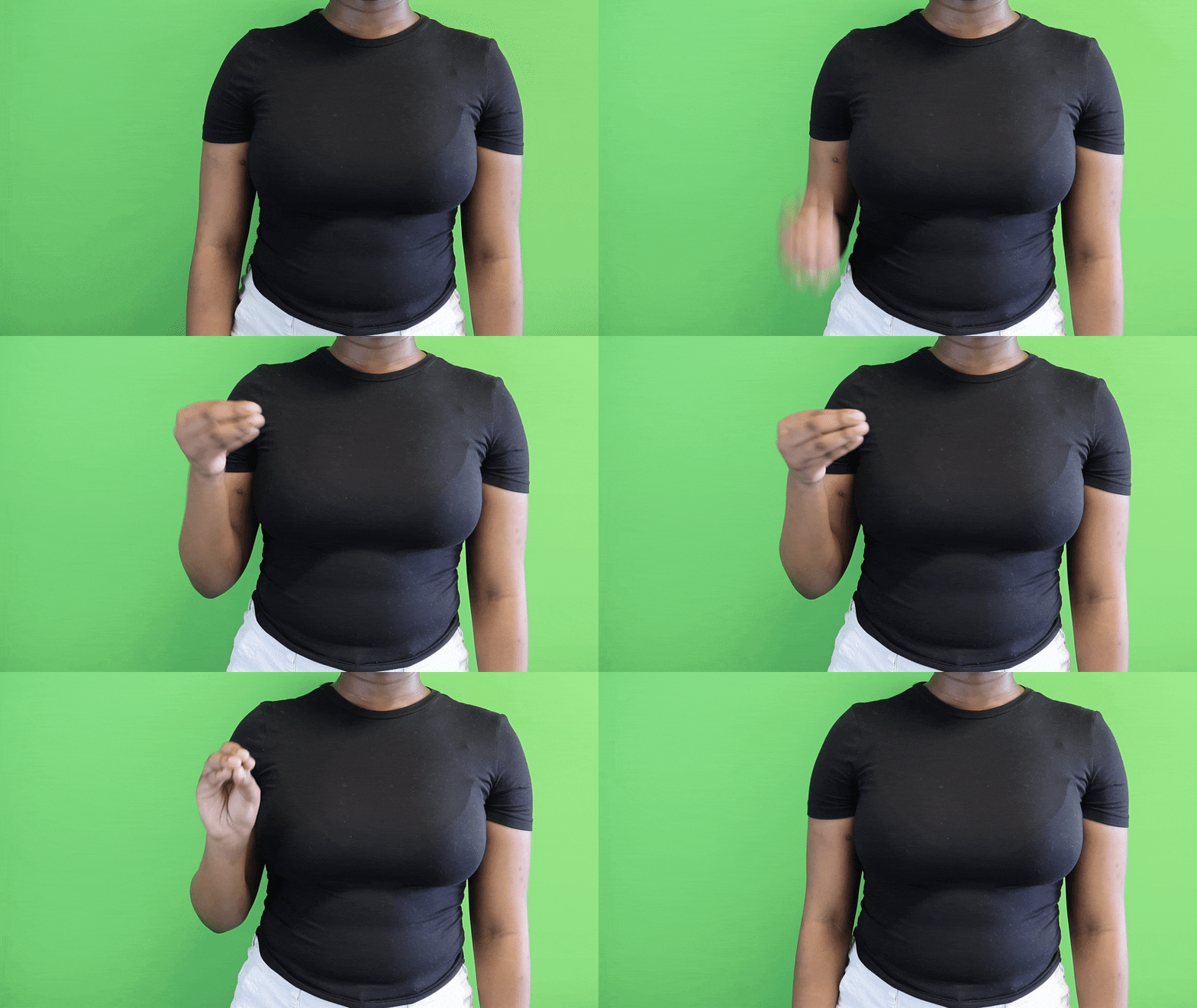 |
||
| 14= Wrist flick out | 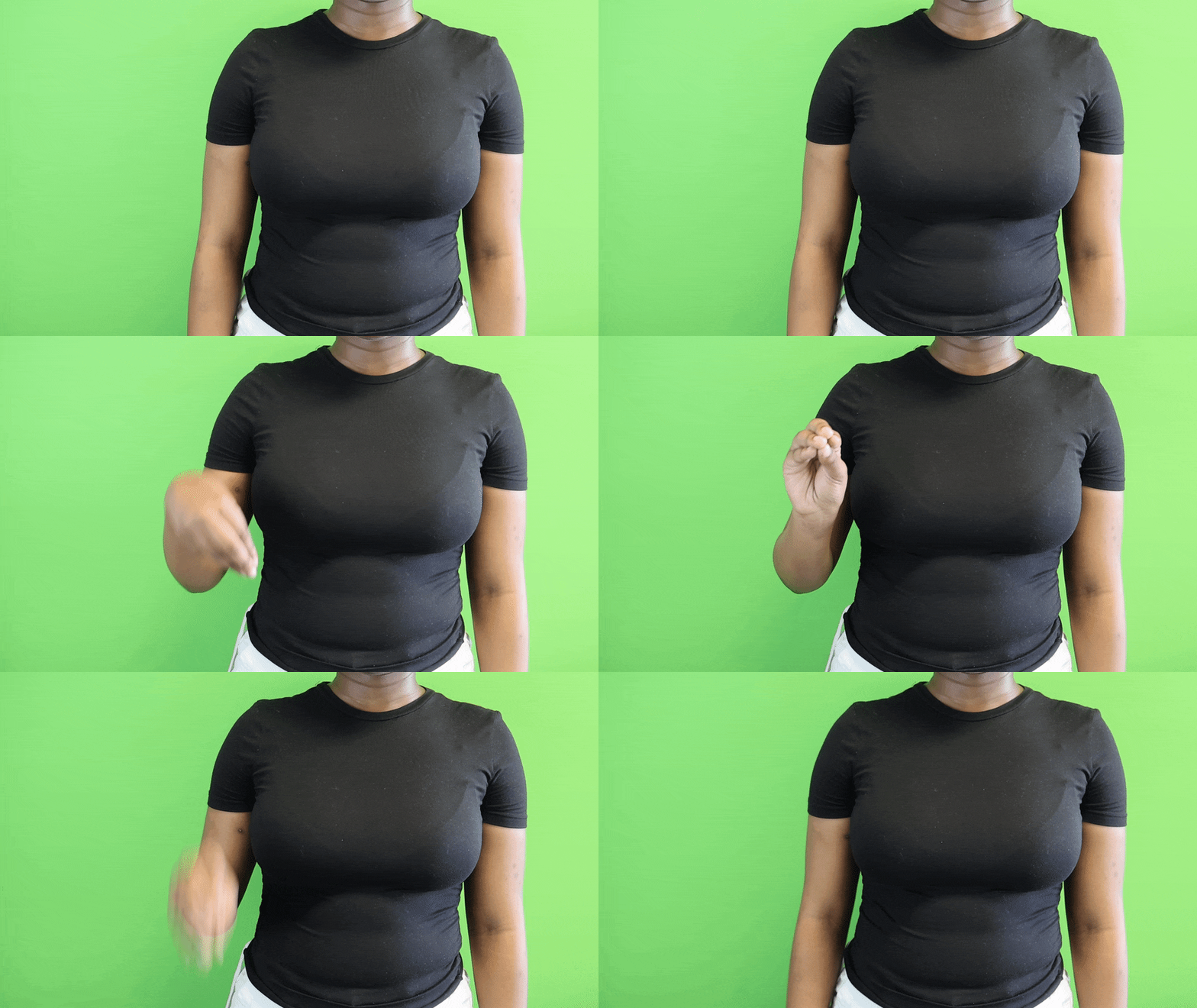 |
||
| 15= Forward | 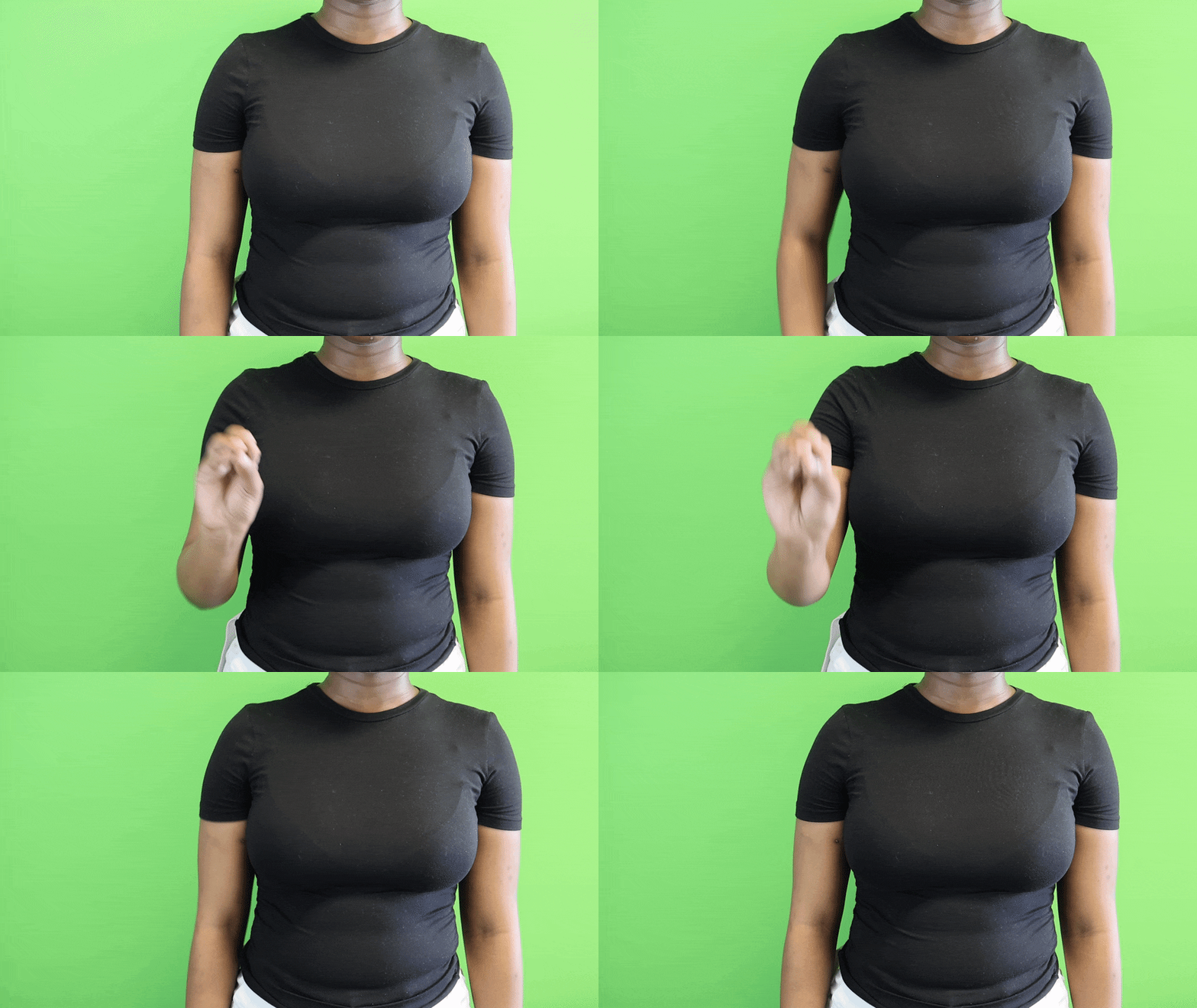 |
||
| 16= Wrist circle | 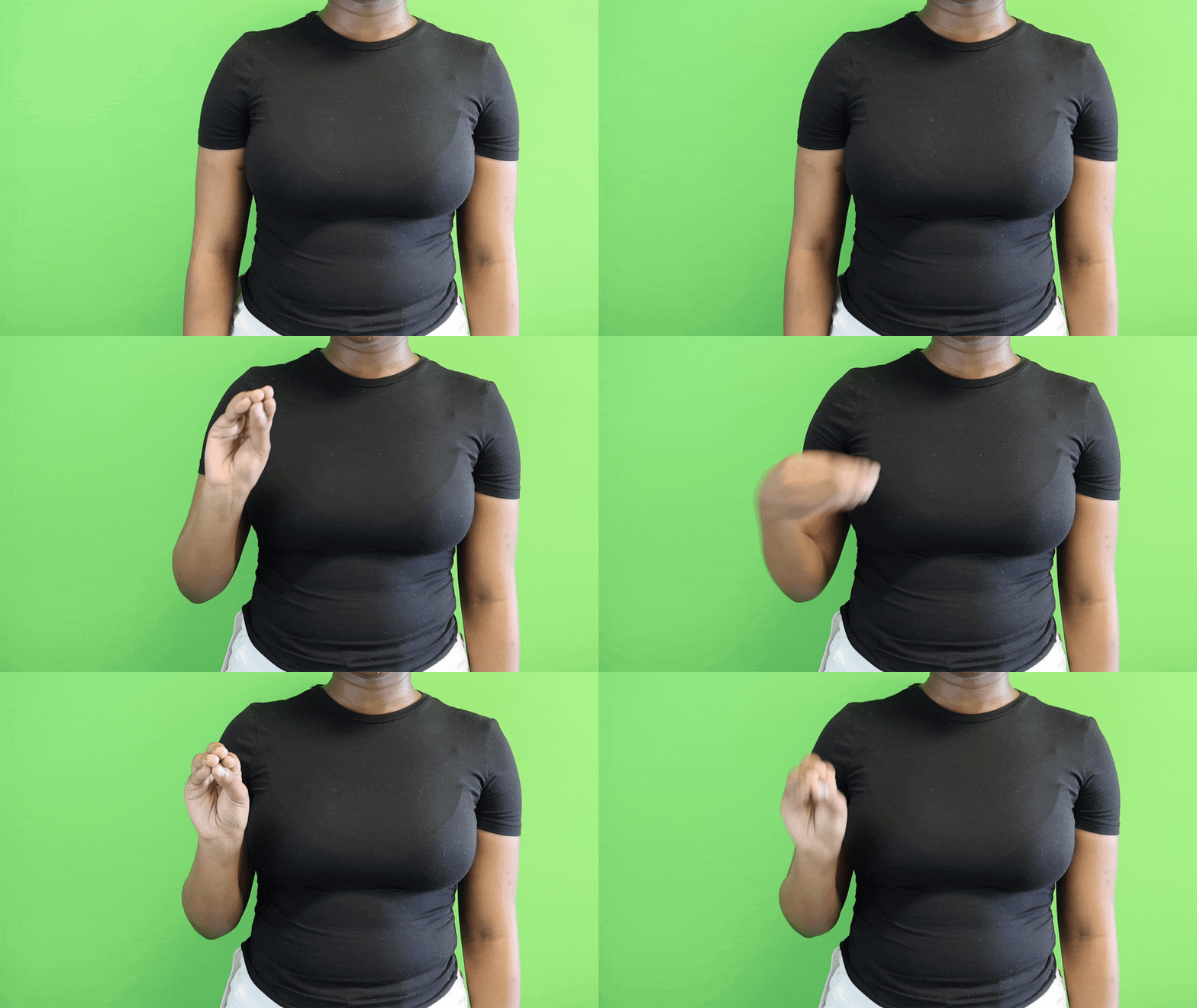 |
||
| 17= Side to side out | 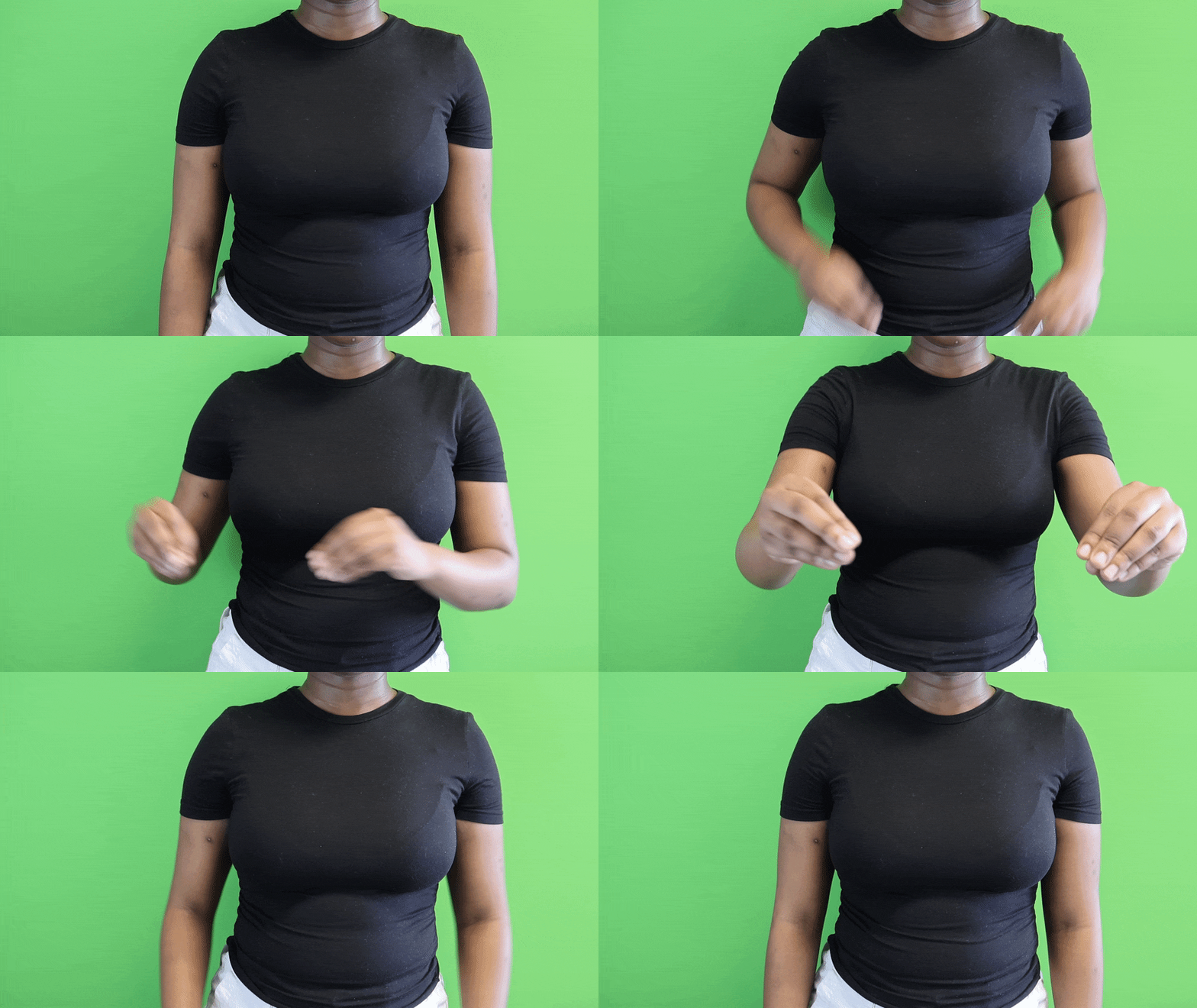 |
||
| 18= Wrist semi-circle | 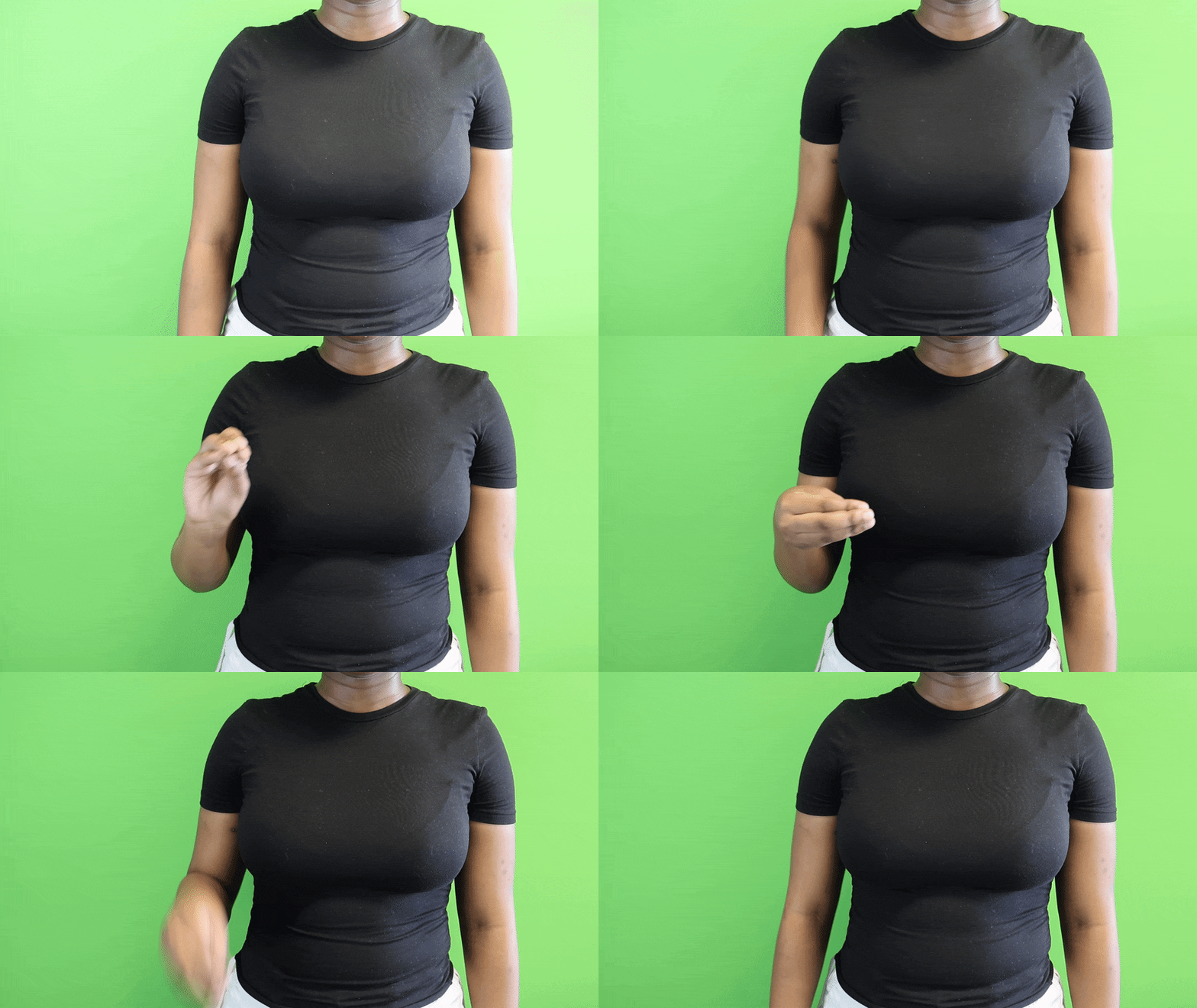 |
||
| 19= Wrist flick up | 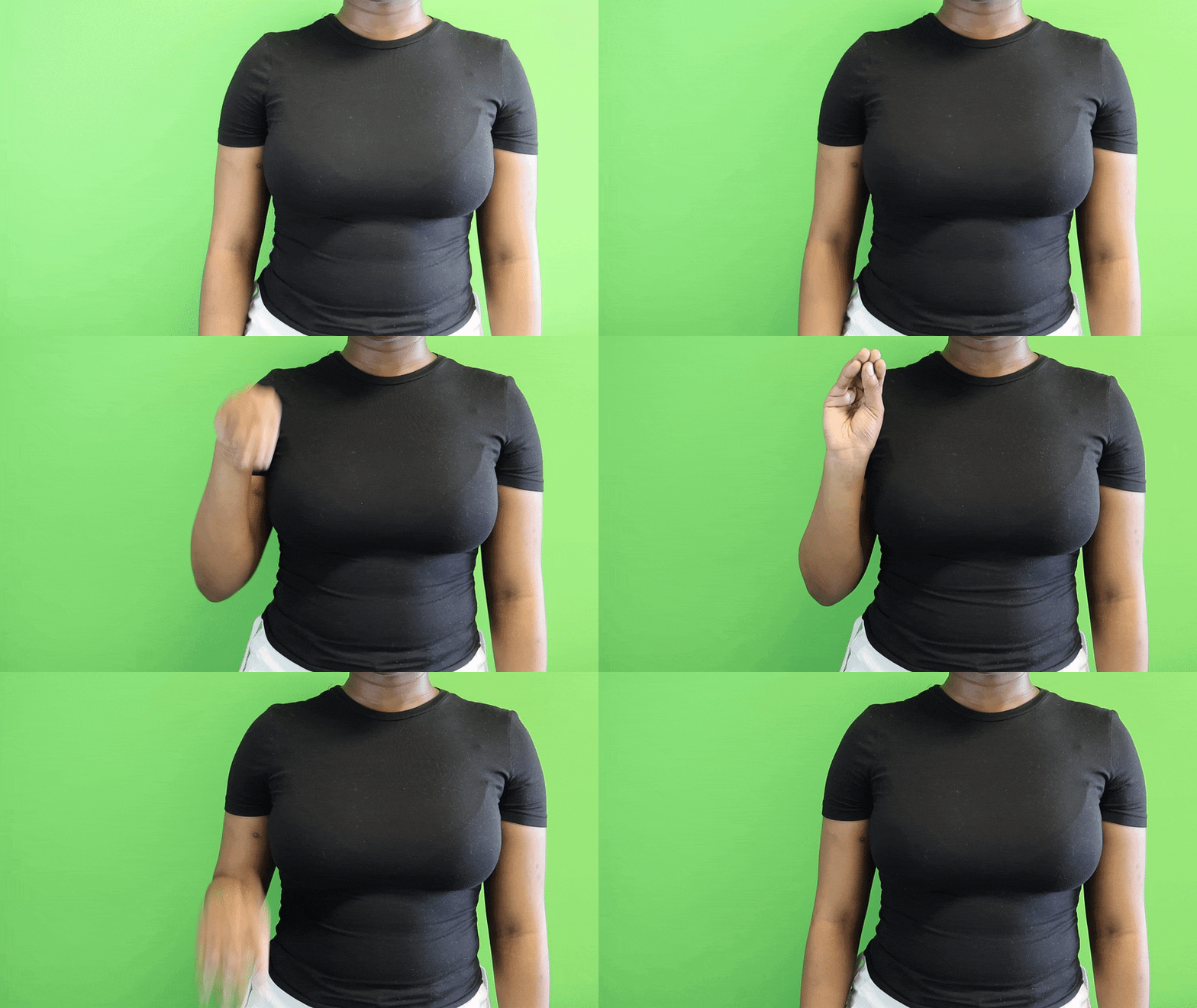 |
||
| 20= Thumb and index finger flick to the side | 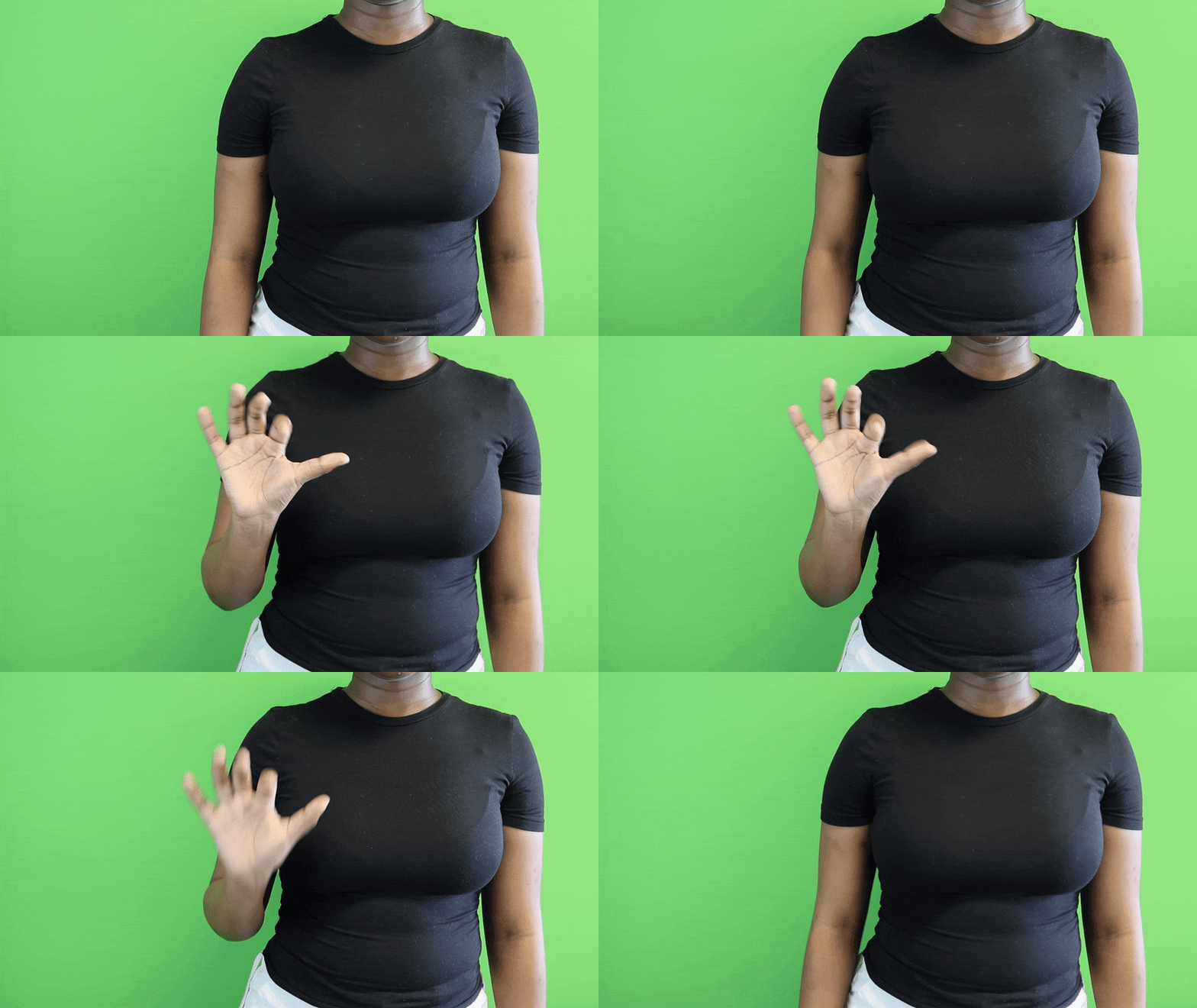 |
||
| 21= Swipe back | 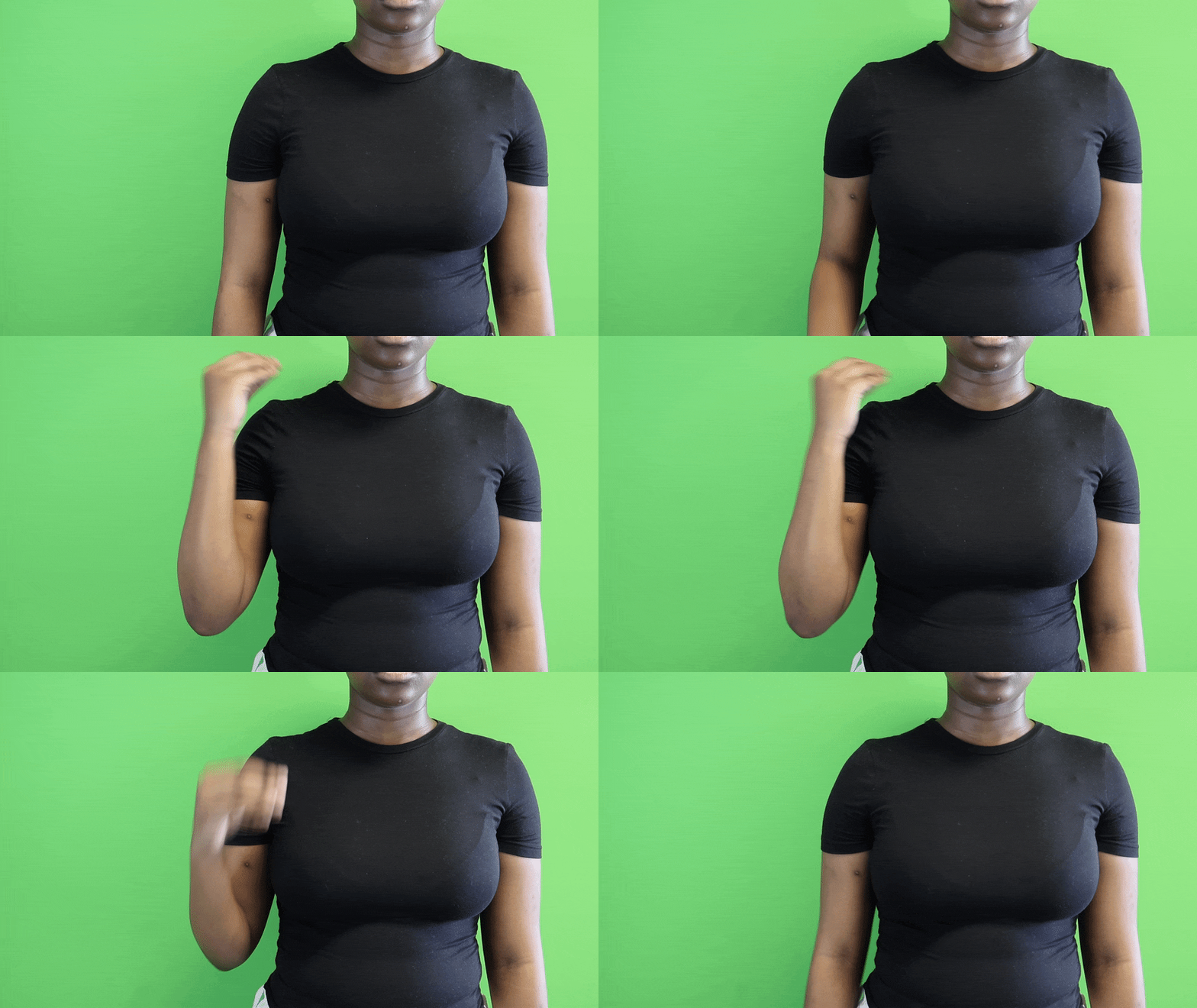 |
||
| 22= Pick up and drop | 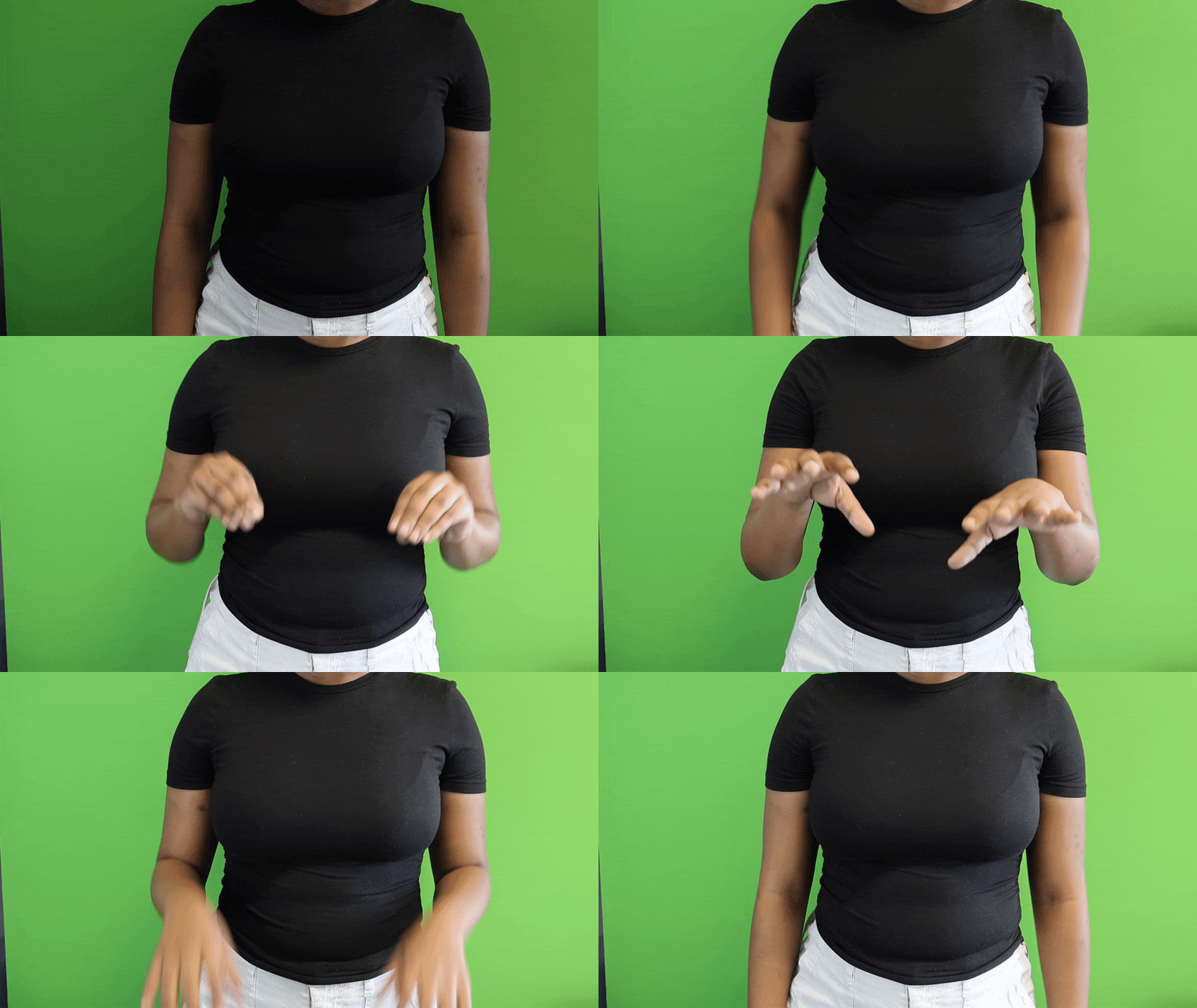 |
||
| 23= Shake out | 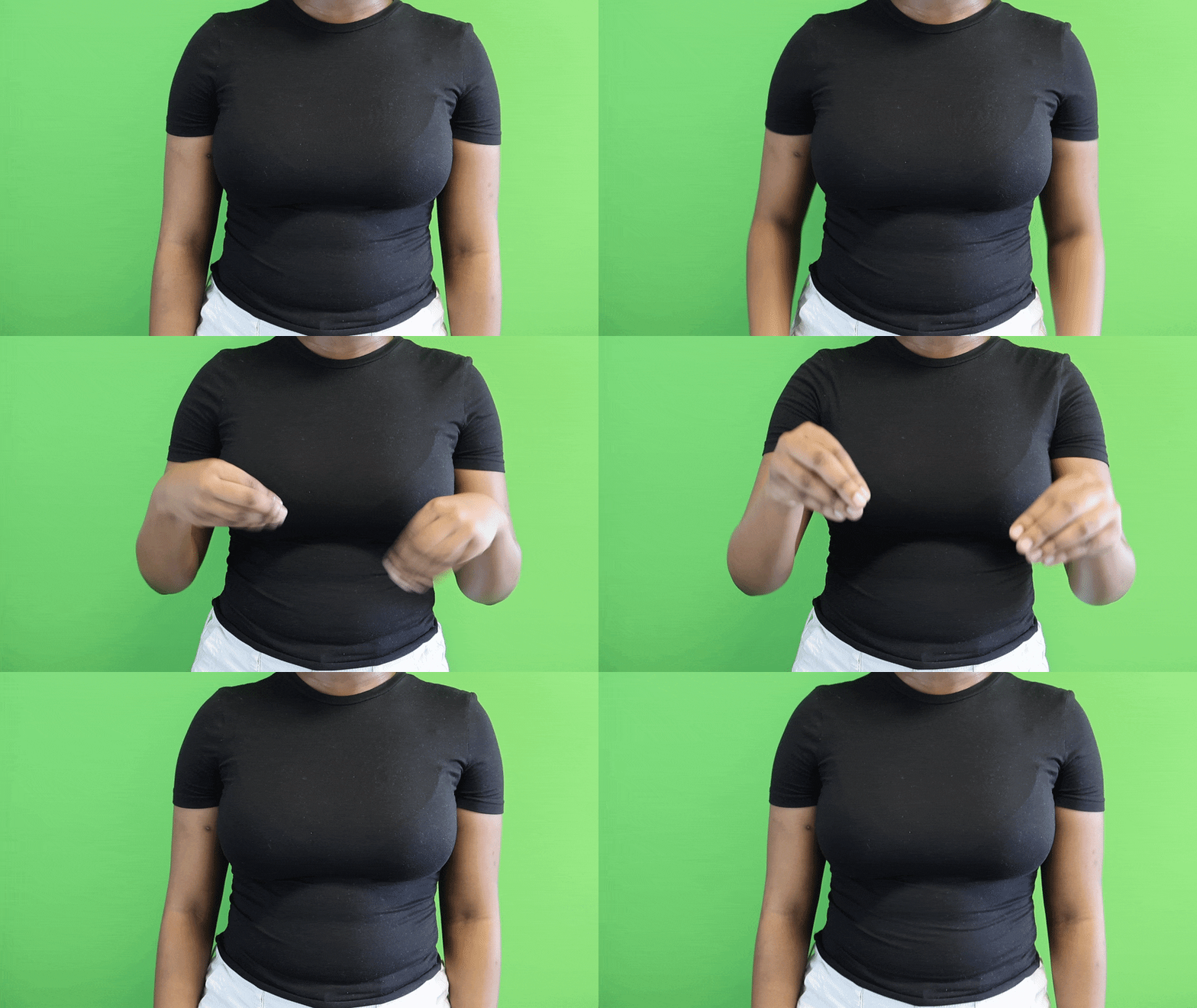 |
||
| 24= Wrist flick in | 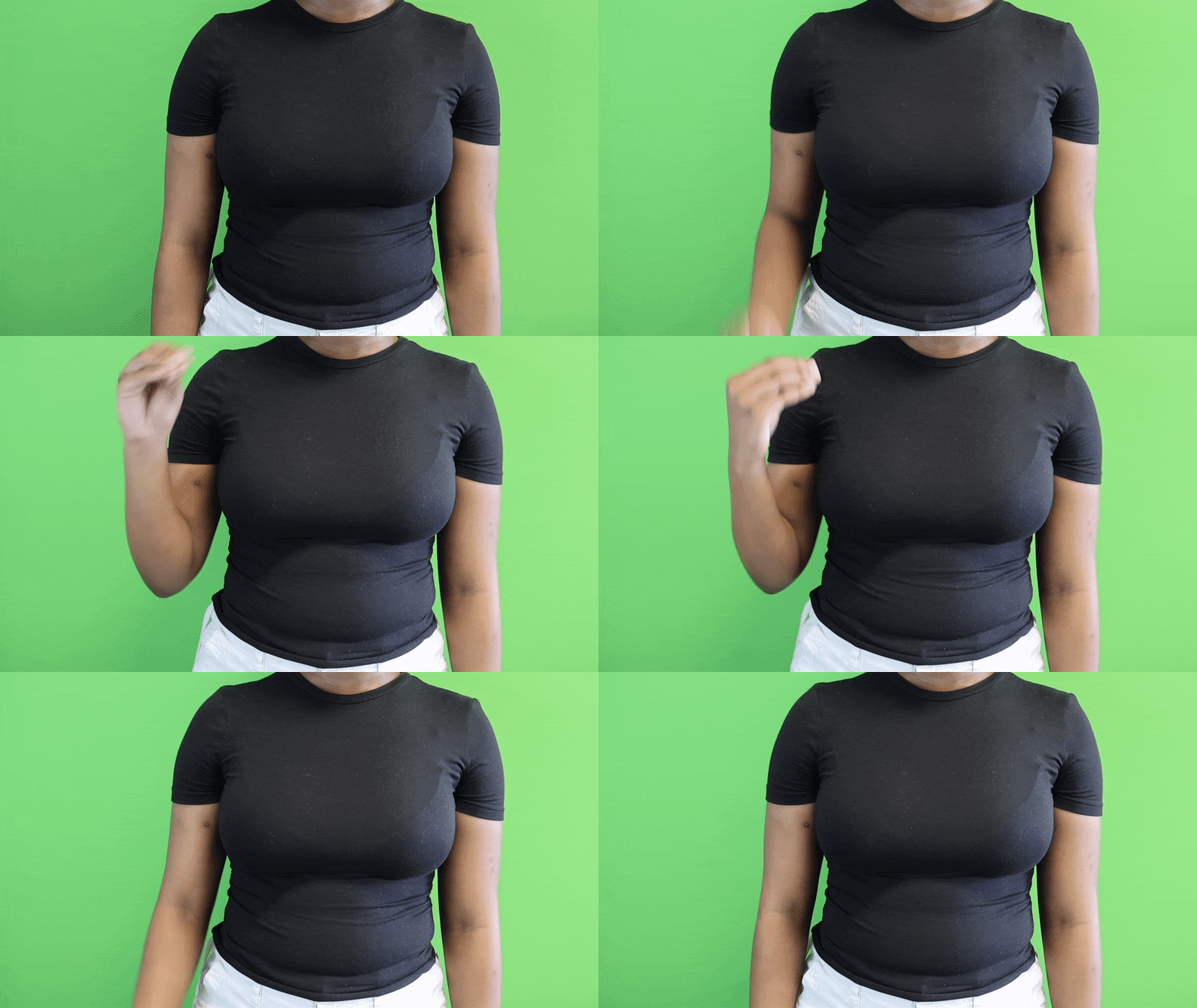 |
||
| 25= Zigzag in | 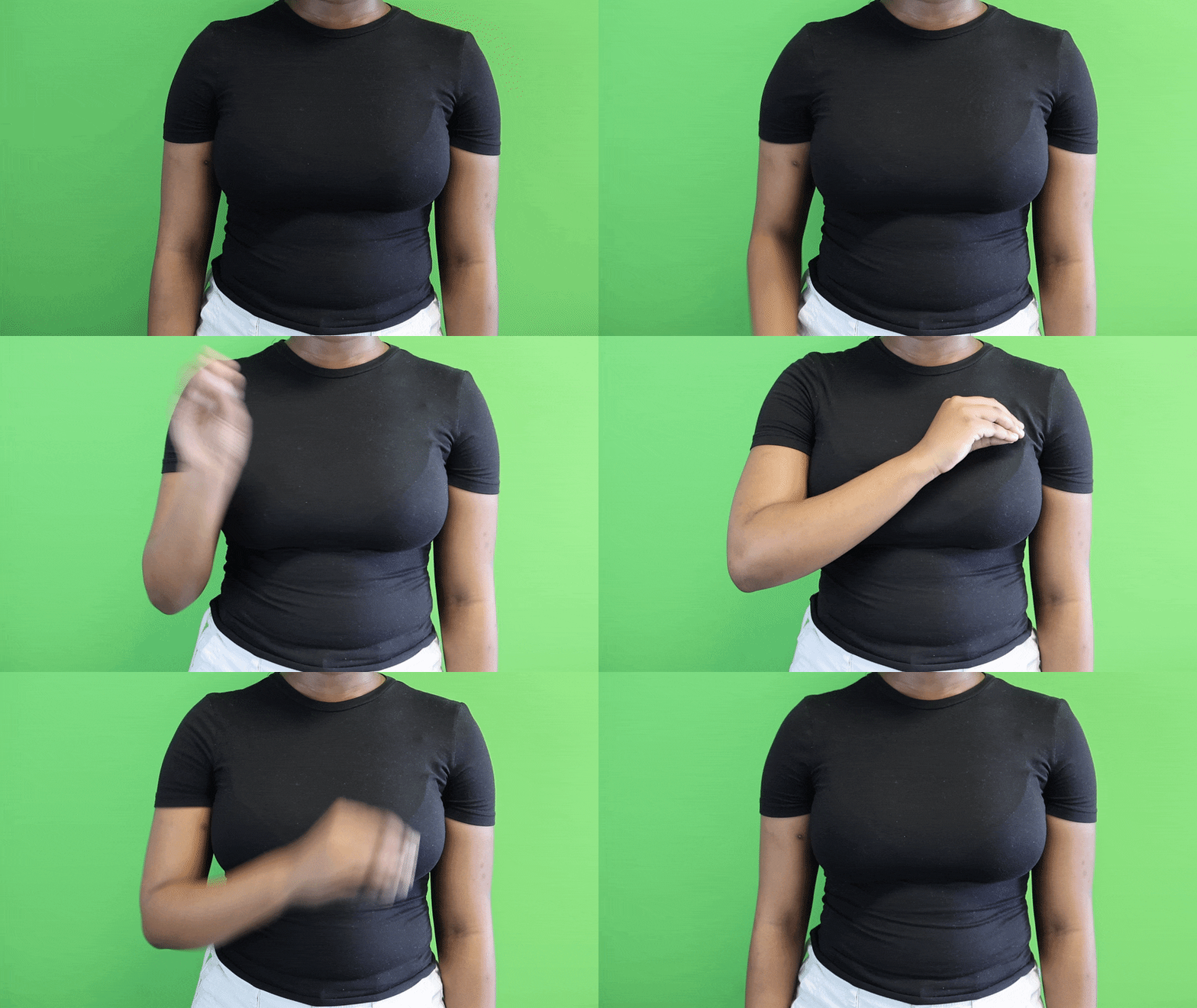 |
||
| 26= Wrist flick down | 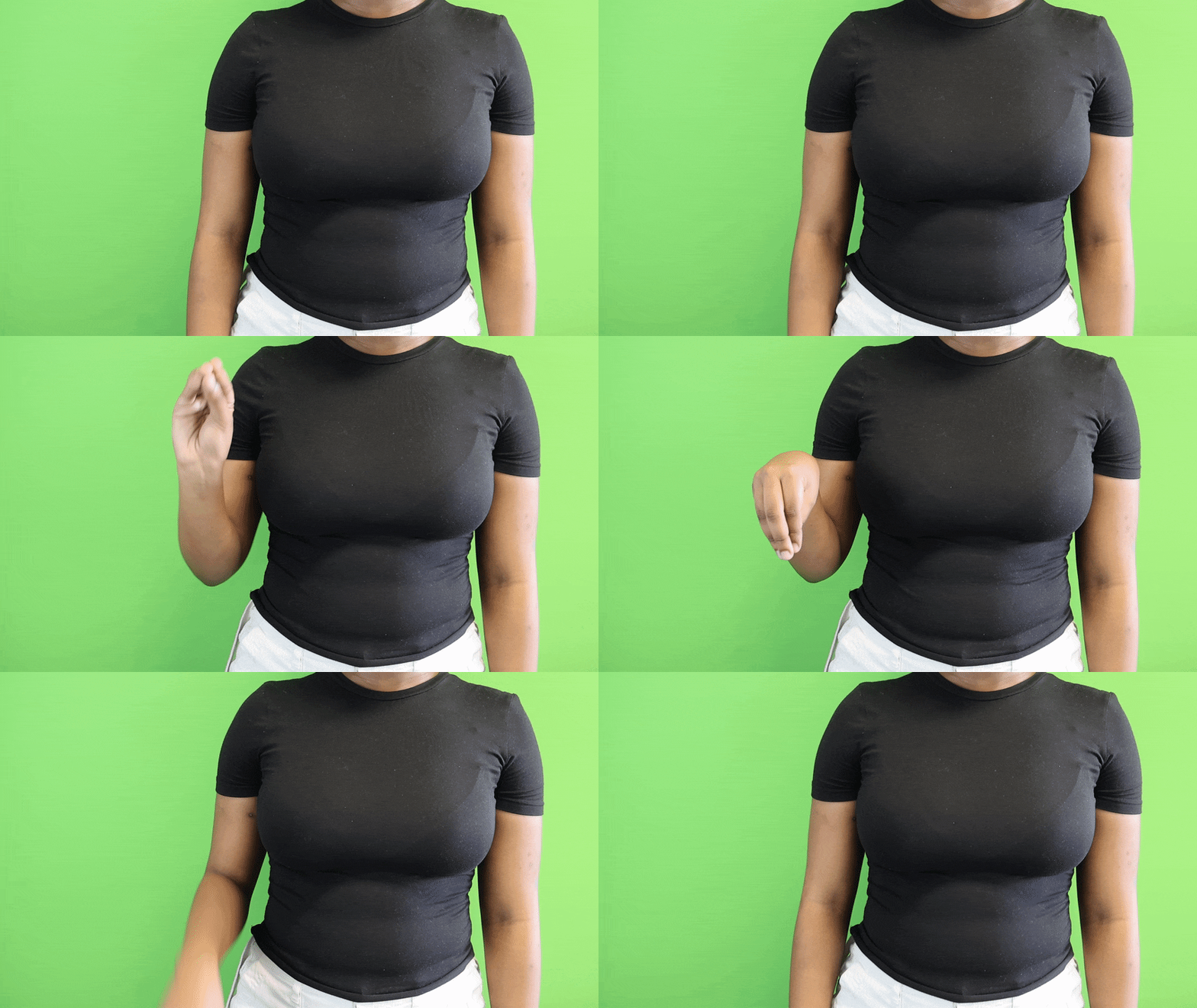 |
||
| 27= Swipe forwards | 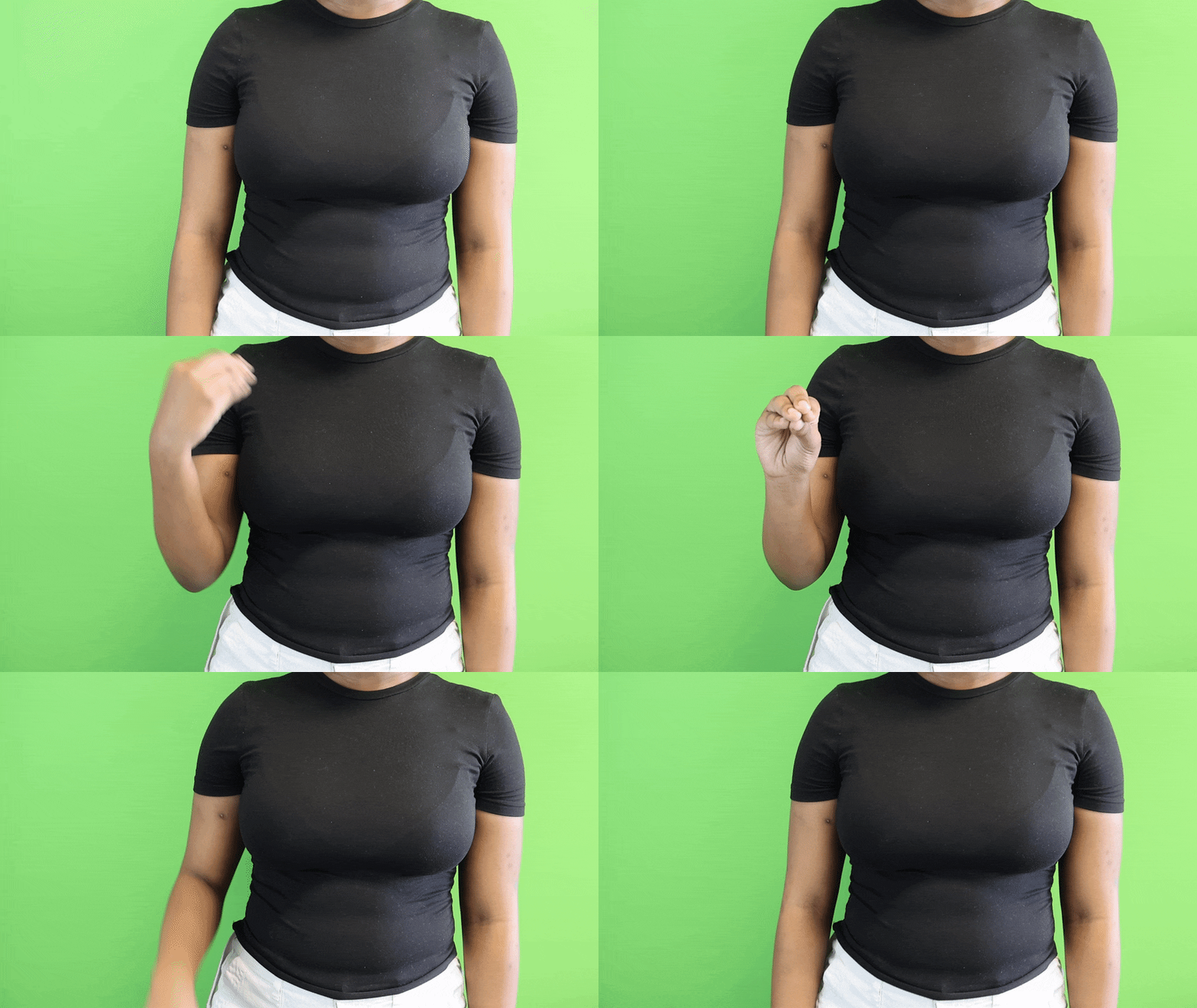 |
||
| 28= Fingers flick | 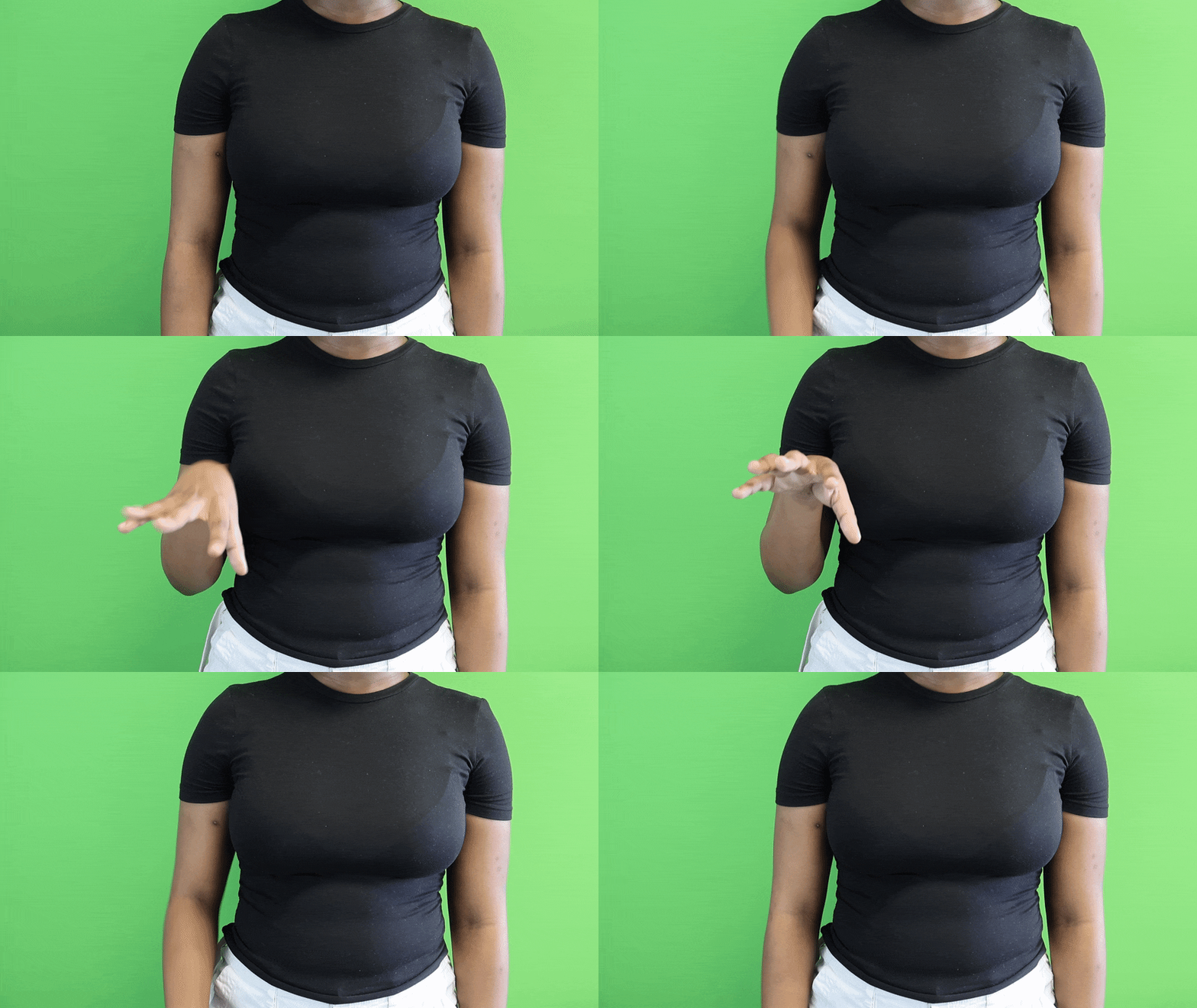 |
||
| 29= Fingers wiggling | 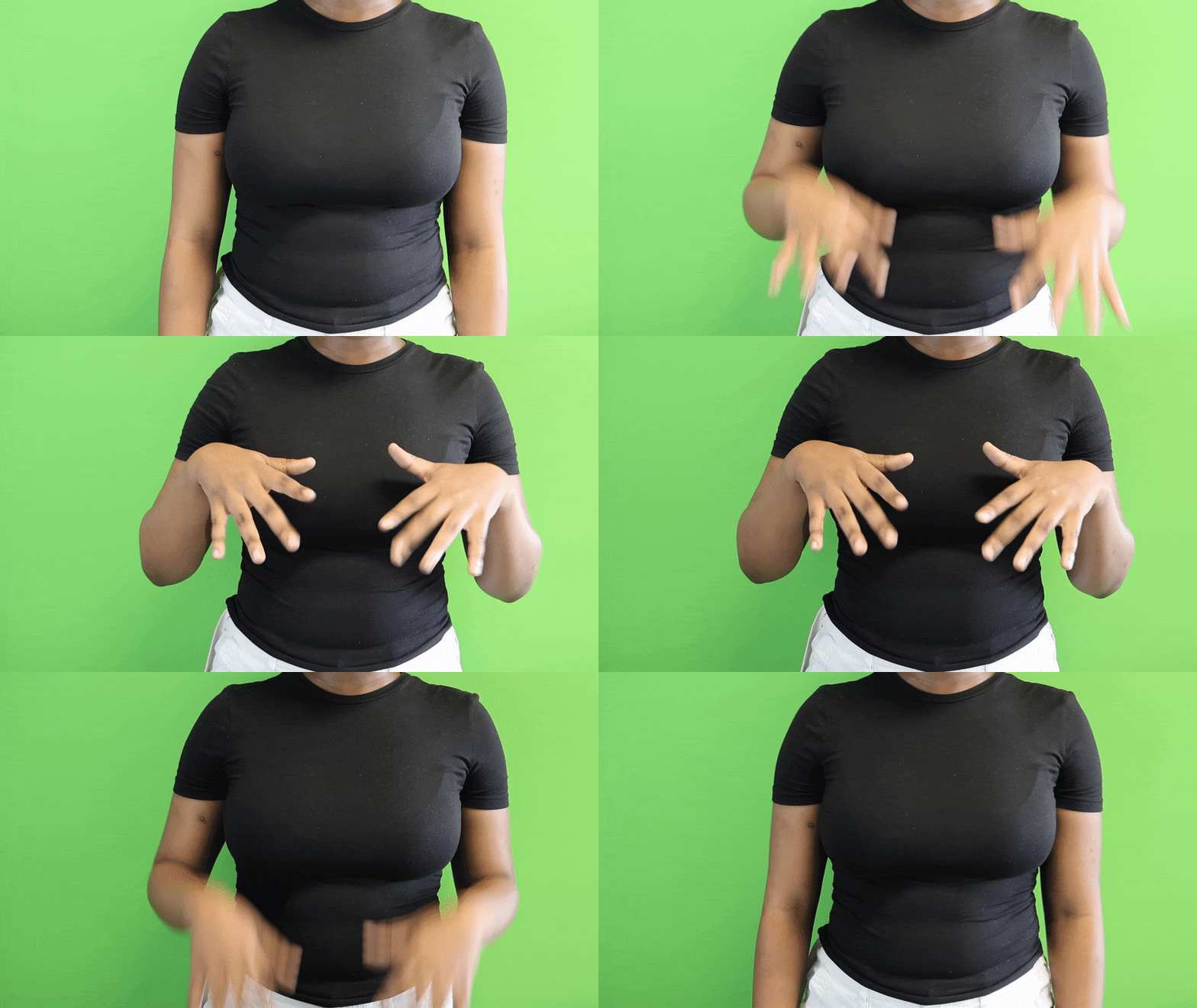 |
||
| 30= Pinch | 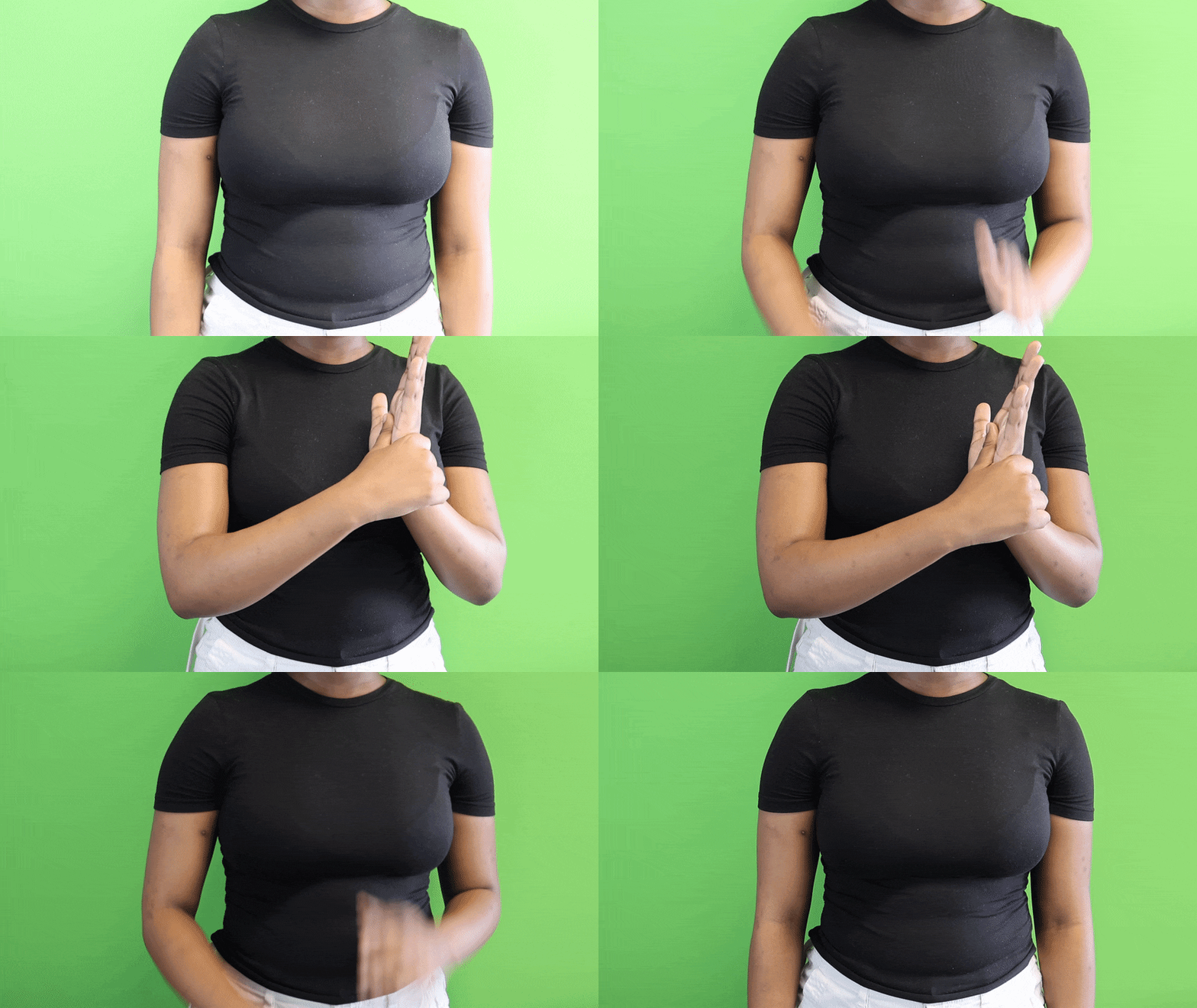 |
||
| 31= In, up to the side | 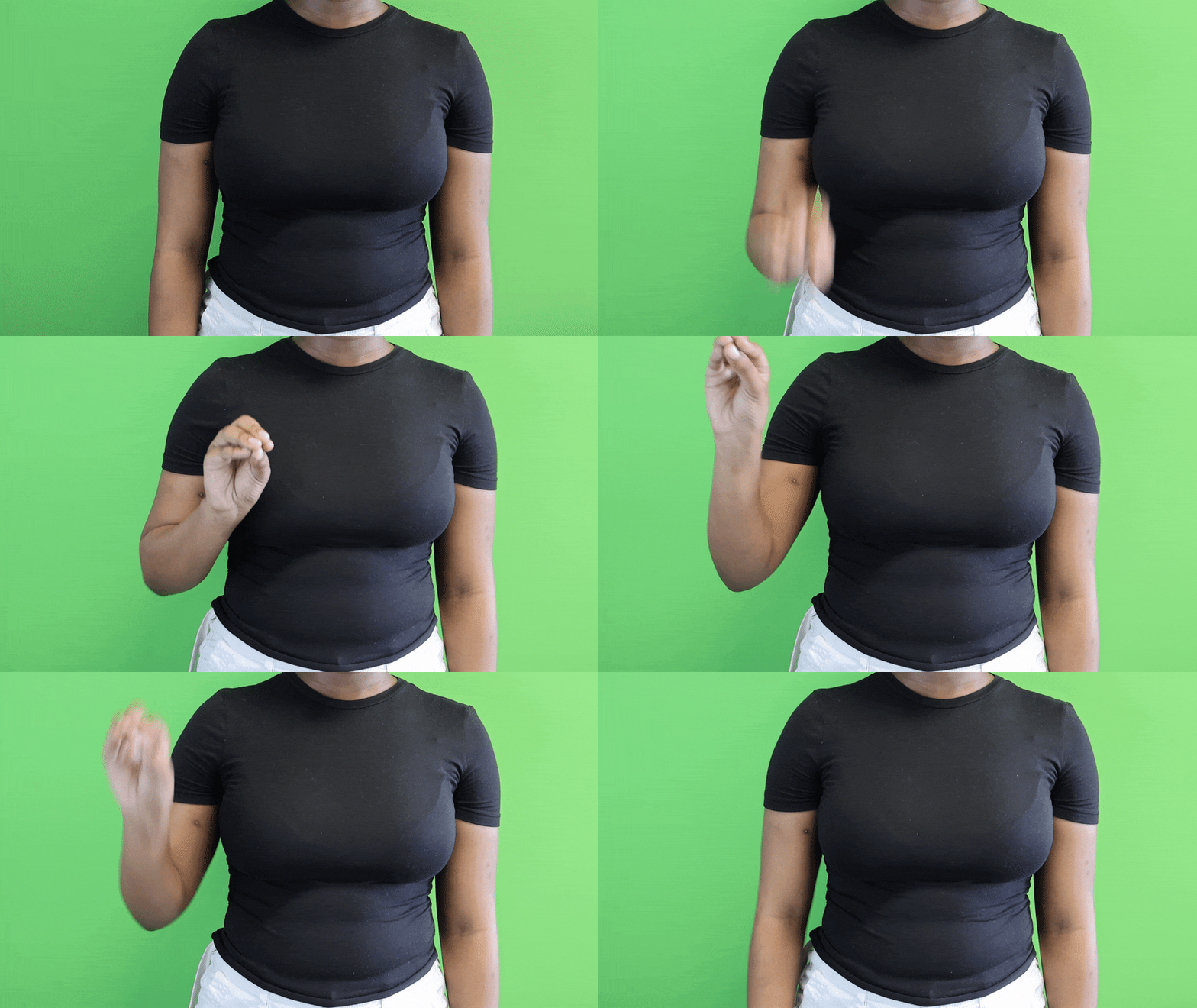 |
||
| 32= Swipe to the side | 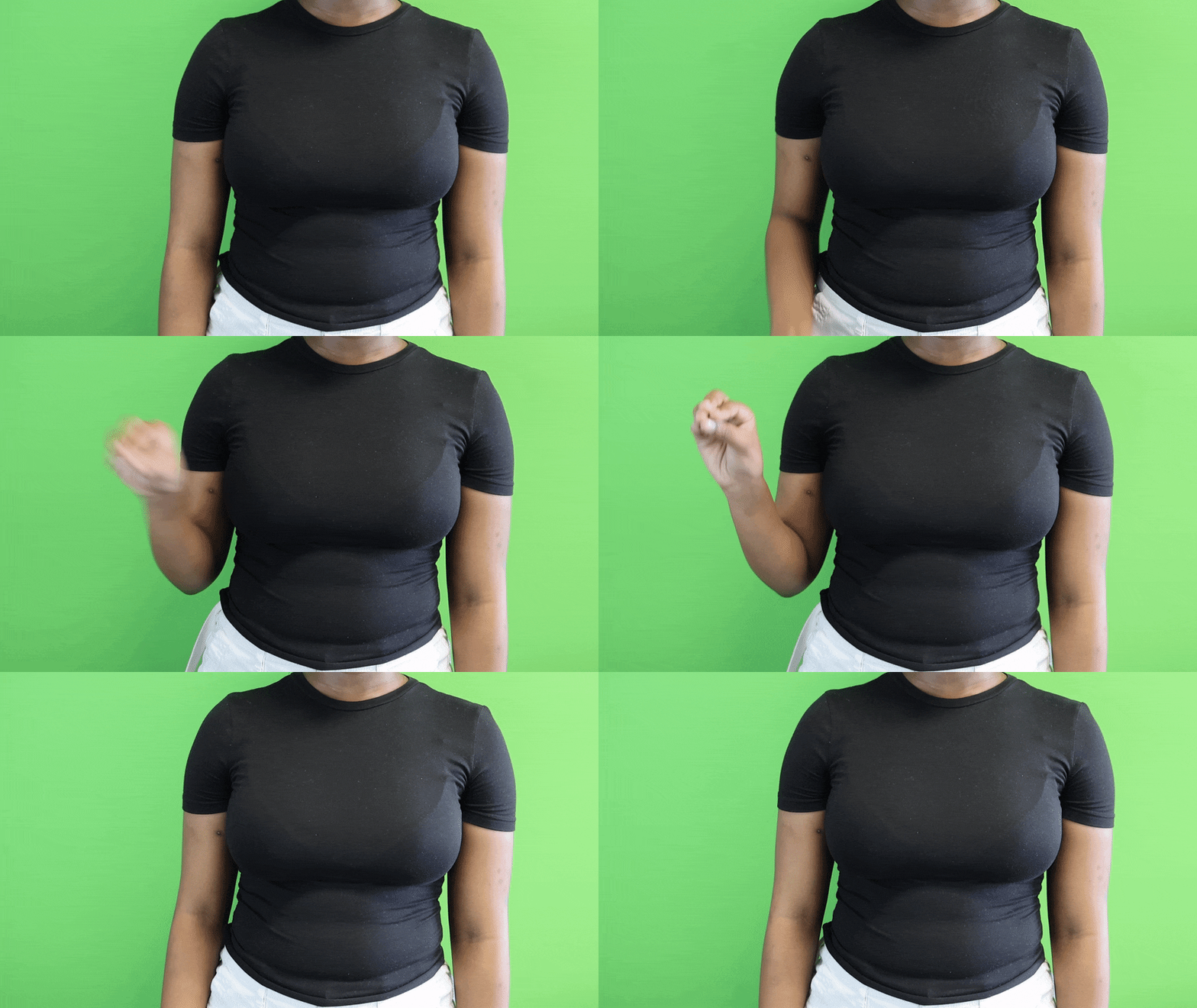 |
||
| 33= Shake out to the side | 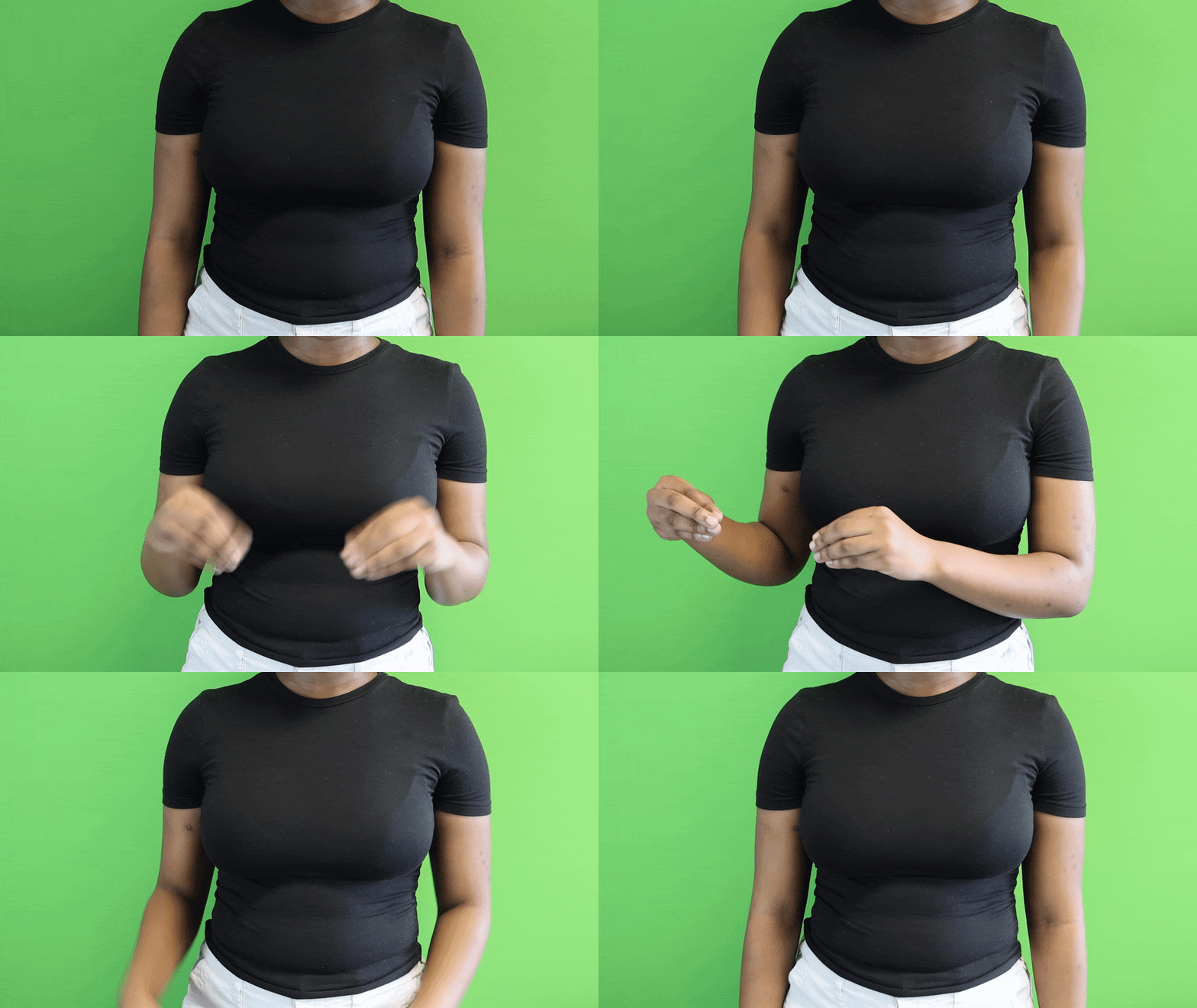 |
||
| 34= Swipe down | 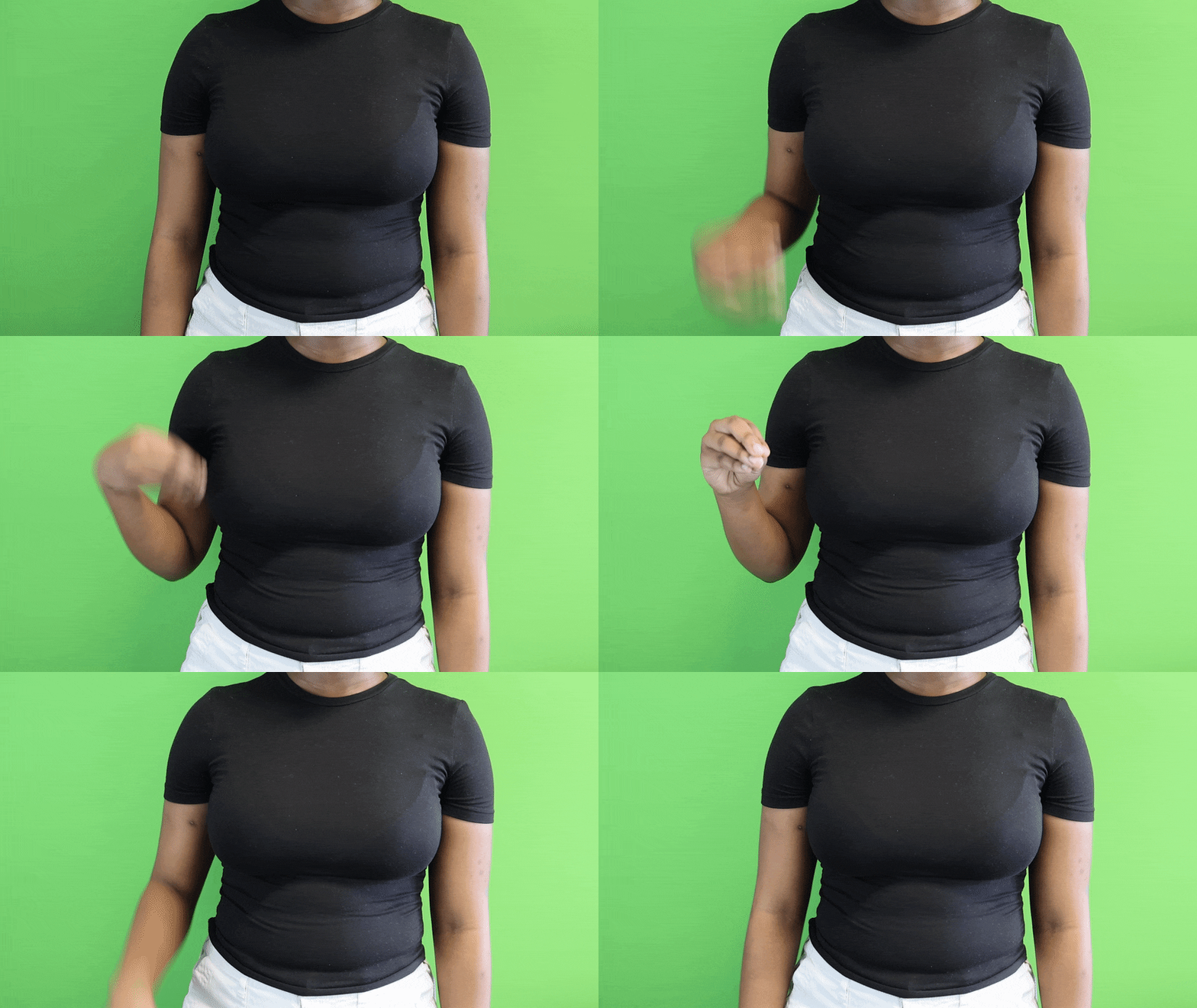 |
||
| 35= Wrist pull towards body | 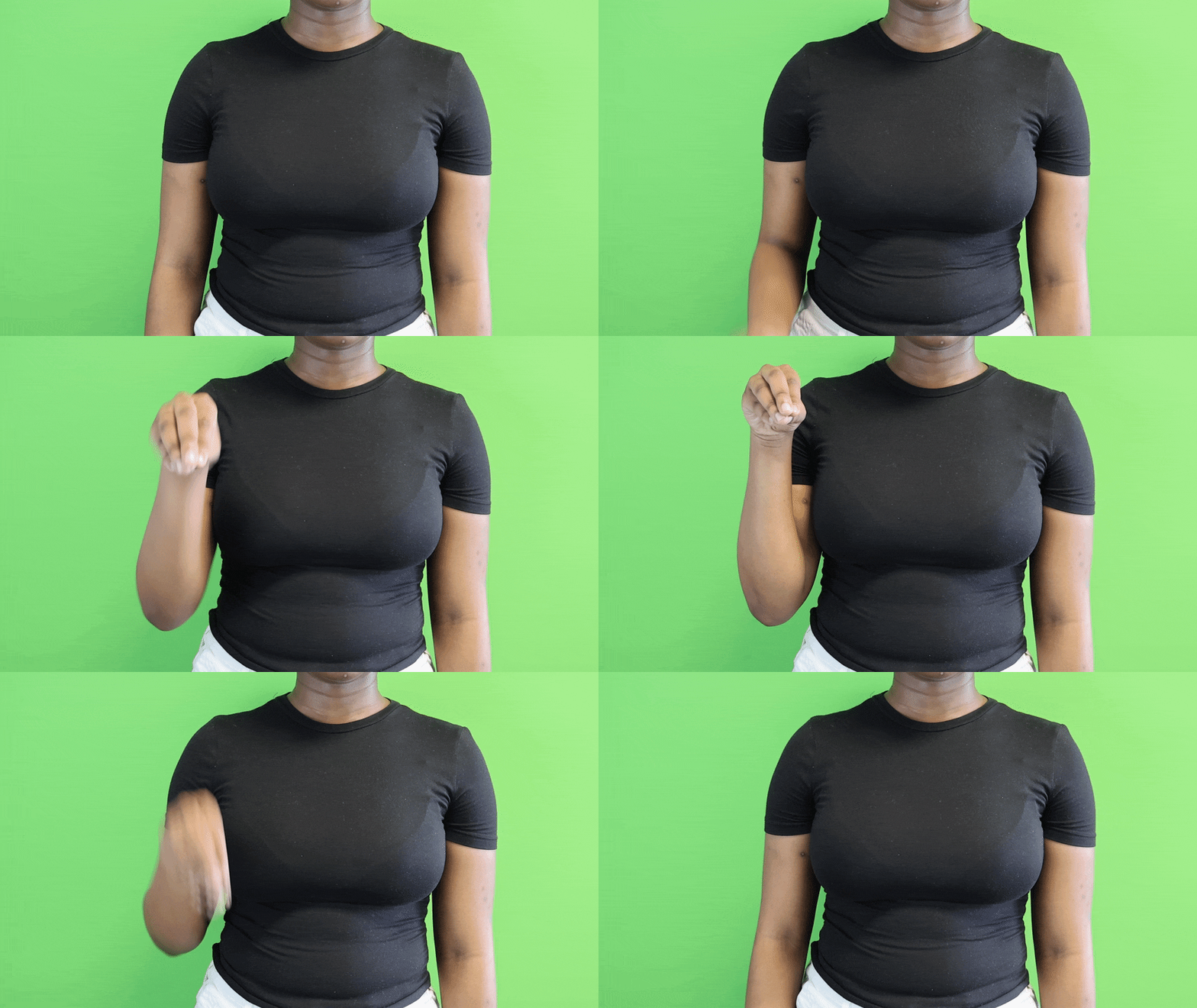 |
||
| 36= Wrist turn in | 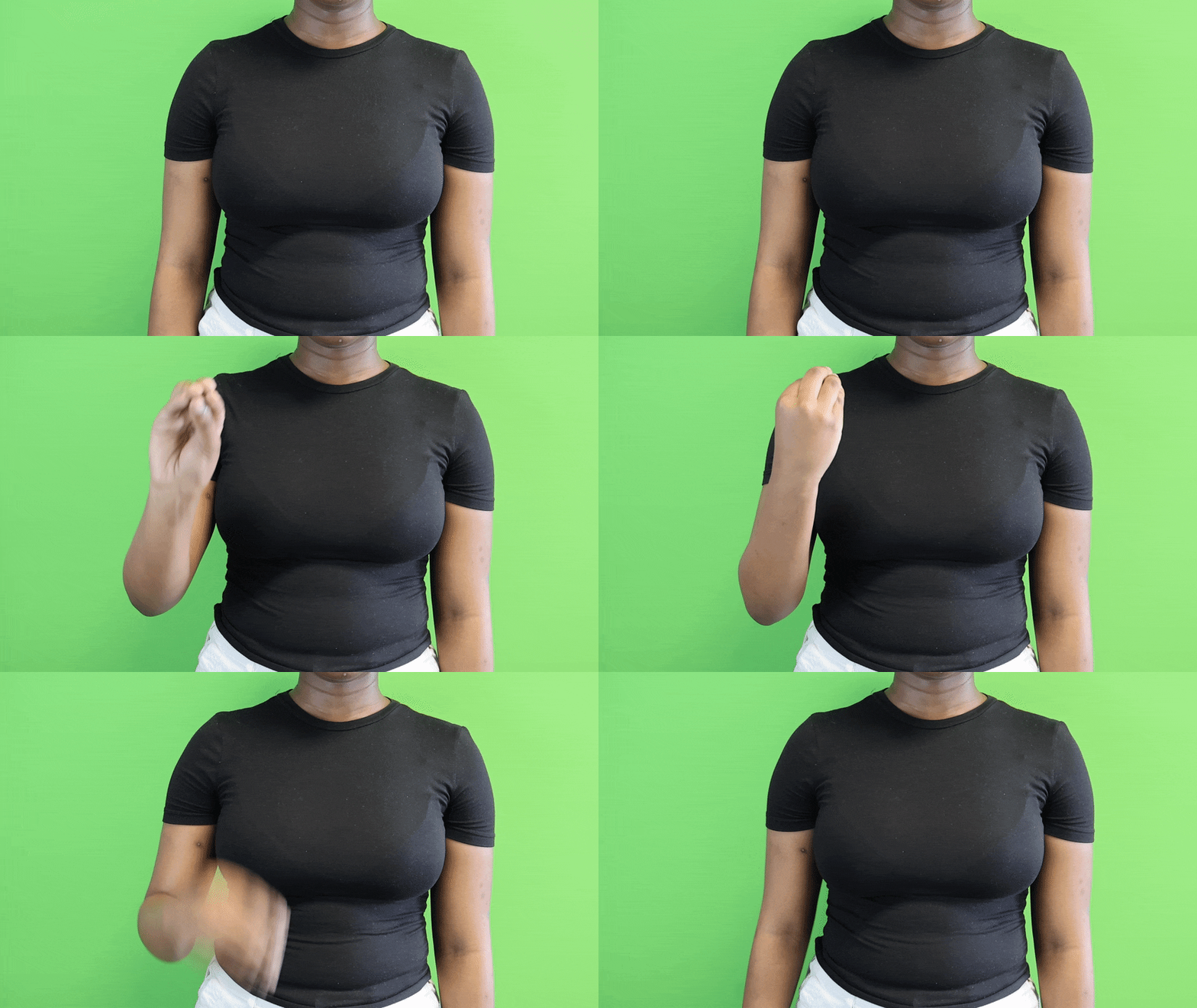 |
||
| 37= Semi-circle down | 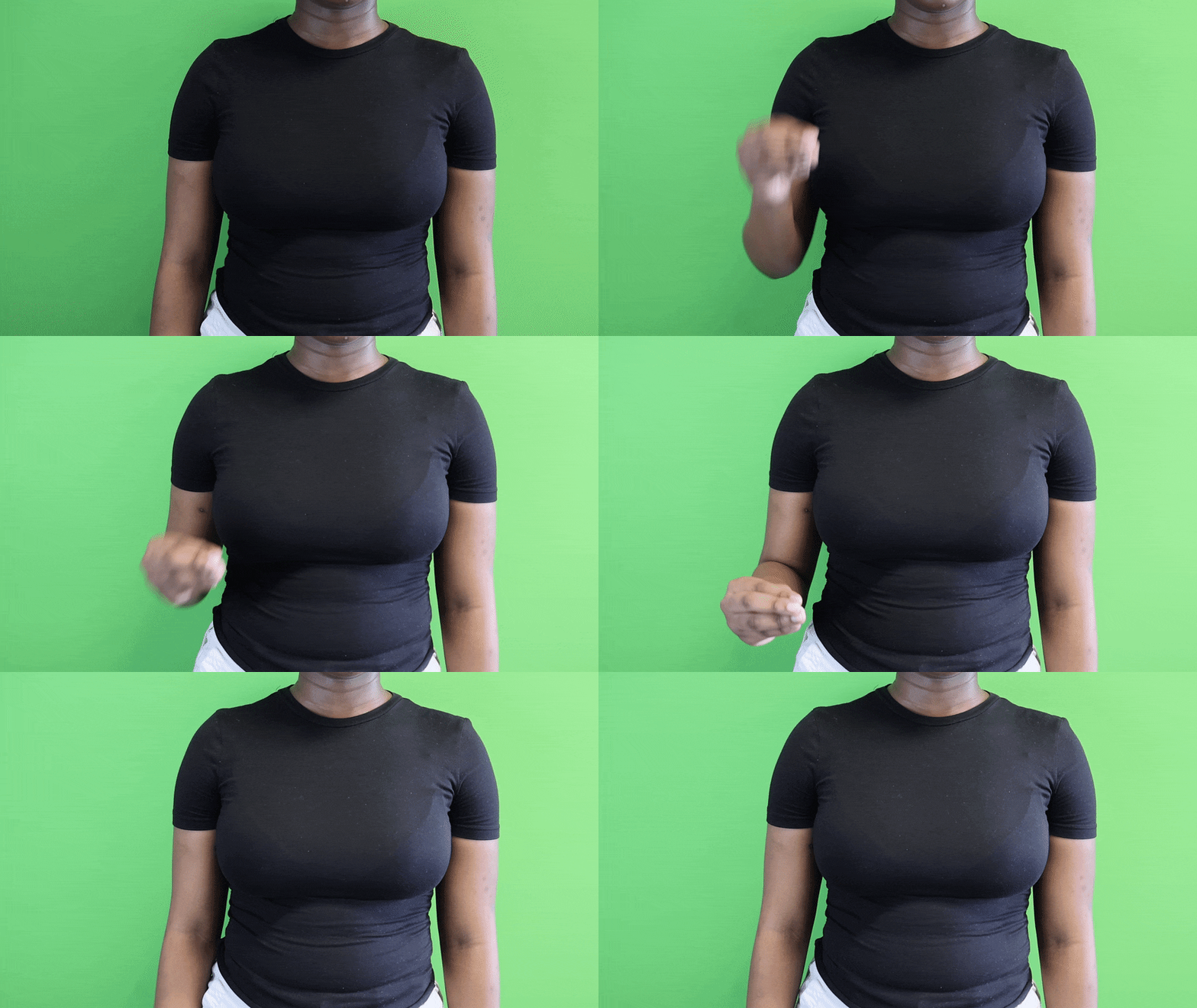 |
||
| 38= Semi-circle out | 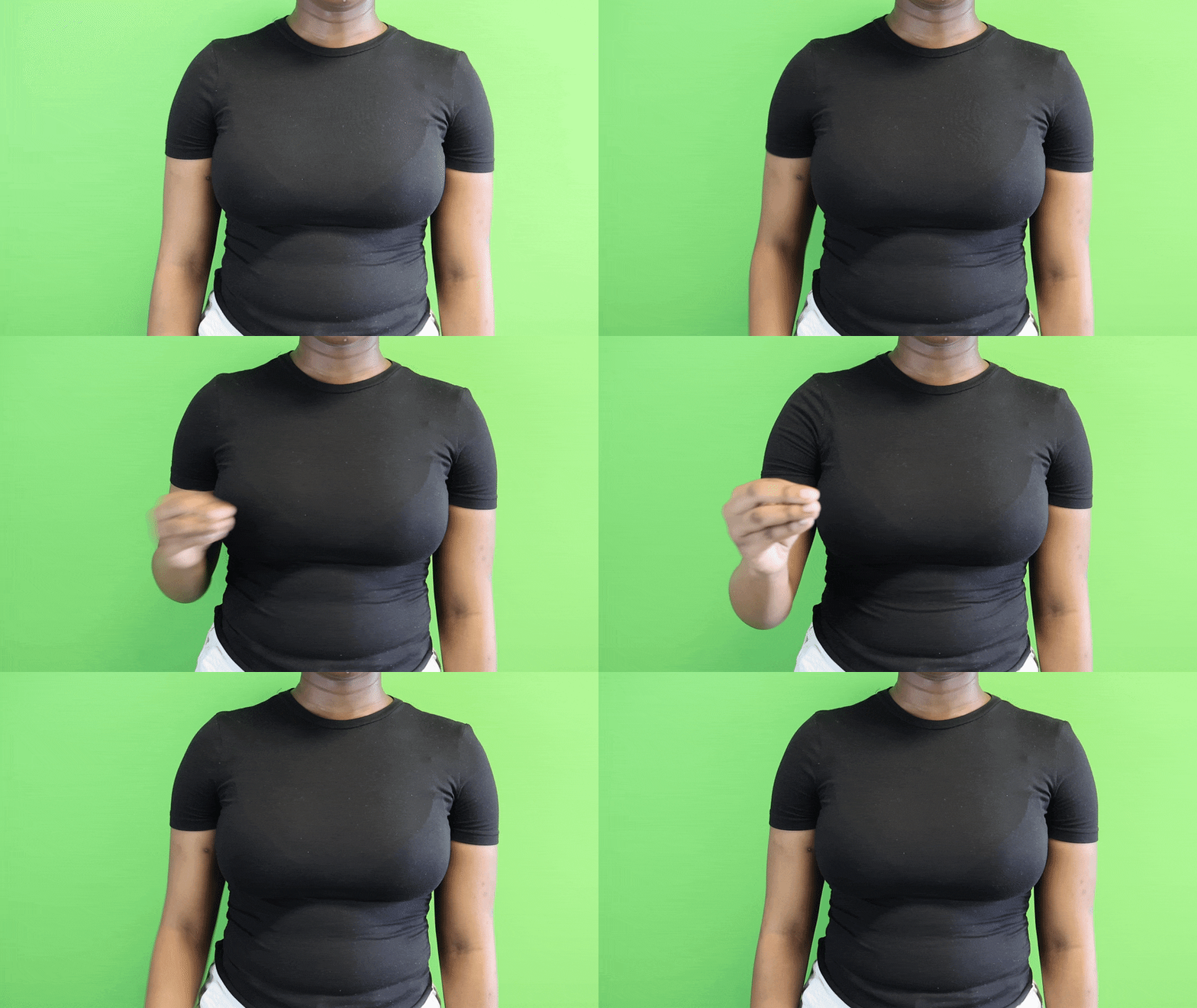 |
||
| 39= Wrist flick up, in | 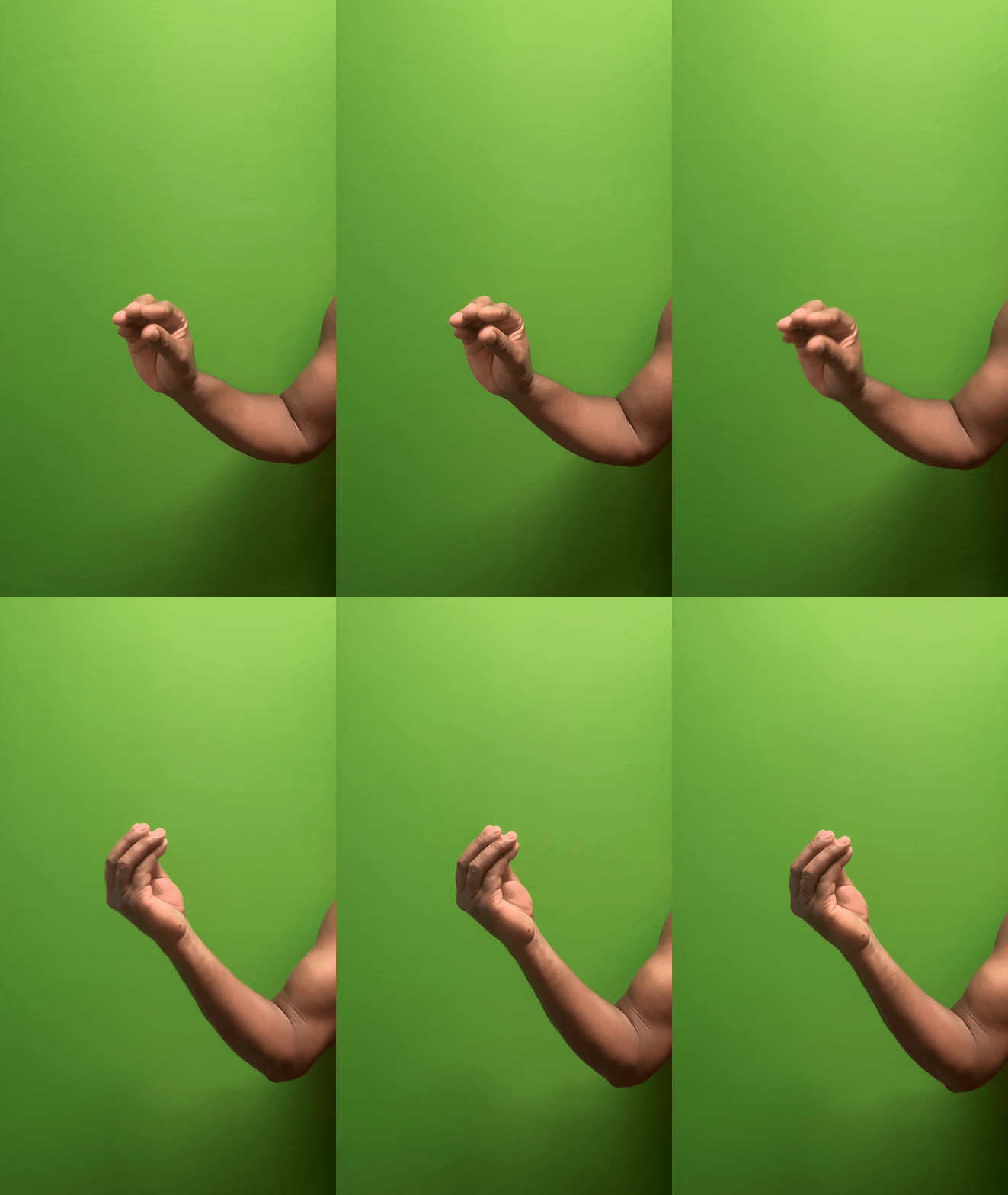 |
||
| 40= Wrist semi-circle, down and up | 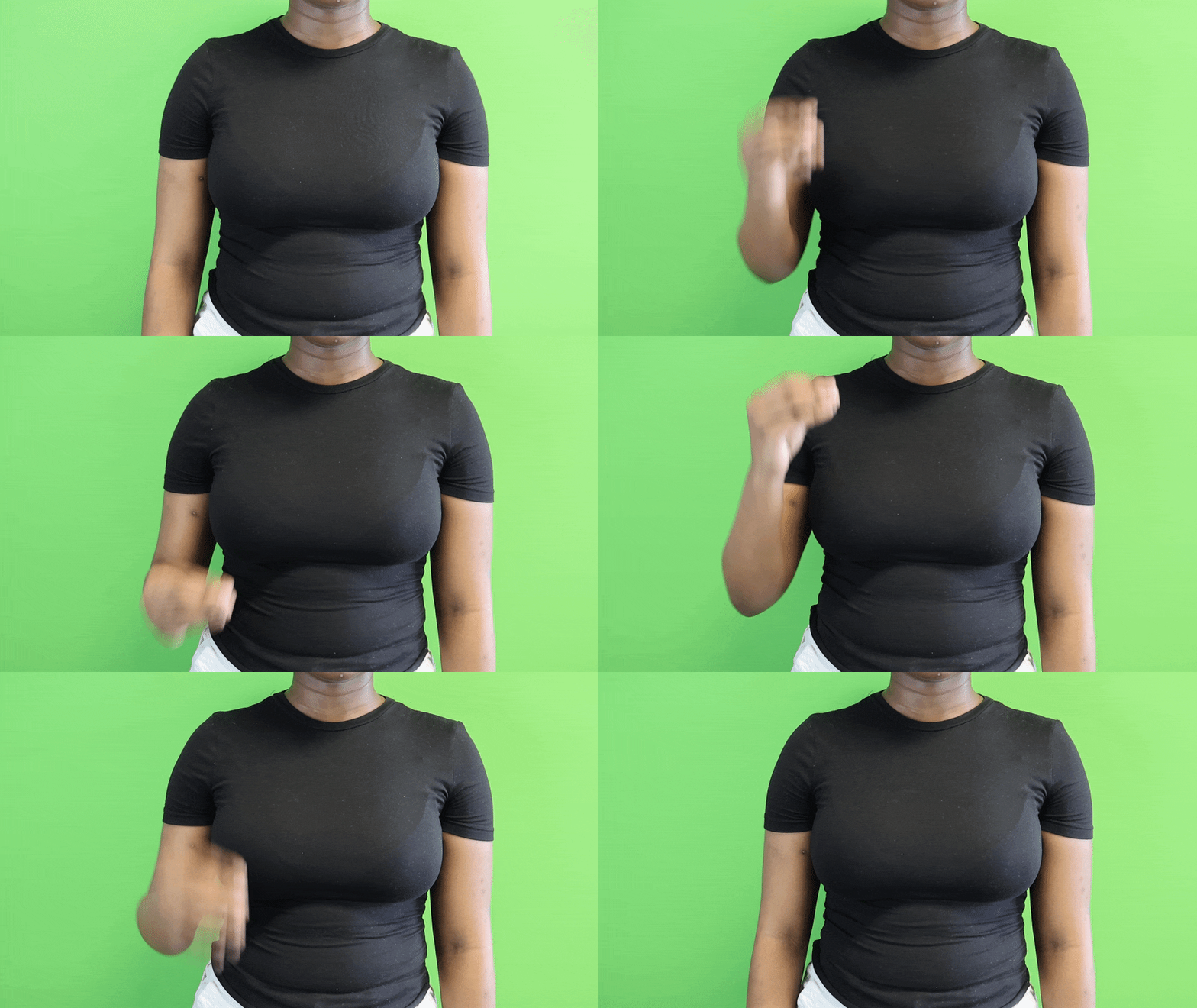 |
||
| 41= Swipe up | 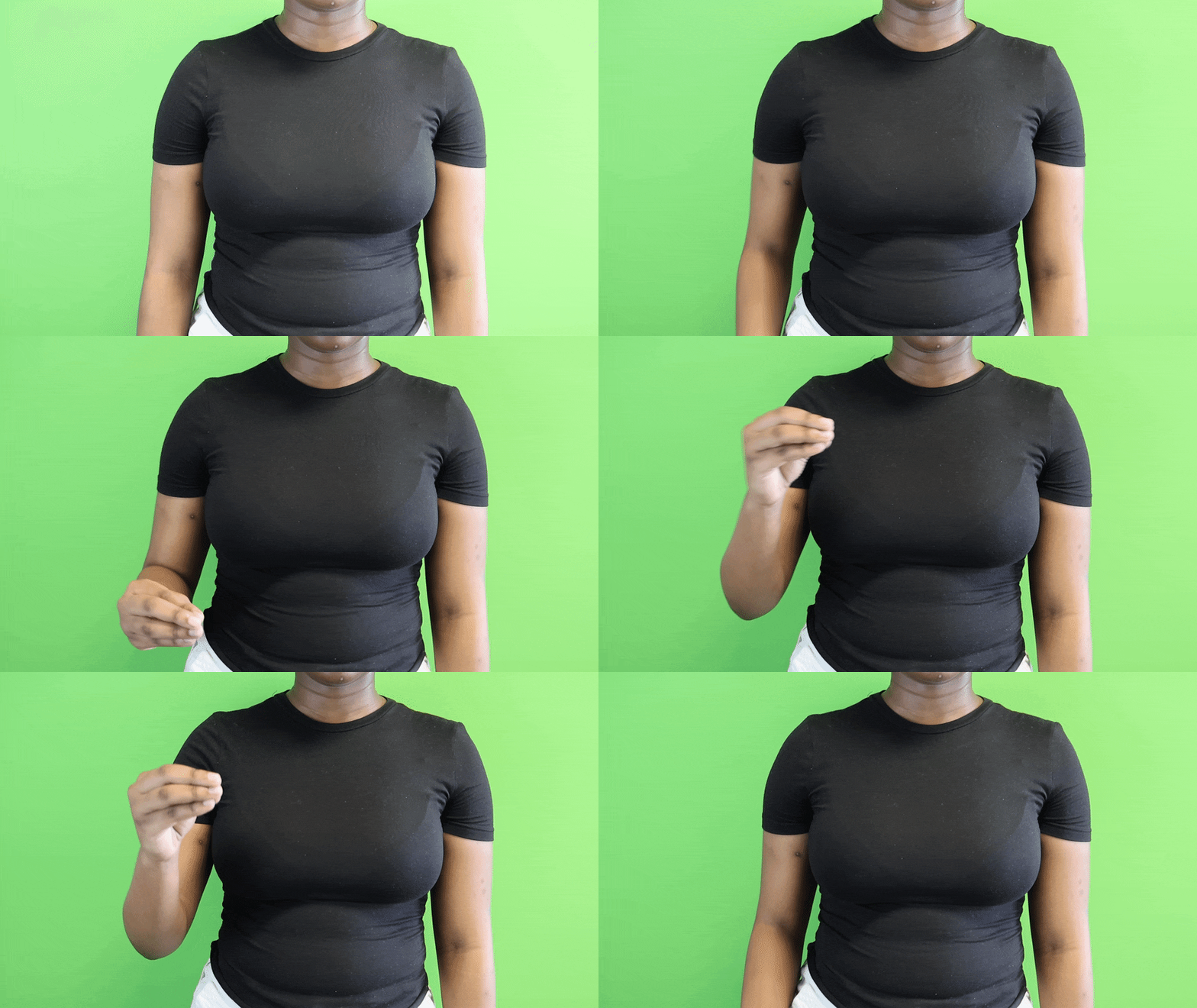 |
||
| 42= Finger bending repeatedly | 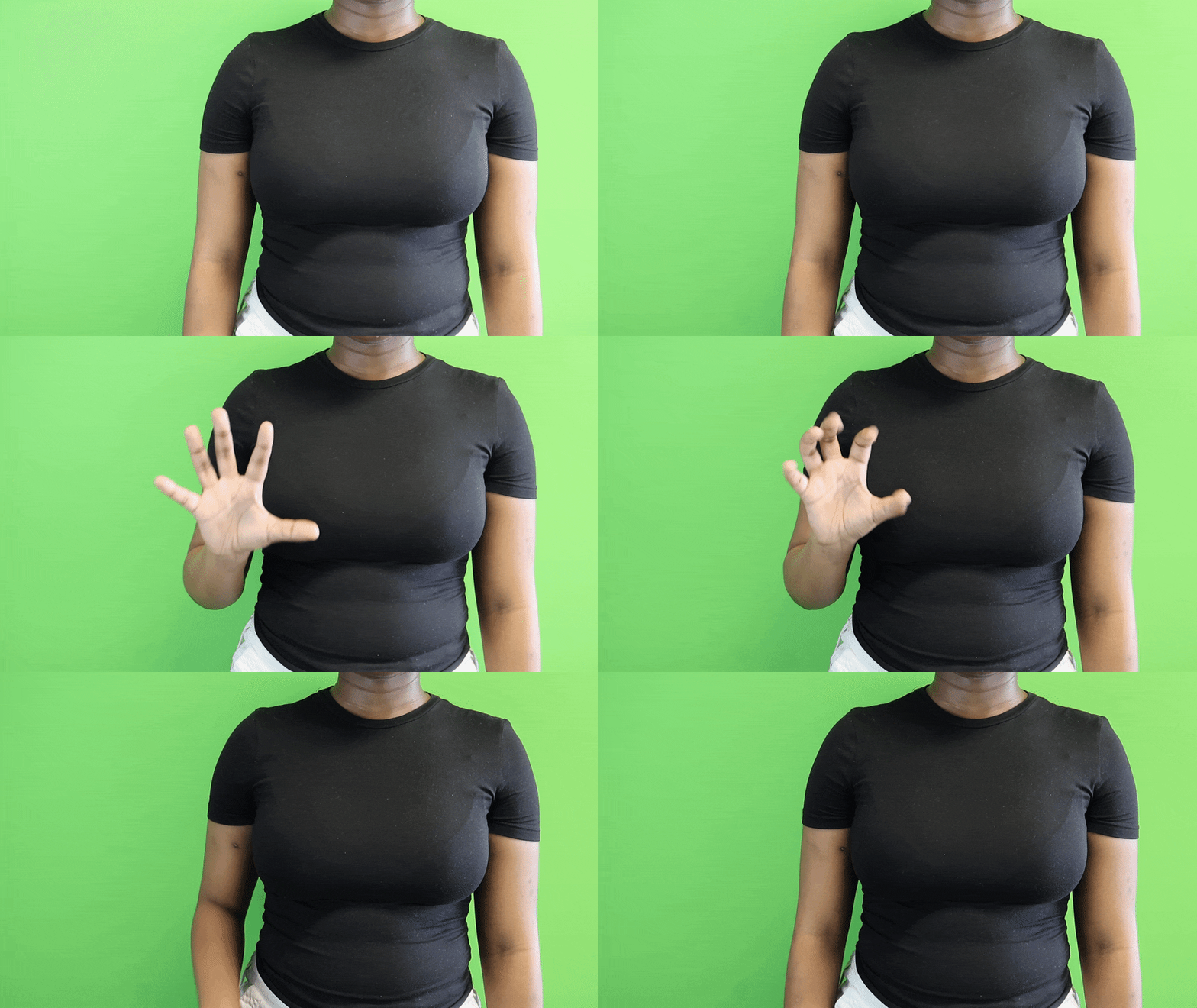 |
||
| 43= Shake to the side | 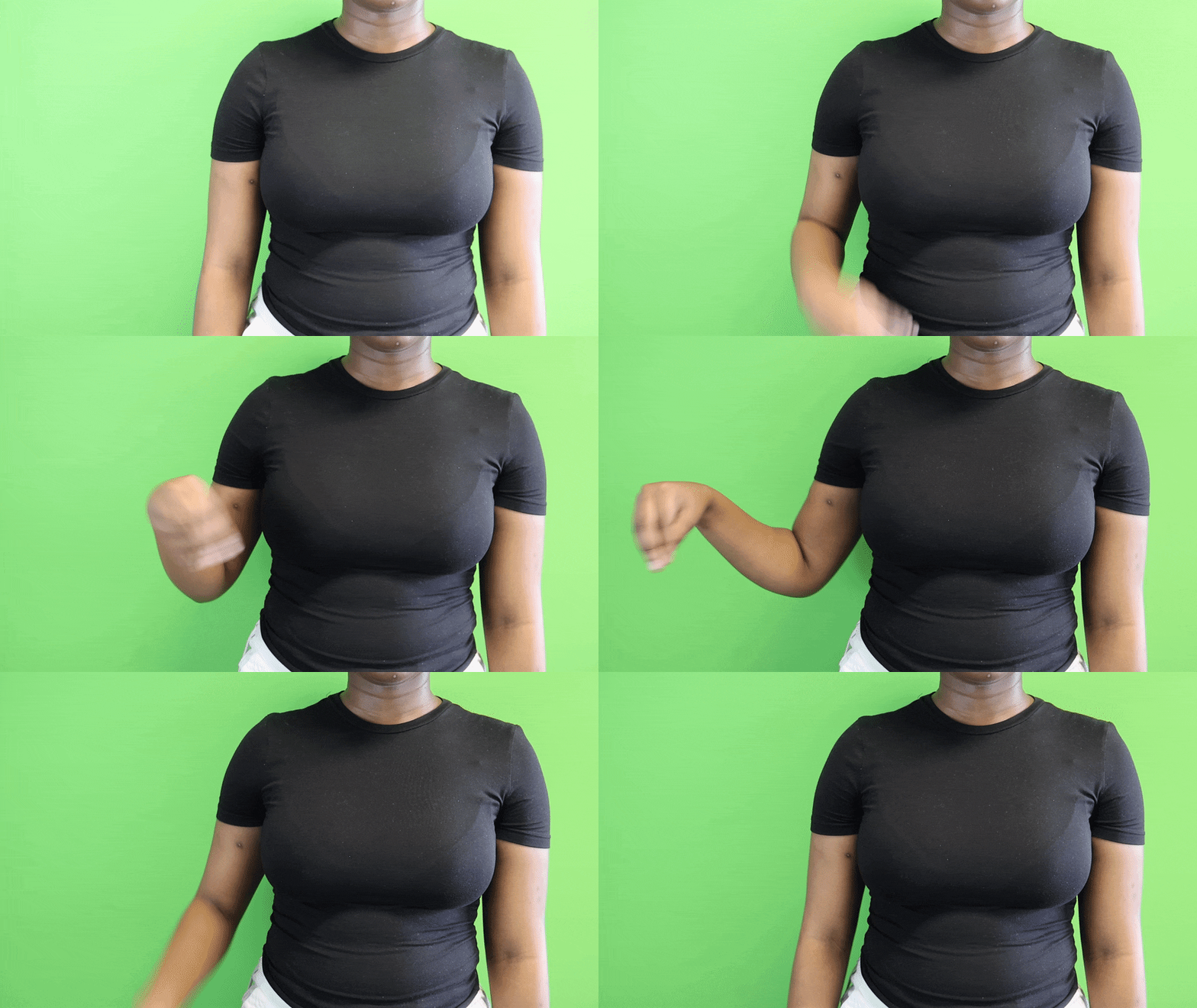 |
||
| 44= Tap up | 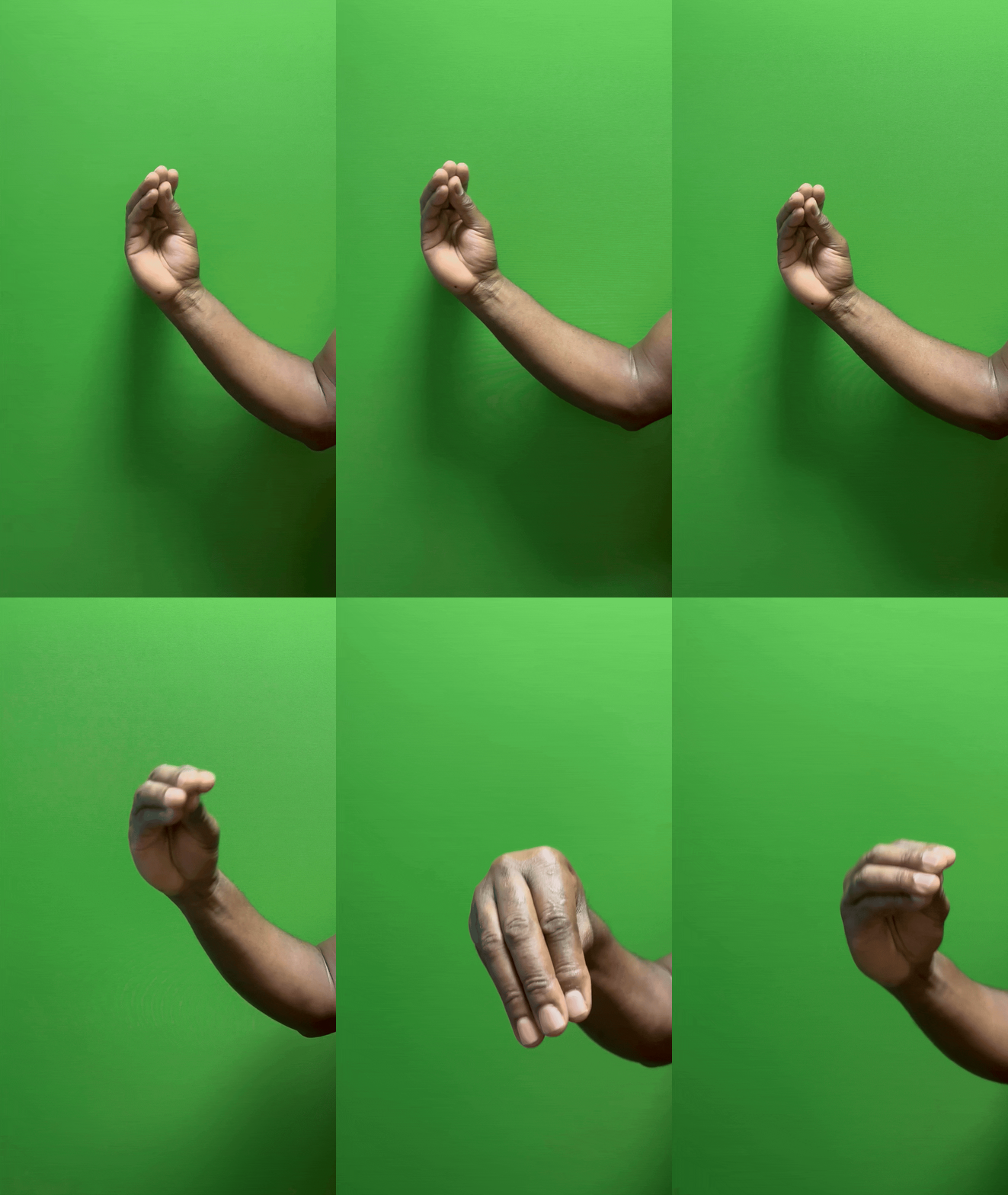 |
||
| 45= Turn out | 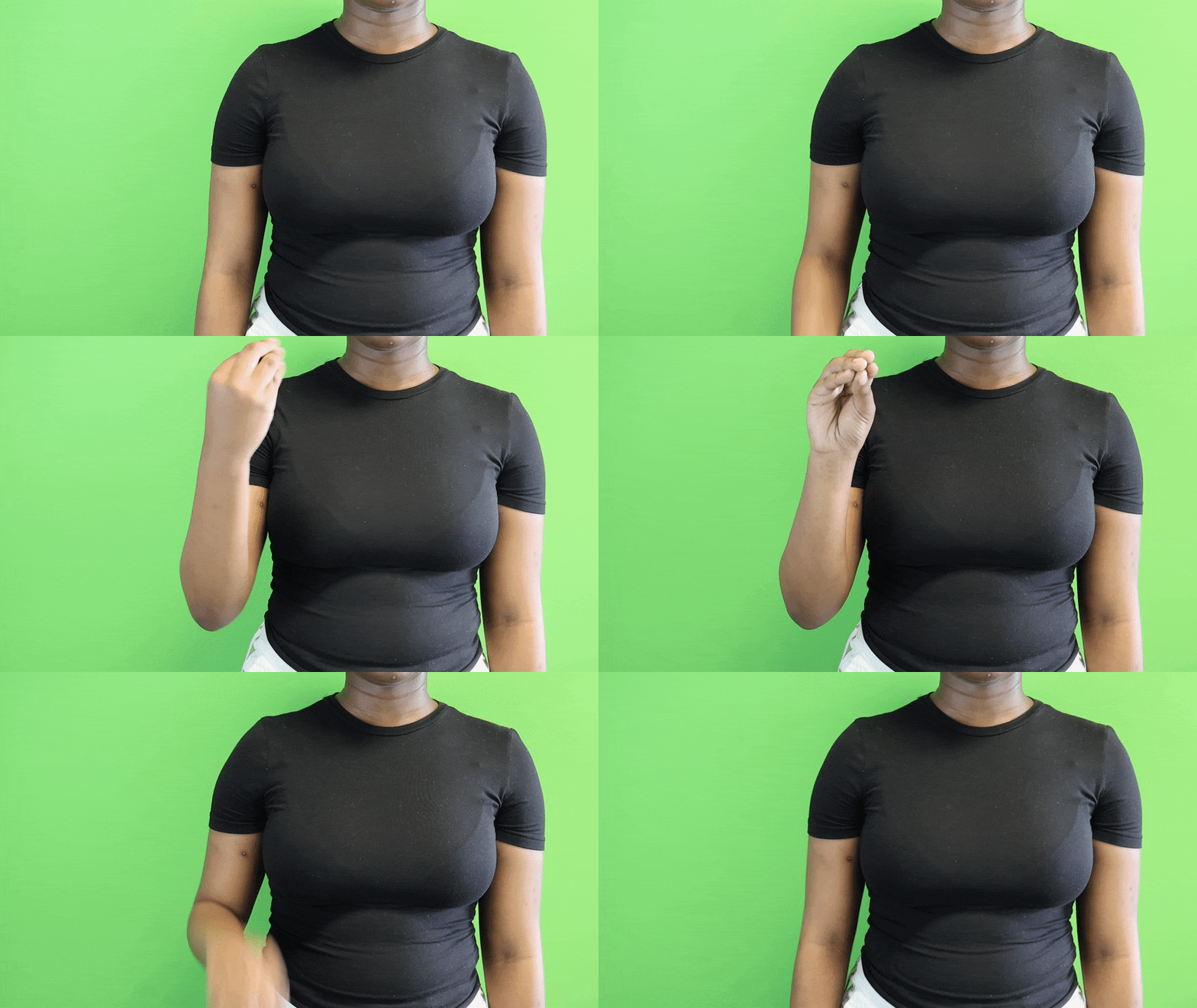 |
||
| 46= Fingers interlocked | 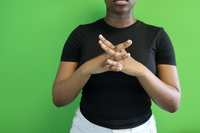 |
||
| 47= Fingers interlocked tapping | 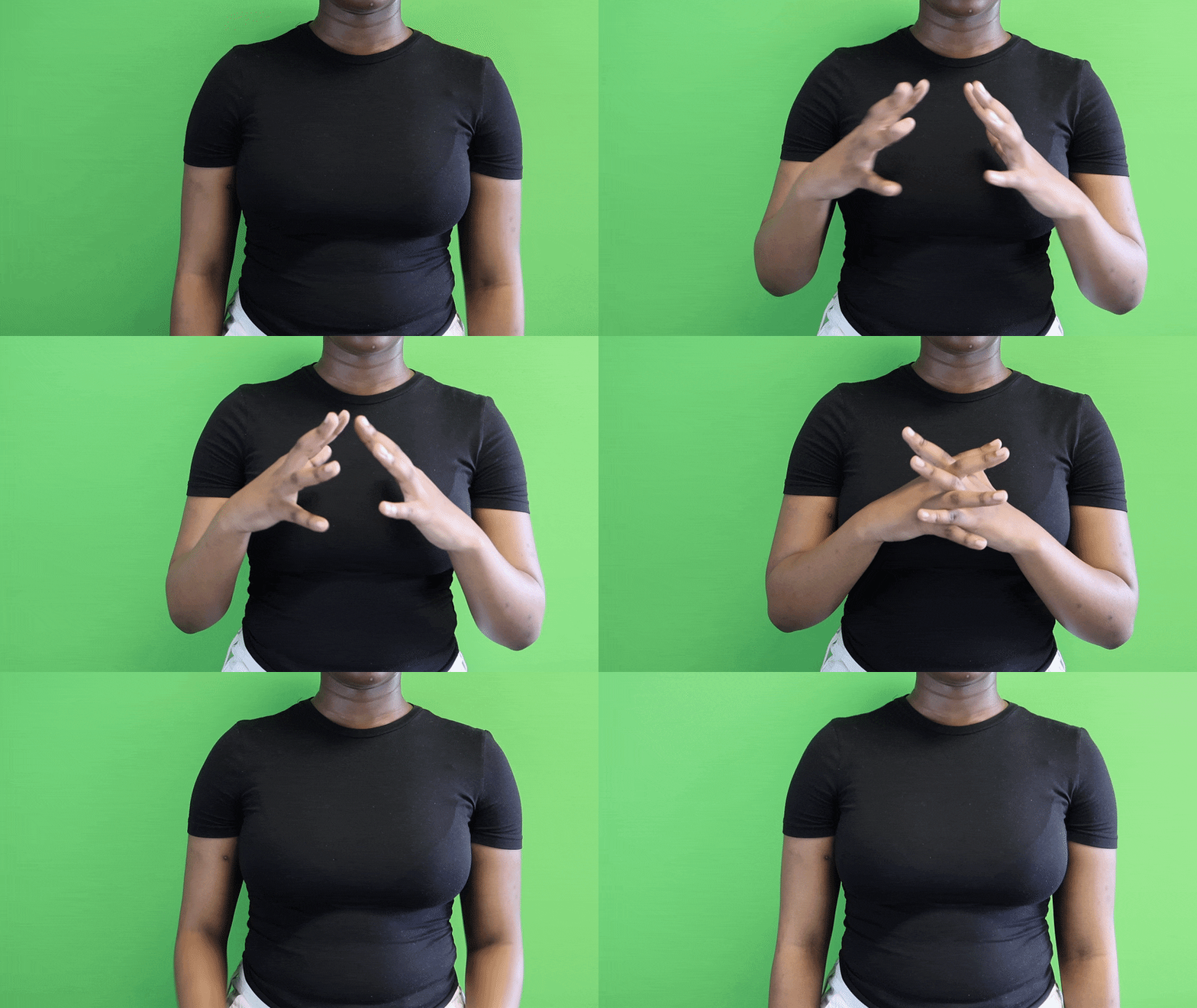 |
||
| Repetition | & | 0= No repetition | 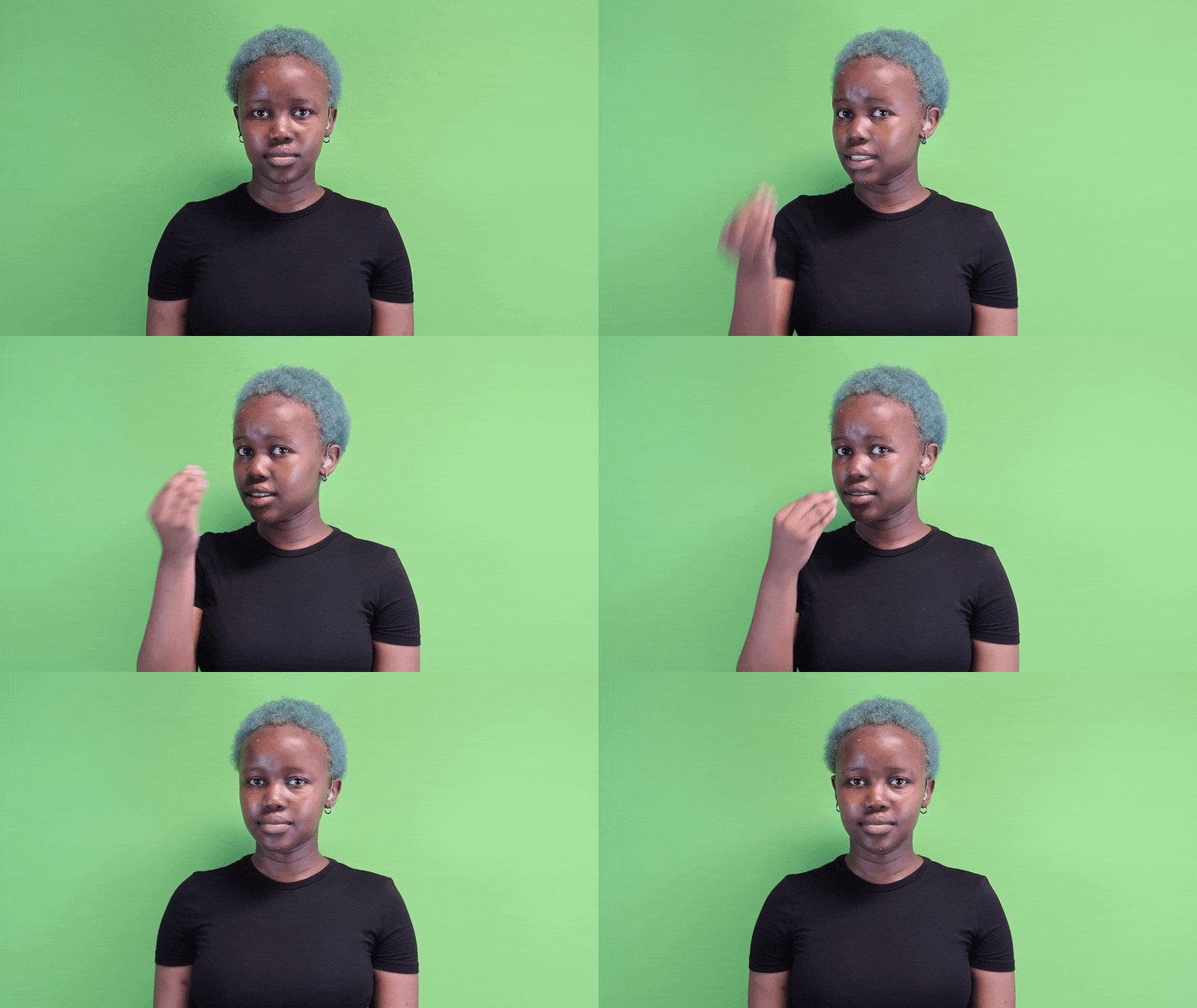 |
| 1= Repetition | 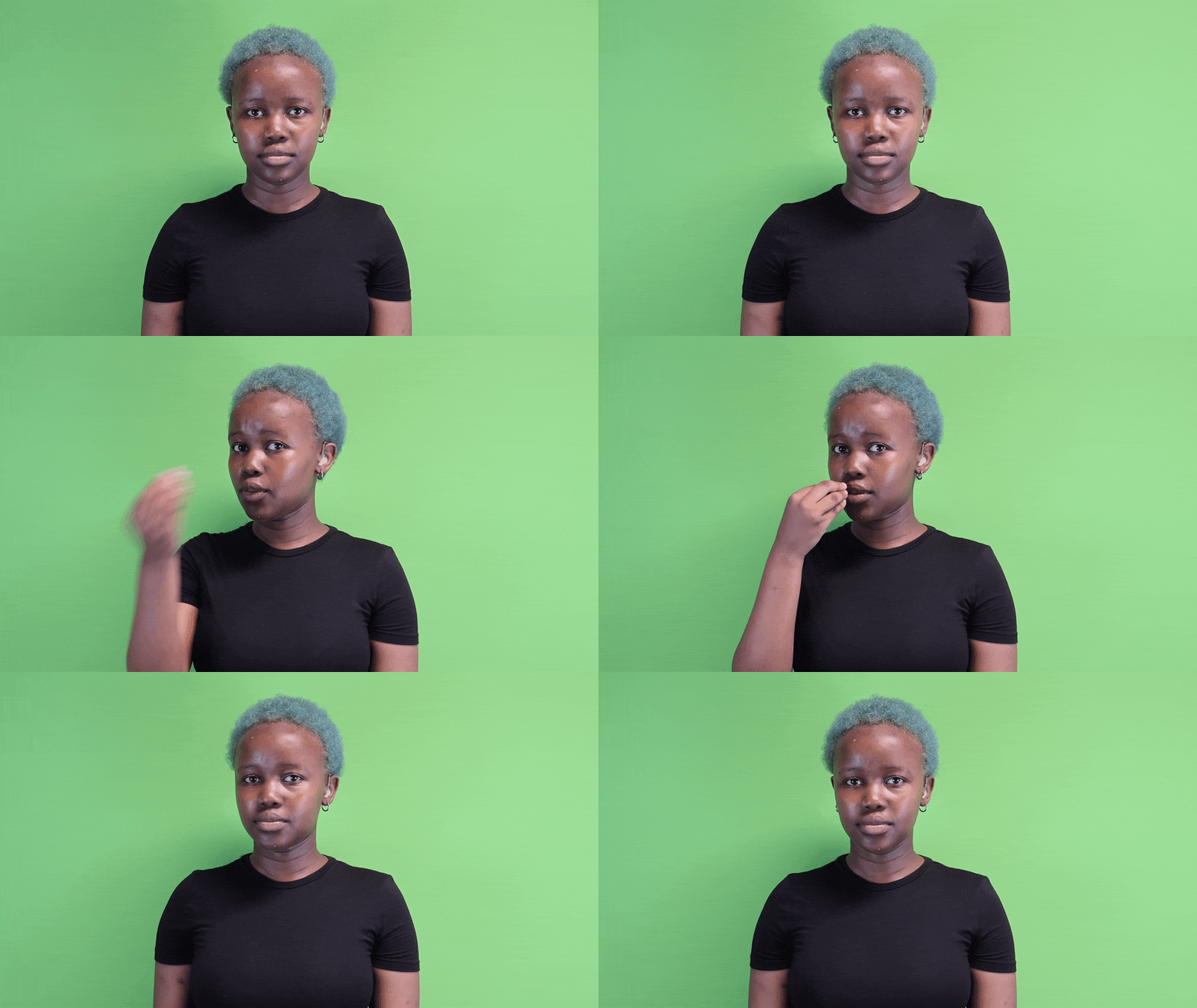 |
References:
- Prillwitz S, Leberecht S, & Zienert H. 1989. HamNoSys: Version 2.0; Hamburg Notation System for Sign Languages: An introductory guide. Hamburg: Signum Press.
- Stokoe WC. 1960. Sign language structure: An outline of the visual communication systems of the American Deaf. Studies in Linguistics, Occasional Papers 8. Buffalo, NY: University of Buffalo.
- Sutton V. 2022. Lessons in SignWriting: Textbook. 5th edition. La Jolla, CA: Deaf Action Committee for SignWriting.
Selection for archive
Find the figshare repository here: https://ufs.figshare.com/articles/dataset/South_African_Place_Names/23741892.
Our collection contains name signs for 104 places, i.e., towns, cities, provinces, and schools for the Deaf. For each of these, the analyses (via linguistic annotation) revealed different numbers of variants per place. Some places have only one variant, while others have as many as twenty, resulting in a total of 334 variants. Place-name sign collection was conducted via two methods. Participants were asked if they had signs for a predetermined list of prominent places in South Africa. Additionally, place names were elicited by asking questions about the participants’ backgrounds, such as “Where did you grow up”, “Where did you go to school”, etc. To determine unique signs, an internal validation process was conducted. The purpose of this process was not to confirm community consensus on the use of a specific sign; but rather to eliminate signs that are obvious mistakes. The resulting dataset comprises of 301 valid, unique signs. A further round of selection was conducted to identify the signs that are the most likely to be of wide-spread interest. This selection of 67 name signs for 27 places is prioritised as the first phase of entries for the archive. Note that all the signs have been re-recorded by Deaf signers who were compensated and who gave consent for their recorded image to be used for research, on the various public platforms, and for machine learning.
Internal verification
The internal verification was conducted by members of the research team:
- Analyst and translator. The research assistant specialising in SASL linguistics with the main task of managing the ELAN analysis.
- Hearing staff member who is fluent in SASL, is a cultural member of the Deaf community, and an advocate for the Deaf.
- Deaf staff member who is fluent in SASL and an advocate for the Deaf.
- Hearing staff member who is fluent in SASL and an advocate for the Deaf.
Criteria for validity
- Uses. Our spreadsheet tracks the number of times a specific variant was used by interviewees. Sometimes one participant used a particular variant multiple times. Signs with a high number of uses by more than one user are automatically accepted as valid variants. Variants that are used five times or less were subjected to further scrutiny.
- Etymology. If a variant is accompanied by an explanation of its origins, it is taken to have a known history and was therefore included.
- Initialisation. When the first letter of a spoken place name was signed, usually with added movement, as the place-name sign. This was a common strategy for creating place-name signs across research sites.
- Compound signs. This occured when signers combined two signs to describe a place. For example, to refer to ‘Western Cape’ a user might have signed ‘West’ followed by ‘Cape’ or ‘Cape Town’.
- Directional signs. These signs were created when signers indicated (geophysical) direction with a directional gesture instead of signing the name of the direction. For example, when signing ‘North West’, the signer made directional movements (i.e., pointing to the cardinal direction points) accompanied by mouthing, but did not include the handshapes ‘N’ and ‘W’.
- Fingerspelling. The full spoken name of the place was spelled out and used as the place-name sign.
Criteria for rejection
- Pronunciation errors. If a sign differed from the most common variant on one parameter (such as palm orientation, movement, etc.) and was used by less than five participants, it was not included.
- Spelling mistakes when fingerspelling the place name.
- Signer errors. These were cases where the interviewees stated that they were unsure, that they were guessing, or if their facial expression conveyed clearly that they ded not know the sign. The latter only occurred in a few cases and the team reached consensus to not include these variants.
Selection for the archive
The selection process was conducted by members of the research team:
- Analyst and translator – research assistant specialising in SASL linguistics with the main task of managing the ELAN analysis.
- Hearing staff member who is fluent in SASL, a cultural member of the Deaf community, and an advocate for the Deaf.
- Translator – student assistant who is a CODA and fluent in SASL.
- Hearing team lead specialised in sociolinguistics.
- Hearing researcher with extensive experience of research in Deaf communities.
Criteria for inclusion
The purpose was to determine a selection of signs to fully curate for the archive as a first pahes. The result is 67 variants used for 27 places.
- Frequency of use.
- The most common sign for provinces.
- The most common sign for main towns. These “main towns” were listed as such on the questionnaire and participants were directly asked what name signs they know for that place.
- Relevance to the Deaf community. The names of towns where schools for the Deaf are situated, or the names of the schools themselves. These names were elicited in the interviews (i.e., Where did you go to school?).