Browse All
DISCLAIMER
The selection of SASL place names is a reflection of variation in SASL, and should not be considered an official terminology list. For formally verified place-name signs, please contact the Pan South African Language Board (PanSALB) or see the Dictionary of the National Institute for the Deaf (NID).
Browse by..
-
 Bethlehem 01Bethlehem 01 is a descriptive sign that is clearly distinct from other variants (lexical variation). It is the same as the sign for JESUS. The sign mimics showing where the nails went through Jesus’ palms when he was crucified. In the bible, Jesus was born in Bethlehem, which explains the use of the name sign JESUS for the place Bethlehem.
 -
 Bethlehem 03Bethlehem 03 is a descriptive sign with the handshape O followed by A, which is clearly distinct from Bethlehem 01 (lexical variation). The handshapes refer to the previous number plate for Bethlehem, which started with OA. The movement is to the side, which could possibly indicate the shape of the number plate on the vehicle.
-
 Bloemfontein 01Bloemfontein 01 is a descriptive sign with the handshape O followed by B. The handshapes refer to the previous number plate for Bloemfontein, which started with OB. It is a phonological variation from Bloemfontein 06.In the case of Bloemfontein there are two lexical variations: one with the hand resembling a flower (Bloemfontein 03) and the OB variation. Then, the OB variation itself has three phonological variations (Bloemfontein 01, Bloemfontein 06 and Bloemfontein 07). Additionally, there is a morphological variation that combines both lexical variations (Bloemfontein 13).
 -
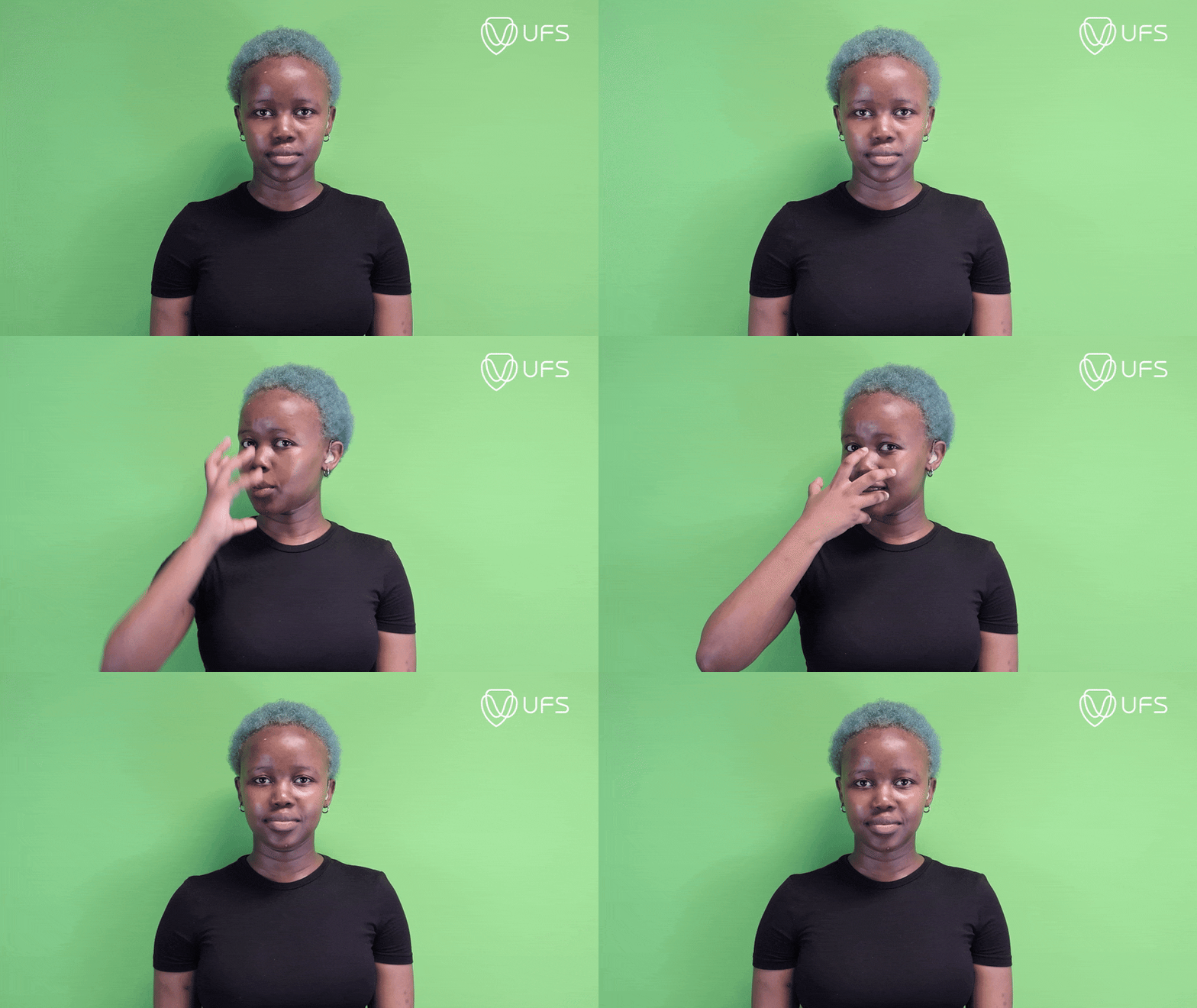 Bloemfontein 03Bloemfontein 03 is a descriptive sign that is clearly distinct from other variants (lexical variation). It is the same as the sign for ROSE, which references Bloemfontein’s colloquial name of City of Roses, which indicates a possible loan sign from spoken language. This variant includes mouthing of ‘Bloemfontein’. The movement is the same as Free State 01. This could possibly indicate a derivation between the two signs, as Bloemfontein is the capital of the Free State province.In the case of Bloemfontein there are two lexical variations: one with the hand resembling a flower (Bloemfontein 03) and the OB variation. Then, the OB variation itself has three phonological variations (Bloemfontein 01, Bloemfontein 06 and Bloemfontein 07). Additionally, there is a morphological variation that combines both lexical variations (Bloemfontein 13).
 -
 Bloemfontein 06Bloemfontein 06 is a descriptive sign with the handshape O followed by B. The handshapes refer to the previous number plate for Bloemfontein, which started with OB. It is a phonological variation from both Bloemfontein 01 and Bloemfontein 07.In the case of Bloemfontein there are two lexical variations: one with the hand resembling a flower (Bloemfontein 03) and the OB variation. Then, the OB variation itself has three phonological variations (Bloemfontein 01, Bloemfontein 06 and Bloemfontein 07). Additionally, there is a morphological variation that combines both lexical variations (Bloemfontein 13).
 -
 Bloemfontein 07Bloemfontein 07 is a descriptive sign with the handshape O followed by B. The handshapes refer to the previous number plate for Bloemfontein, which started with OB. It is a phonological variation from Bloemfontein 06.In the case of Bloemfontein there are two lexical variations: one with the hand resembling a flower (Bloemfontein 03) and the OB variation. Then, the OB variation itself has three phonological variations (Bloemfontein 01, Bloemfontein 06 and Bloemfontein 07). Additionally, there is a morphological variation that combines both lexical variations (Bloemfontein 13).
 -
 Bloemfontein 13Bloemfontein 13 is a descriptive sign that starts with the handshape O. This O is a shortened reference to the previous number plate for Bloemfontein, which started with OB. The handshape transitions into a handshape similar to the sign for ROSE, drawing on Bloemfontein’s colloquial name of City of Roses (similar to Bloemfontein 03), which indicates a possible loan sign from spoken language.In the case of Bloemfontein there are two lexical variations: one with the hand resembling a flower (Bloemfontein 03) and the OB variation. Then, the OB variation itself has three phonological variations (Bloemfontein 01, Bloemfontein 06 and Bloemfontein 07). Additionally, there is a morphological variation that combines both lexical variations (Bloemfontein 13).
-
 Cape Town 01Cape Town 01 is an initialised-descriptive sign that incorporates the T handshape for both hands in a movement that mimics the shape of Table Mountain, a landmark of Cape Town. Over time, this shortened version of the sign evolved to only flick the wrists up and down, with the hands in the T handshape. This variant is a lexical variation from both Cape Town 07 and Cape Town 12.
 -
 Cape Town 07Cape Town 07 is an initialised sign with the handshape in lower-case C in SASL. This is also the alphabet letter C in British Sign Language. This variant is a lexical variation from both Cape Town 01 and Cape Town 12.
 -
 Cape Town 12Cape Town 12 is an initialised-descriptive sign that incorporates the X handshape for both hands. The dominant hand moves with the palm facing upwards back and forth across the forearm of the non-dominant hand, which faces palm down. This variant originates from the Afrikaans Deaf community. They have a sign for ‘Kaap’, which is a colloquial reference to the areas surrounding Cape Town. This variant is a lexical variation from both Cape Town 07 and Cape Town 12.
-
 Durban 05Durban 05 is an initialised sign with both hands forming the letter D in the two-handed alphabet of British Sign Language. The mouthing of ‘Durban’ distinguishes this variation from other similar signs. This is a lexical variation from Durban 05.
 -
 Durban 01Durban 01 is an initialised sign with the handshape in D. The location of the sign on the forehead distinguishes this variant from other similar signs. This is a lexical variation from Durban 05.
-
 East London 02East London 02 is an initialised sign with the handshape E followed by L. The movement is to the side, which is the most common form of movement that accompanies initialised place name signs.
 -
 East London 12East London 12 is an initialised two-handed sign that commences with the dominant hand in the handshape E, followed by L placed into the palm of the non-dominant hand. The latter half of the sign is similar to the sign for LOCATION, and thereby indicates that this is a place-name sign. This addition makes it a morphological variation from East London 02.
-
 Eastern Cape 01Eastern Cape 01 is an initialised sign with the handshape E followed by C. This variant has no movement, making it a phonological variation from Eastern Cape 02.
 -
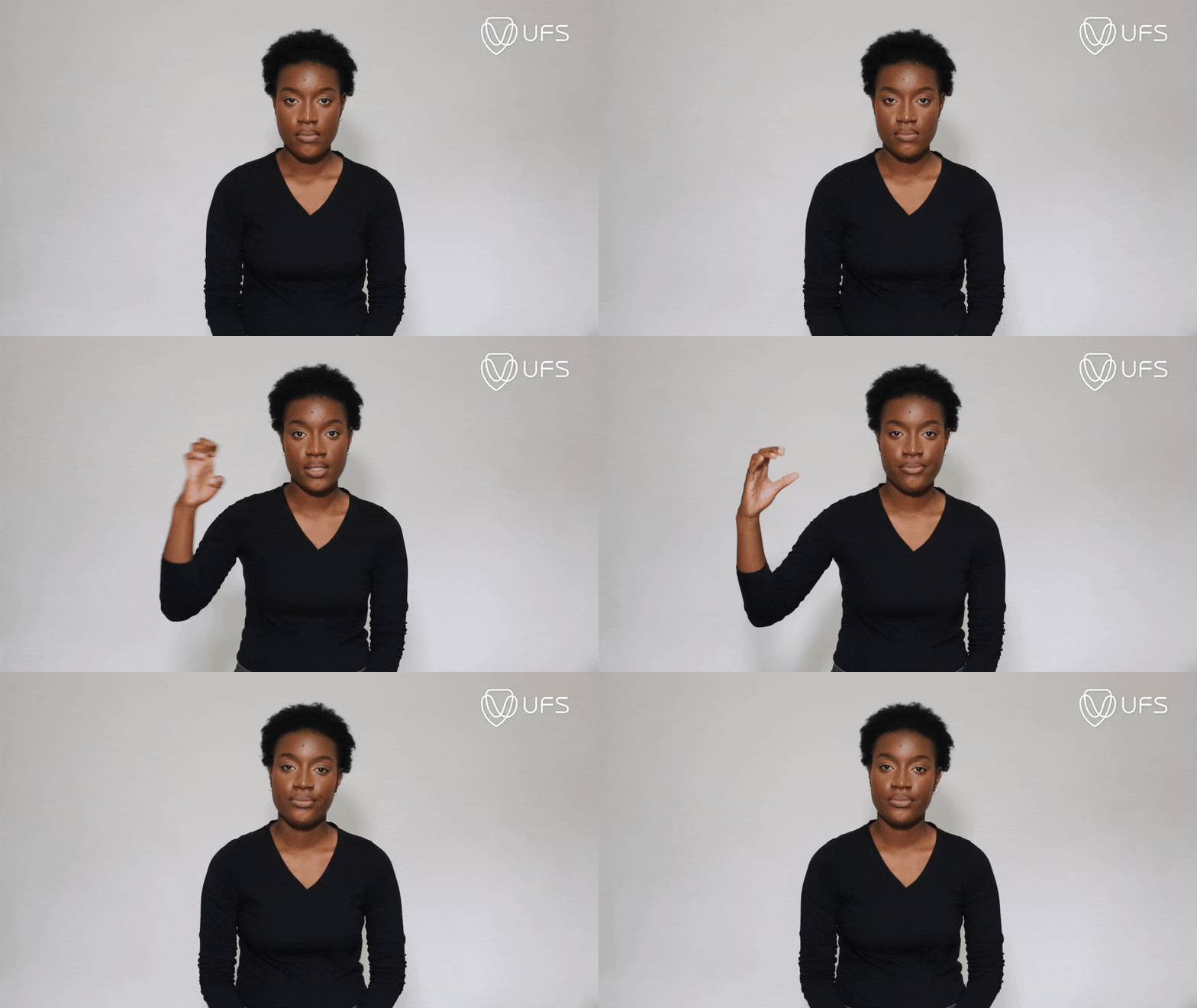 Eastern Cape 02Eastern Cape 02 is an initialised sign with the handshape E followed by C. This variant includes movement to the side, making it a phonological variation from Eastern Cape 01.
-
 Free State 05Free State 05 is an initialised two-handed sign with the handshape V, from the Afrikaans name from the province, ‘Vrystaat’. The dominant hand in the handshape V is placed in the flat open palm of the non-dominant hand, similar to the sign for LOCATION. This indicates that Free State 05 is a place-name sign. It is a lexical variation from both Free State 01 and Free State 02.
 -
 Free State 02Free State 02 is an initialised sign, with the handshape F followed by D. This variation includes no movement. It is a lexical variation from both Free State 01 and Free State 05.
 -
 Free State 01Free State 01 is a descriptive sign. The handshape is in the form of a ‘claw’ that mimics the sign for ORANGE. Most likely this is a reference to the previous name of the province, which was the Orange Free State. It is a lexical variation from both Free State 02 and Free State 05.
-
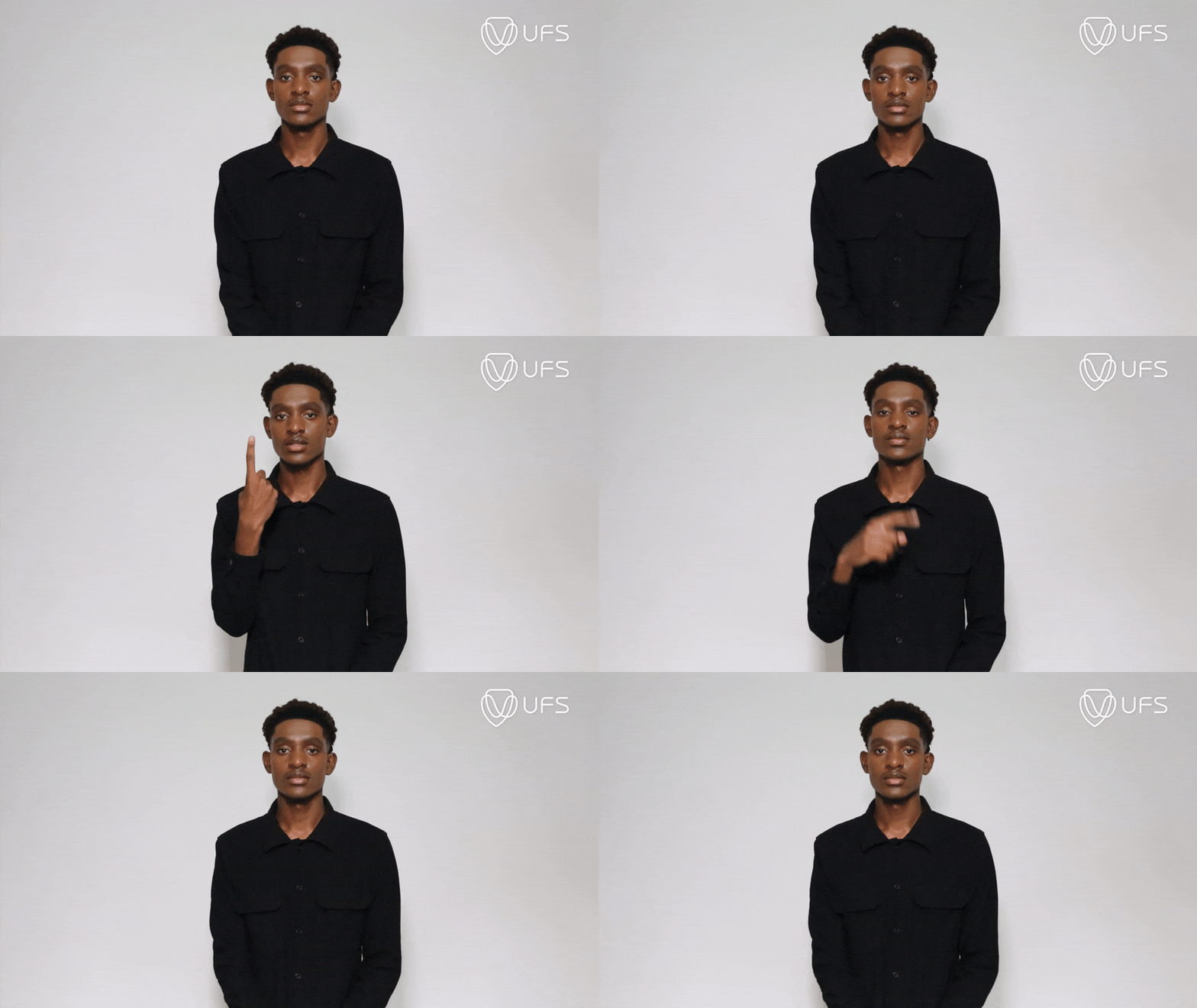 Gauteng 03Gauteng 03 is a descriptive sign with the hand in the S1 SASL handshape (finger extended) with an upward motion. This mimics the landmark tall Telkom Joburg Tower (also known as the Hillbrow Tower), which was until 2021 the tallest tower in Africa. It is a simplified version of Gauteng 01 (morphological variation).
 -
 Gauteng 01Gauteng 01 is an initialised-descriptive sign. The sign starts with both hands in the handshape S with the fists atop each other, but this is similar to the British Sign Language alphabet letter G. The dominant hand then moves into the S1 SASL handshape (finger extended) with an upward motion. This mimics the landmark tall Telkom Joburg Tower (also known as the Hillbrow Tower), which was until 2021 the tallest tower in Africa. This variant is a morphological variation from Gauteng 03.

-
 Gqeberha 08Gqeberha 08 is an initalised sign with the handshape P in the two-handed British Sign Language alphabet. The previous name of Gqeberha was Port Elizabeth.Gqeberha has two lexical variations. Gqeberha 01, Gqeberha 06 and Gqeberha 08 are all initialised signs that differ on phonological level from each other. Gqeberha 11 is a distinct descriptive variant.
 -
 Gqeberha 11Gqeberha 11 is a descriptive sign. The open hand moves in a brushing motion behind the head, possibly indicating hair blowing in the wind. This could be a reference to the Gqeberha’s colloquial name, the Windy City, which indicates a possible loan sign from spoken language. The mouthing of ‘PE’, a colloquial shortened version of Gqeberha’s previous name, Port Elizabeth, identifies this variant as a place-name sign.Gqeberha has two lexical variations. Gqeberha 01, Gqeberha 06 and Gqeberha 08 are all initialised signs that differ on phonological level from each other. Gqeberha 11 is a distinct descriptive variant.
 -
 Gqeberha 06Gqeberha 06 is an initialised sign. It starts with the handshape P in the Irish Sign Language alphabet, followed by the SASL alphabet letter for E. The colloquial shortened version of Gqeberha’s previous name, Port Elizabeth, was PE. Movement to the side is added.Gqeberha has two lexical variations. Gqeberha 01, Gqeberha 06 and Gqeberha 08 are all initialised signs that differ on phonological level from each other. Gqeberha 11 is a distinct descriptive variant.
 -
 Gqeberha 01Gqeberha 01 is an initialised sign with the handshape P followed by E. The colloquial shortened version of Gqeberha’s previous name, Port Elizabeth, was PE. Gqeberha has two lexical variations. Gqeberha 01, Gqeberha 06 and Gqeberha 08 are all initialised signs that differ on phonological level from each other. Gqeberha 11 is a distinct descriptive variant.
-
 St. Vincent 01St. Vincent 01 is an initialised sign with the handshape S followed by V. Placement of the sign is on the shoulder.
 -
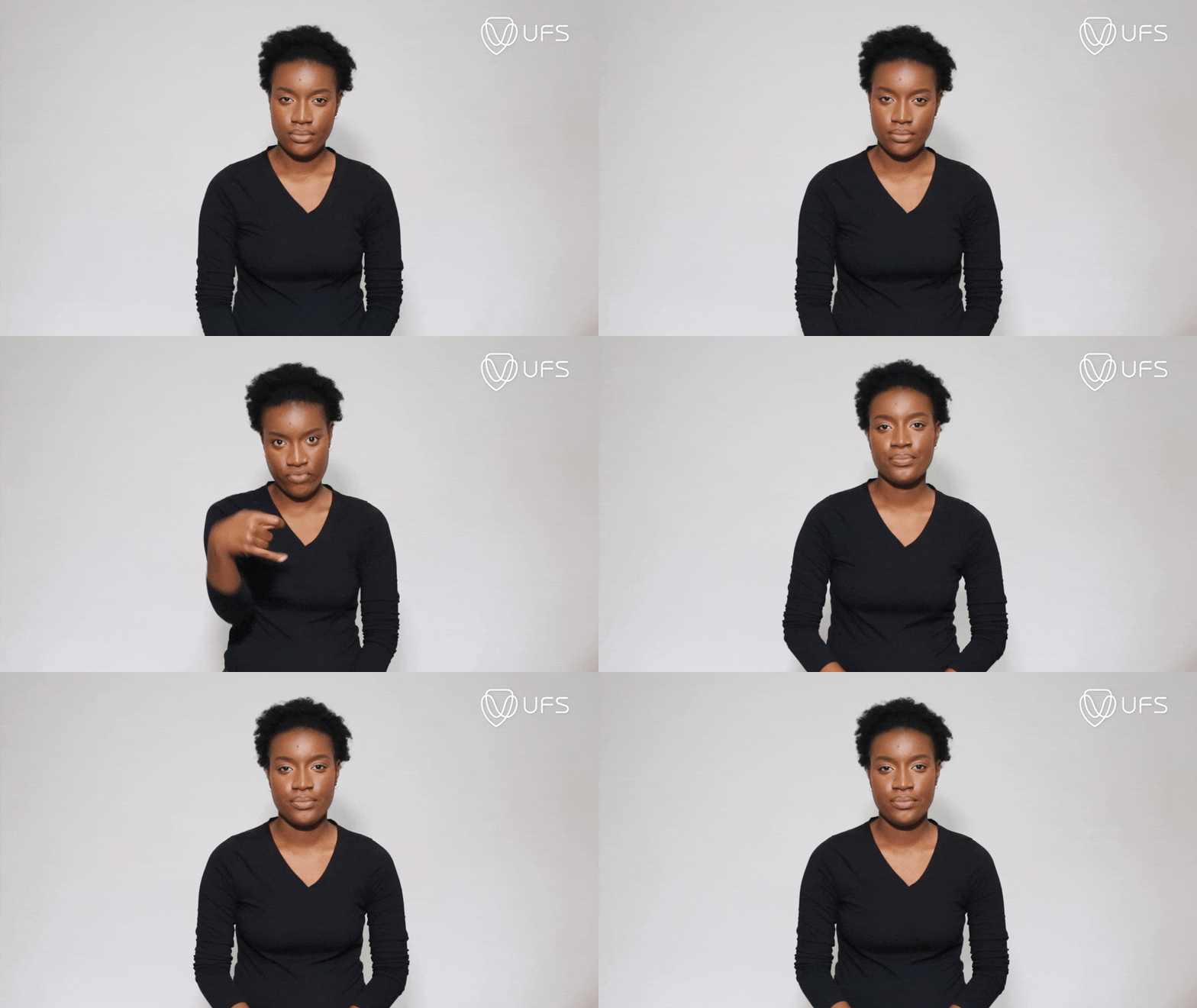 Johannesburg 03Johannesburg 03 is a descriptive sign with the handshape T followed by J. The handshapes likely refer to the previous number plate for Johannesburg, which started with TJ. This variant is a lexical variation from Johannesburg 01.
 -
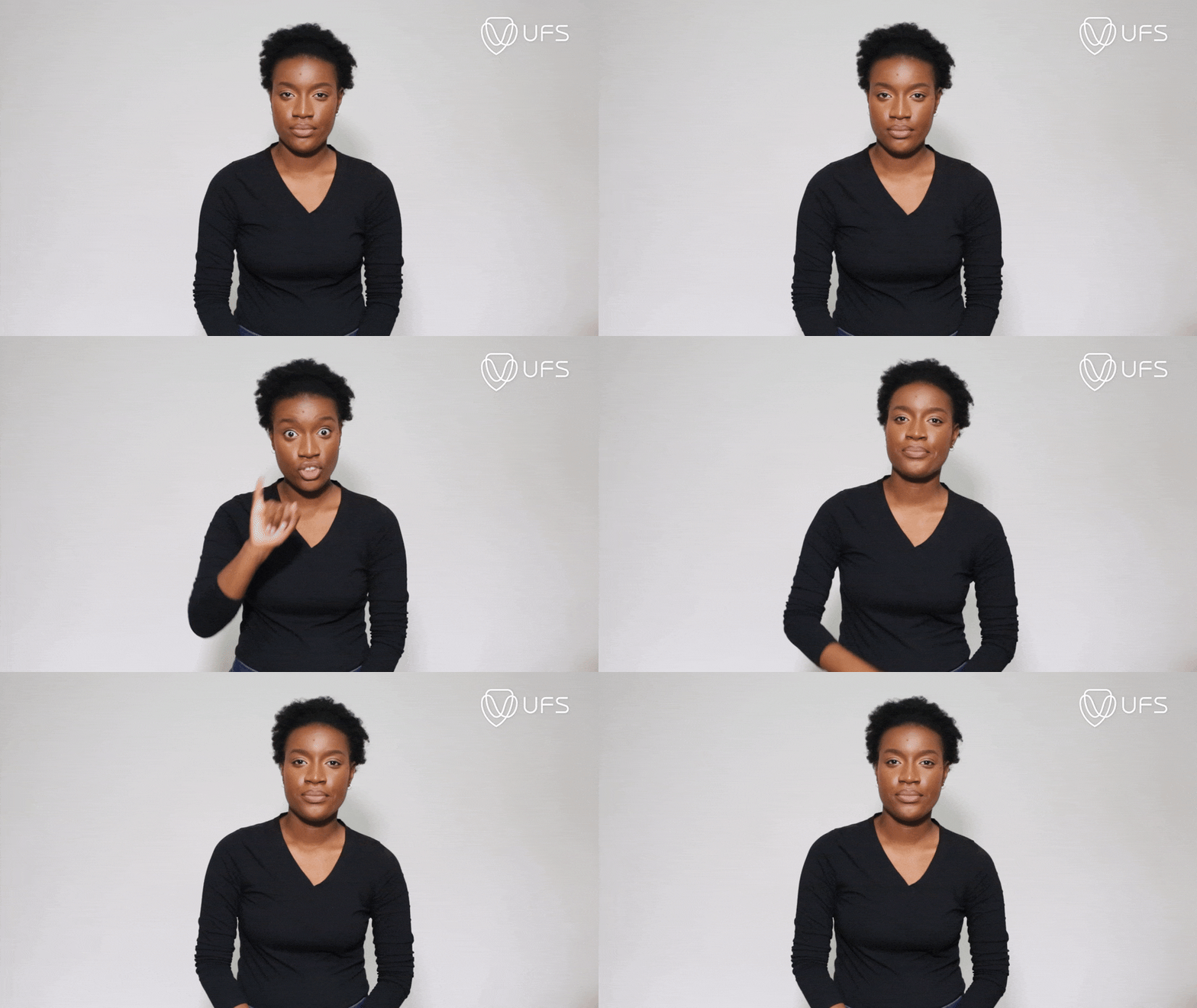 Johannesburg 01Johannesburg 01 is an initialised sign, with just the handshape J. This variant is a lexical variation from Johannesburg 03.
-
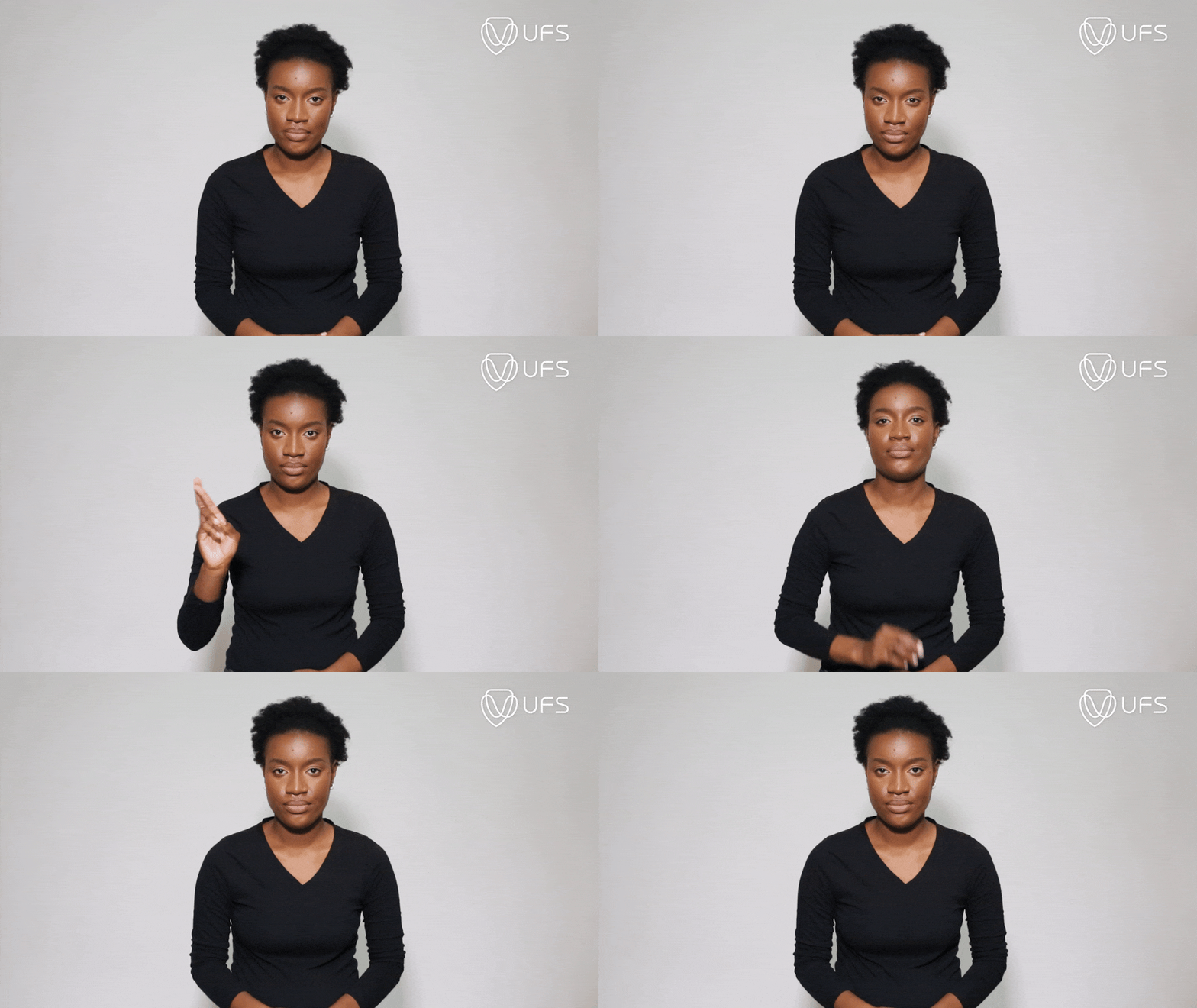 Re Thlameleng 01Re Thlamaleng 01 is an initialised sign with the handshape R and added side-so-side wrist movement. The mouthing of ‘Re Thlamaleng’ distinguishes this variant from other similar signs and identifies it as a place-name sign.
 -
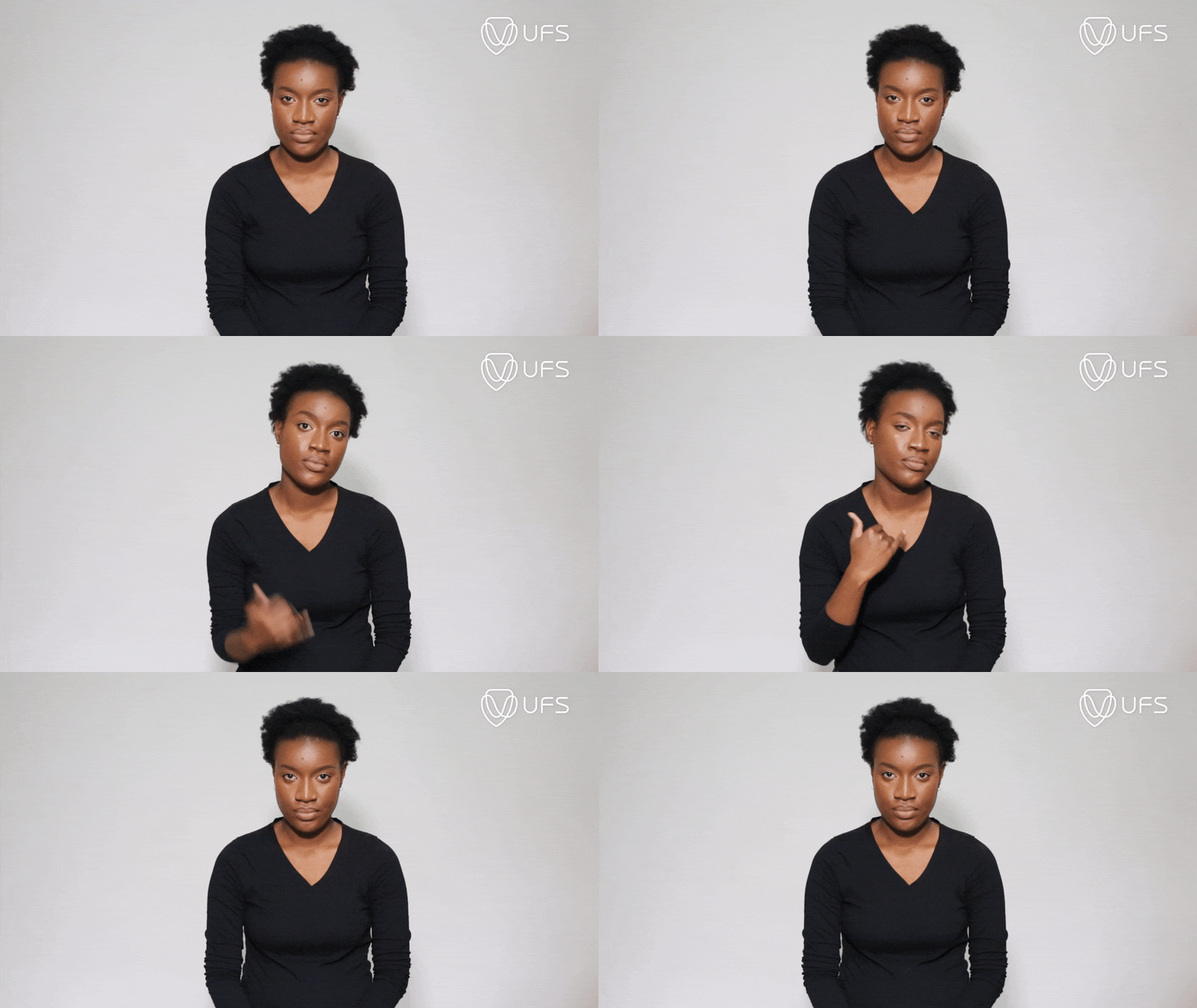 Kimberley 08Kimberley 08 is an initialised-descriptive sign. The handshape Y is accompanied by a forward swiping motion on the signer’s neck. We were unable to determine the meaning of this sign. This variant is a lexical variation from Kimberley 01 and Kimberley 03.
 -
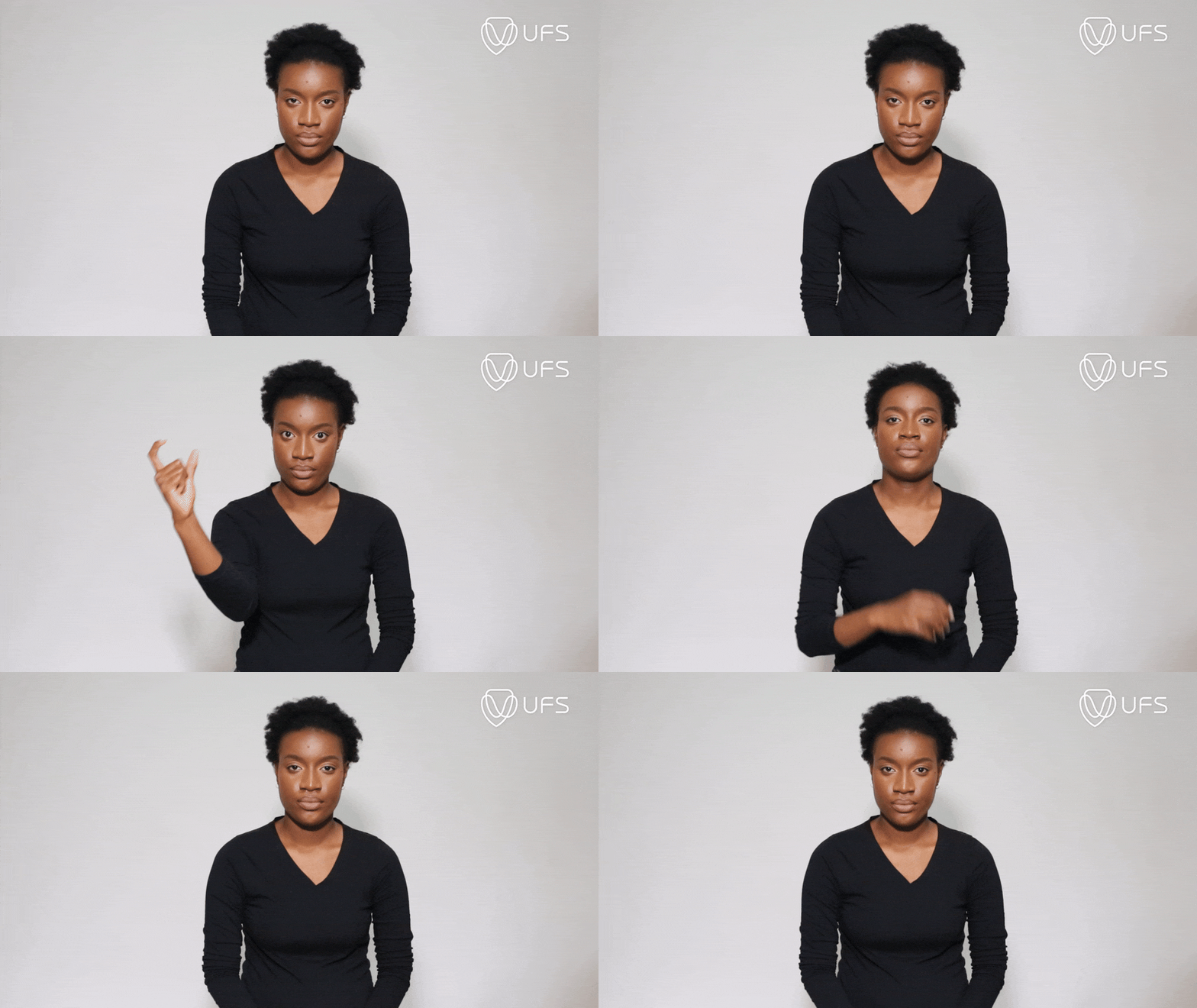 Kimberley 03Kimberley 03 is a descriptive sign with the handshape in lower-case C, which is the same is the British Sign Language alphabet letter C (same as Cape Town 07). The handshape most likely refers to the previous number plate for Kimberley, which started with CC. This variant is a lexical variation from Kimberley 01 and Kimberley 08.
 -
 Kimberley 01Kimberley 01 is an initialised-descriptive sign. Both hands are in handshape K. They move down and inwards to indicate the Big Hole, an old mine that is a landmark of Kimberley. This variant is a lexical variation from Kimberley 03 and Kimberley 08.
-
 KwaZulu-Natal 01KwaZulu-Natal 01 is an initialised sign with the handshape K and then N. This is followed by a zigzag inward motion towards the signer’s body that could be interpreted to mimic the handshape for Z.
-
 Limpopo 02Limpopo 02 is an initialised-descriptive sign. Both hands are in the handshape L and move in a side-to-side forwards motion that mimics the flow of a river. The palms face to the side, which makes this variant a phonological variation from Limpopo 02.
 -
 Limpopo 01Limpopo 01 is an initialised-descriptive sign. Both hands are in the handshape L and move in a side-to-side forwards motion that mimics the flow of a river. The palm orientation is down, which makes this variant a phonological variation from Limpopo 02.
-
 Mpumalanga 01Mpumalanga 01 is a descriptive sign. The dominant hand mimics the sun rising. The meaning of ‘Mpumalanga’ is ‘the place where the sun rises’ in the Nguni language family. This indicates a loan sign from spoken language.
-
 North West 02North West 02 is an initialised sign with the handshape N followed by W. This variant has added movement to the side, which makes it a phonological variation from North West 01.
 -
 North West 01North West 01 is an initialised sign with the handshape N followed by W. This variant has no movement, and is a phonological variation from North West 02.
-
 Northern Cape 02Northern Cape 02 is an initialised sign with the handshape N followed by C. This variant has added movement to the side, which makes it a phonological variation from Northern Cape 01.
 -
 Northern Cape 01Northern Cape 01 is an initialised sign with the handshape N followed by C. This variant has no movement and is a phonological variation from Northern Cape 02.
-
 Thiboloha 01Thiboloha 01 is an initialised sign with the handshape T and added side-to-side wrist movement. The mouthing of ‘Thiboloha’ differentiates this variant from other similar signs, such as Thaba ‘Nchu 01.
 -
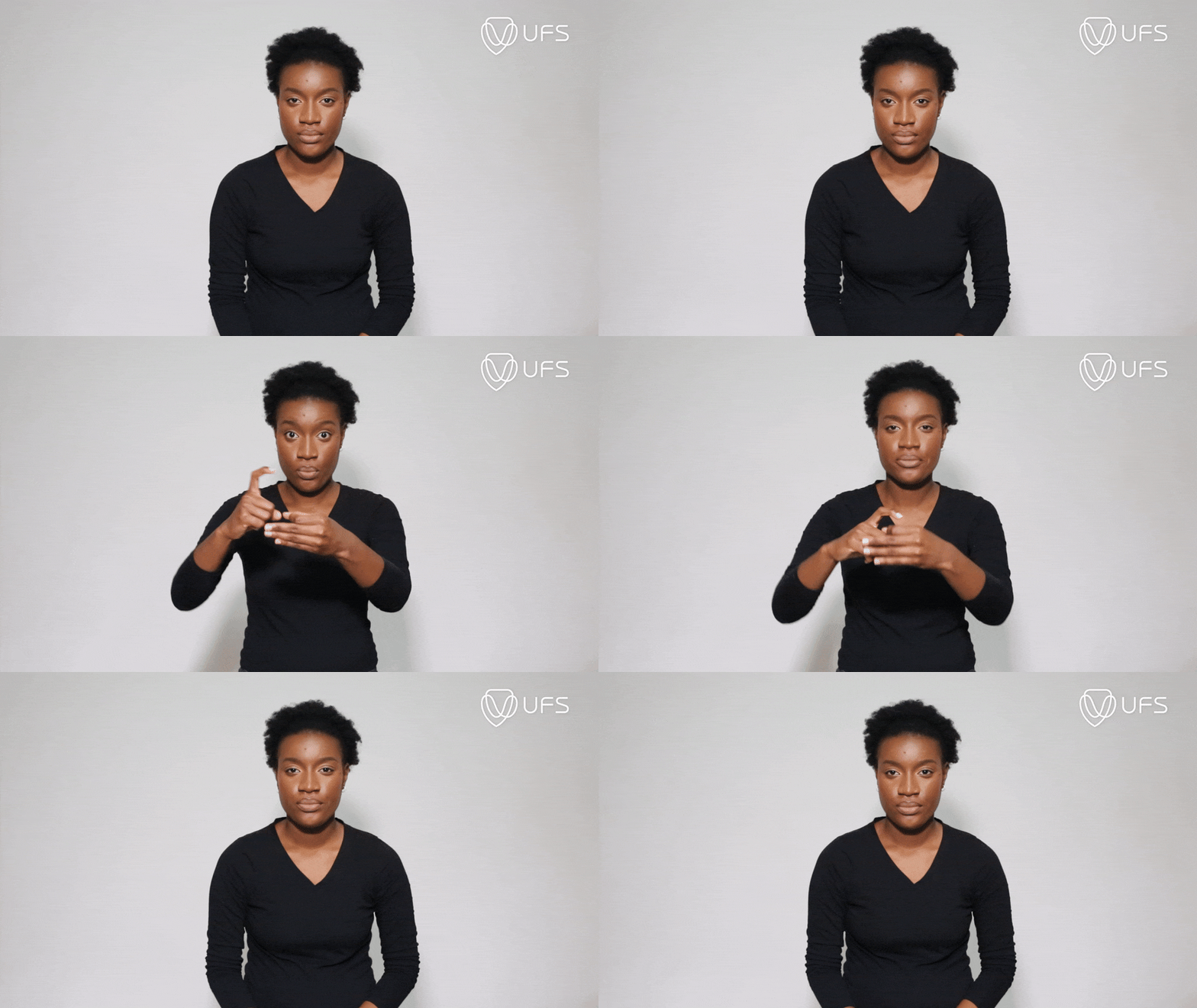 QwaQwa 02QwaQwa 02 is initialised with Q in the British Sign Language alphabet. The dominant hand is in the SASL handshape X and moves in a down and up motion to the non-dominant hand which is in the SASL handshape F. The F handshape makes it a phonological variation from QwaQwa 02, and could possibly be a spelling error.
 -
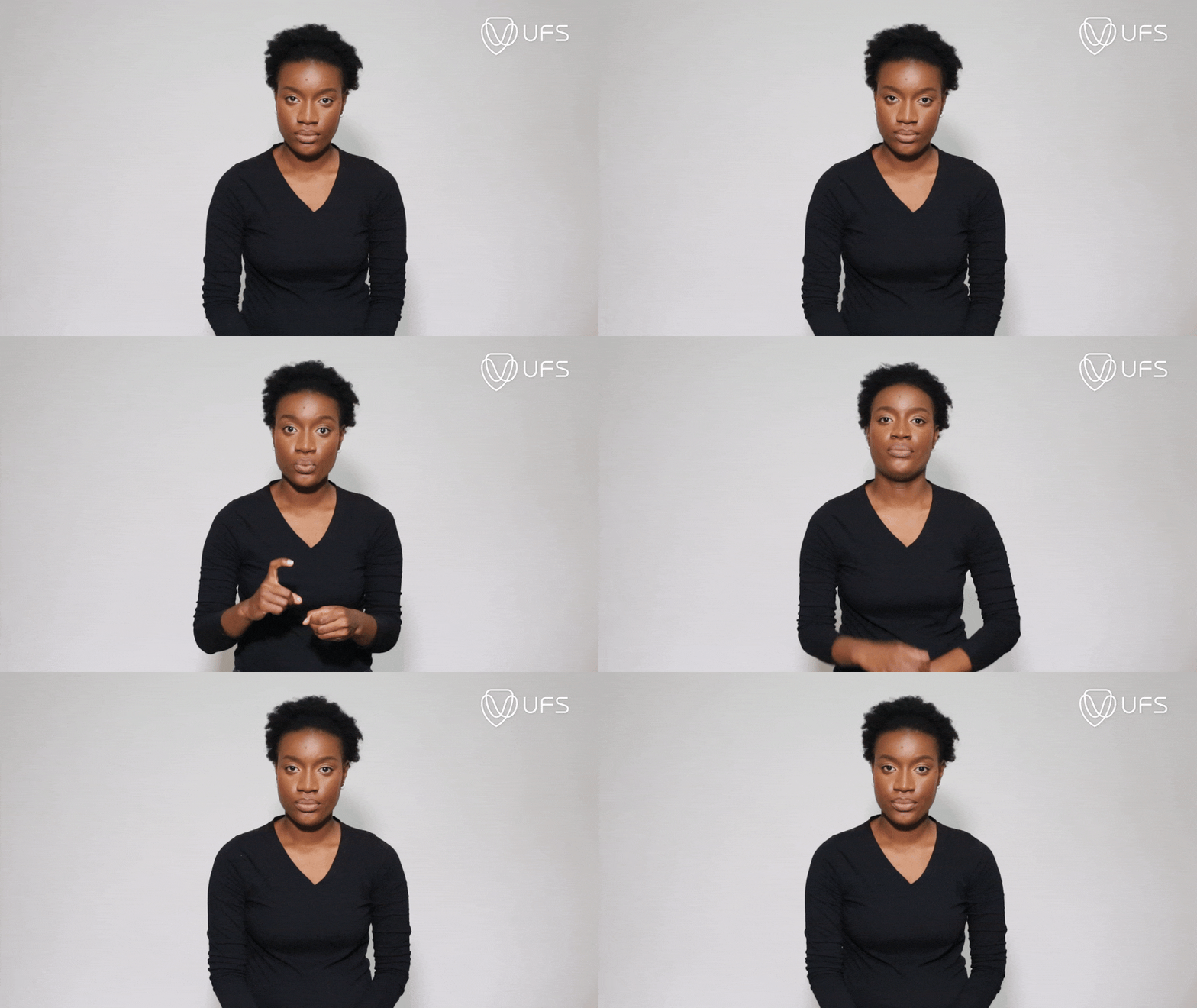 QwaQwa 01QwaQwa 01 is initialised with Q in the British Sign Language alphabet. The dominant hand is in the SASL handshape X and moves in a down and up motion to the non-dominant hand which is in the SASL handshape O. The O handshape makes it a phonological variation from QwaQwa 02.
-
 Pietermaritzburg 04Pietermaritzburg 04 is an initialised-descriptive sign. It has the handshape is X, with the hand placed on the chin and the palm facing towards the signer. We were unable to determine the meaning of this sign. The mouthing of ‘Pietermaritzburg’ identifies this variant as a place-name sign. Pietermaritzburg 04 is a lexical variation from Pietermaritzburg 01.
 -
 Pietermaritzburg 01Pietermaritzburg 01 is an initialised sign, with the handshape P followed by M, then B. This is a common abbreviation for Pietermaritzburg in spoken language as well. This variant has no movement. Pietermaritzburg 01 is a lexical variation from Pietermaritzburg 04.
-
 Transoranje 01Transoranje 01 is a descriptive place-name sign that resembles the sign for ORANGE. The ‘-oranje’ in Transoranje is Afrikaans for ‘orange’.
 -
 Sonitus 01Sonitus 01 is a descriptive sign with the handshape K in the Irish Sign Language alphabet. The movement that is done next to the head is similar to the SASL sign for learning or gaining knowledge. The mouthing of ‘Sonitus’ differentiates it from similar signs such as St. Thomas 02.
 -
 Pretoria 14Pretoria 14 is a descriptive place-name sign that is the same as the sign for SISTER. The mouthing of ‘Pretoria’ indicates the sign as a place-name sign.In the case of Pretoria there are three lexical variations: one that resembles the sign for GOVERNMENT (Pretoria 01 and Pretoria 02), another which is the sign for SISTER (Pretoria 14), and two initialised variants that differ phonologically from each other (Pretoria 06 and Pretoria 09).
 -
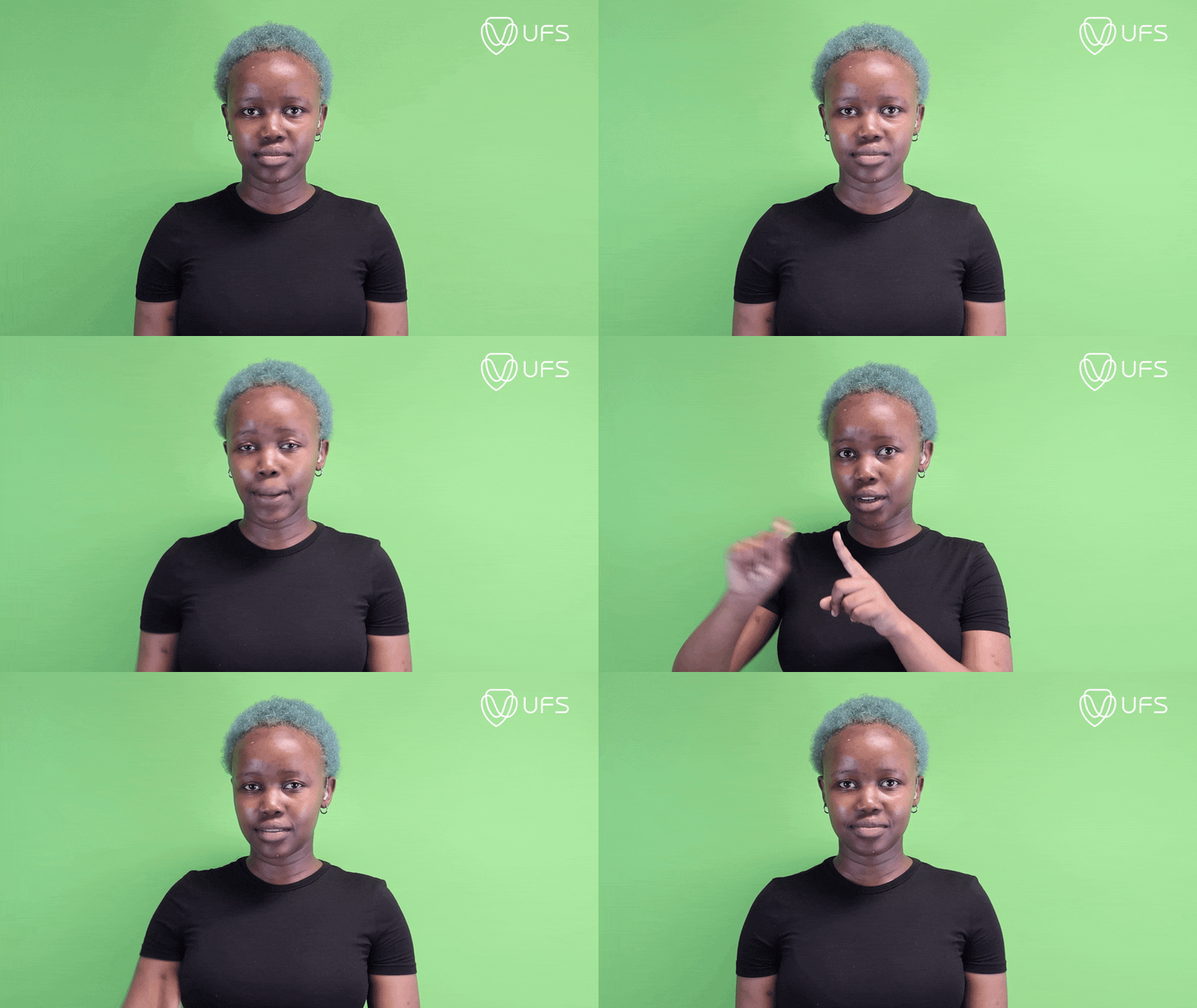 Pretoria 09Pretoria 09 is an initialised sign with the handshape P in the British Sign Language alphabet.In the case of Pretoria there are three lexical variations: one that resembles the sign for GOVERNMENT (Pretoria 01 and Pretoria 02), another which is the sign for SISTER (Pretoria 14), and two initialised variants that differ phonologically from each other (Pretoria 06 and Pretoria 09).
 -
 Pretoria 06Pretoria 06 is a descriptive sign with the handshape T followed by P. The handshapes likely refer to the previous number plate for Pretoria, which started with TP.In the case of Pretoria there are three lexical variations: one that resembles the sign for GOVERNMENT (Pretoria 01 and Pretoria 02), another which is the sign for SISTER (Pretoria 14), and two initialised variants that differ phonologically from each other (Pretoria 06 and Pretoria 09).
 -
 Pretoria 02Pretoria 02 is a descriptive place-name sign that is the similar to the sign for GOVERNMENT, but placed near the centre of the signer’s forehead instead of to the side. This refers to the fact that Pretoria serves as South Africa’s administrative capital, and many government head offices are located there. The handshape is W, which makes it a phonological variation from Pretoria 01.In the case of Pretoria there are three lexical variations: one that resembles the sign for GOVERNMENT (Pretoria 01 and Pretoria 02), another which is the sign for SISTER (Pretoria 14), and two initialised variants that differ phonologically from each other (Pretoria 06 and Pretoria 09).
 -
 Pretoria 01Pretoria 01 is a descriptive place-name sign that is the similar to the sign for GOVERNMENT, but placed near the centre of the signer’s forehead instead of to the side. This refers to the fact that Pretoria serves as South Africa’s administrative capital, and many government head offices are located there. The handshape is F, which makes it a phonological variation from Pretoria 02.In the case of Pretoria there are three lexical variations: one that resembles the sign for GOVERNMENT (Pretoria 01 and Pretoria 02), another which is the sign for SISTER (Pretoria 14), and two initialised variants that differ phonologically from each other (Pretoria 06 and Pretoria 09).
-
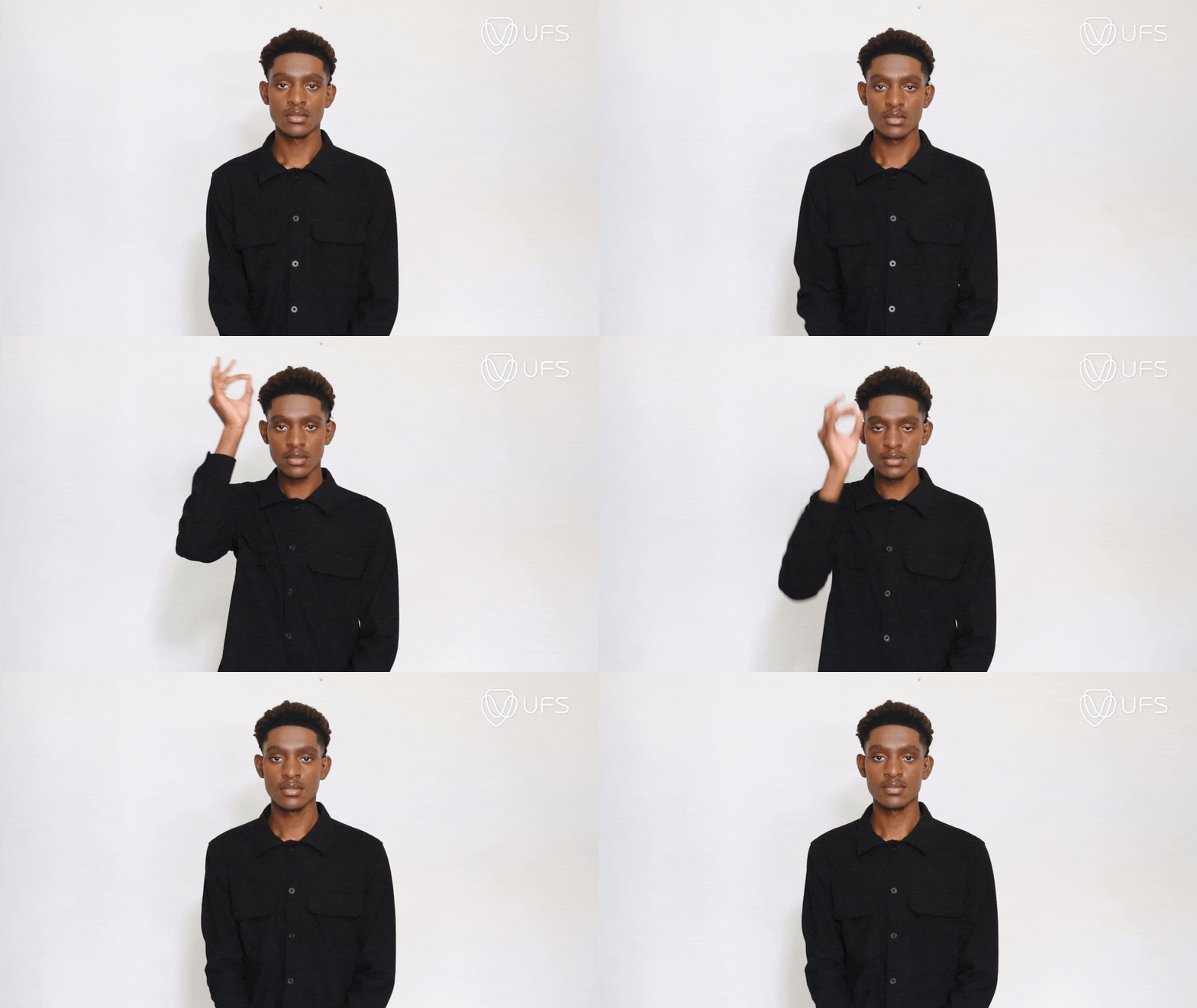 St. Thomas 02St. Thomas 02 is an initialised sign with the handshape K in the Irish Sign Language alphabet. The movement that is done next to the head is similar to the SASL sign for learning or gaining knowledge. The mouthing of ‘St. Thomas’ differentiates it from similar signs such as Sonitus 01.
 -
 St. Thomas 01St. Thomas 01 is an initialised sign. The base handshapes for the sign are S followed by T. Over time, the sign has evolved, and additional movement has been added to make the production of the sign easier, without additional meaning. This variant is a lexical variation from St. Thomas 01.
-
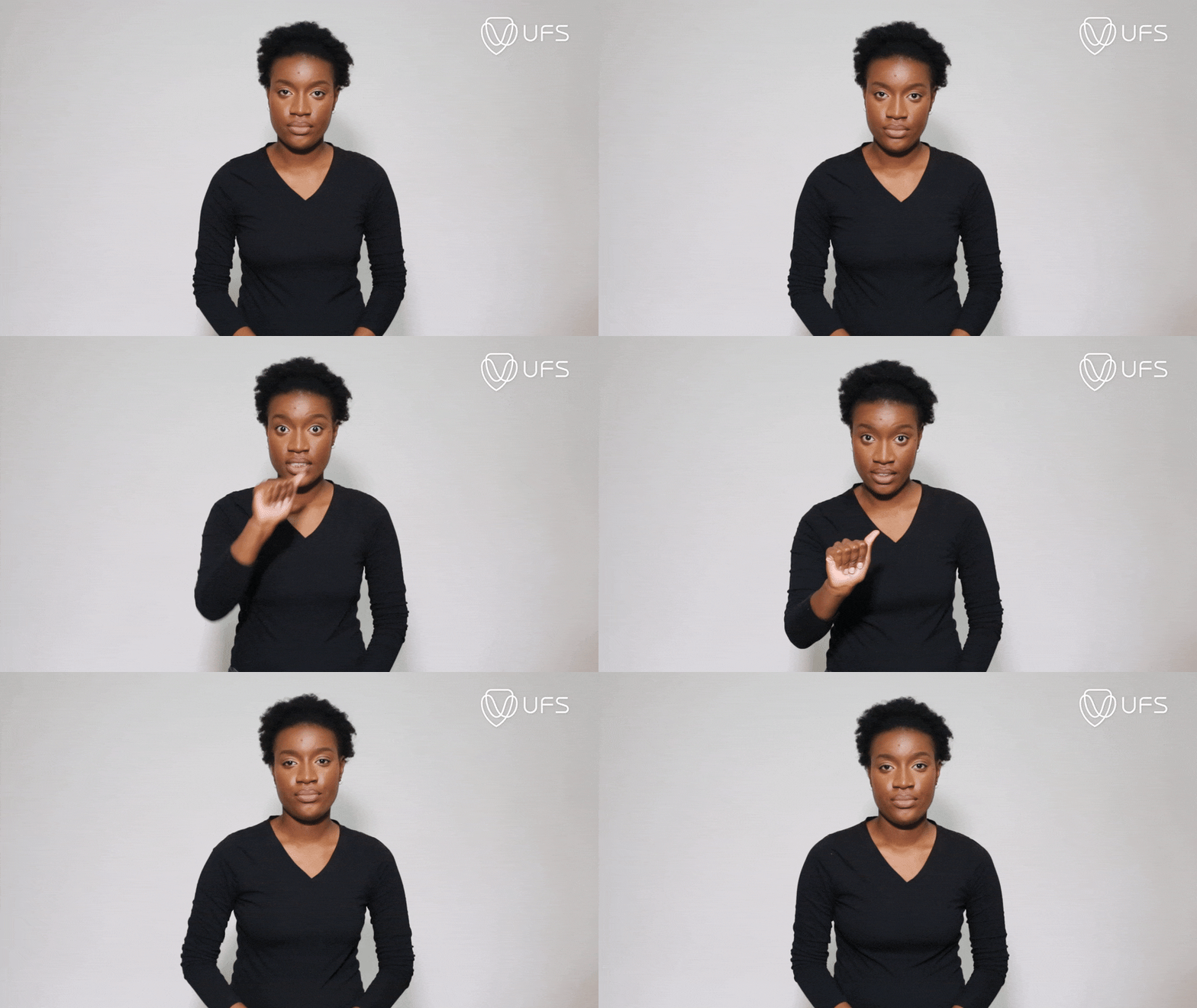 South Africa 01South Africa 01 is an initialised-descriptive sign with a handshape S that moves in a southward direction (‘South’). The sign for AFRICA is then added - a semicircle movement that mimics the rounding at the top of the continent.
-
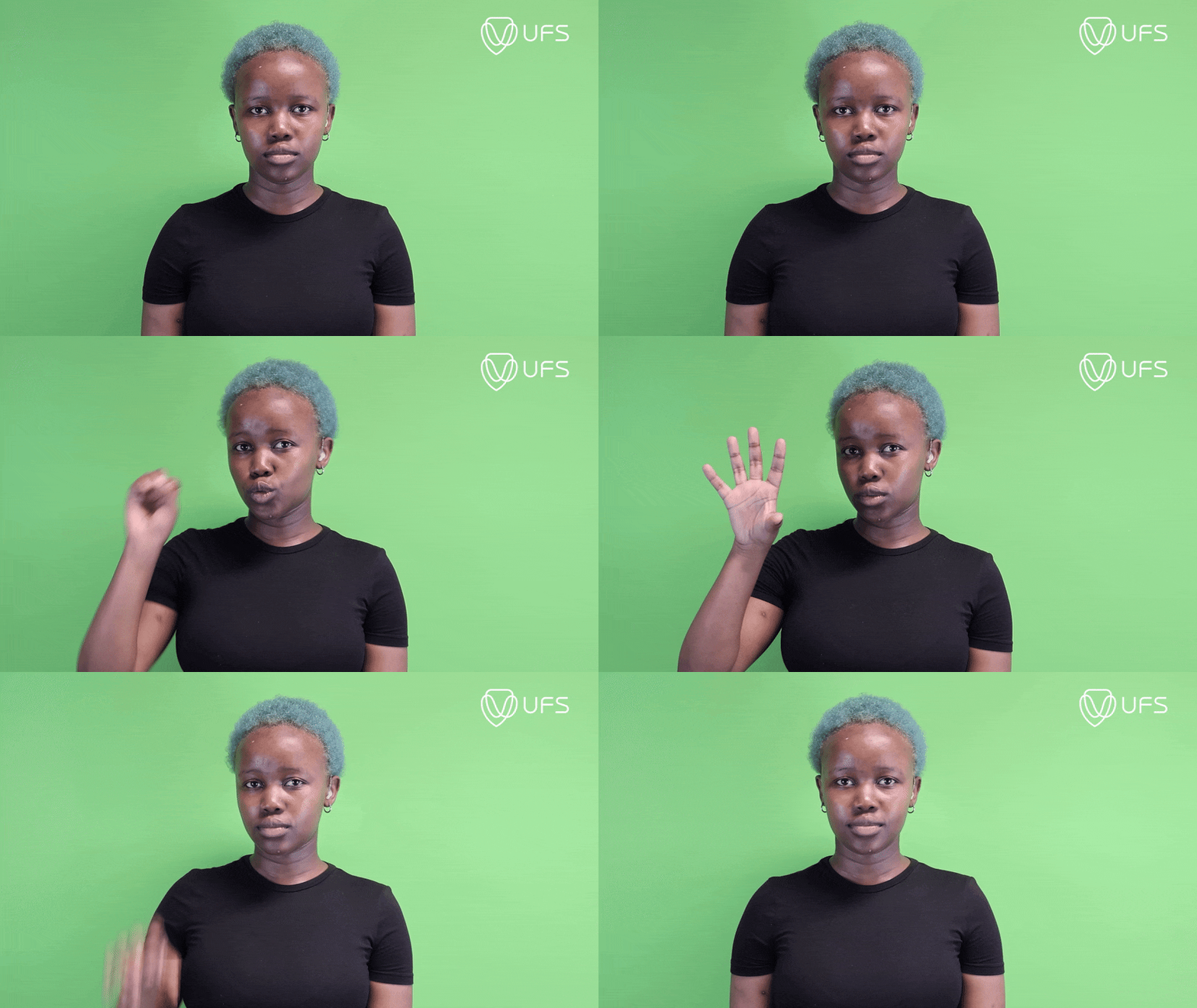 Soweto 01Soweto 01 is a descriptive place-name sign that is similar to the signs for SUN or FLASHING LIGHT. We are unable to determine the origins of this variant, but it could possibly refer to the Sesotho nickname for Gauteng, the province is which Soweto is situated. ‘Maboneng’ means ‘place of lights’.
-
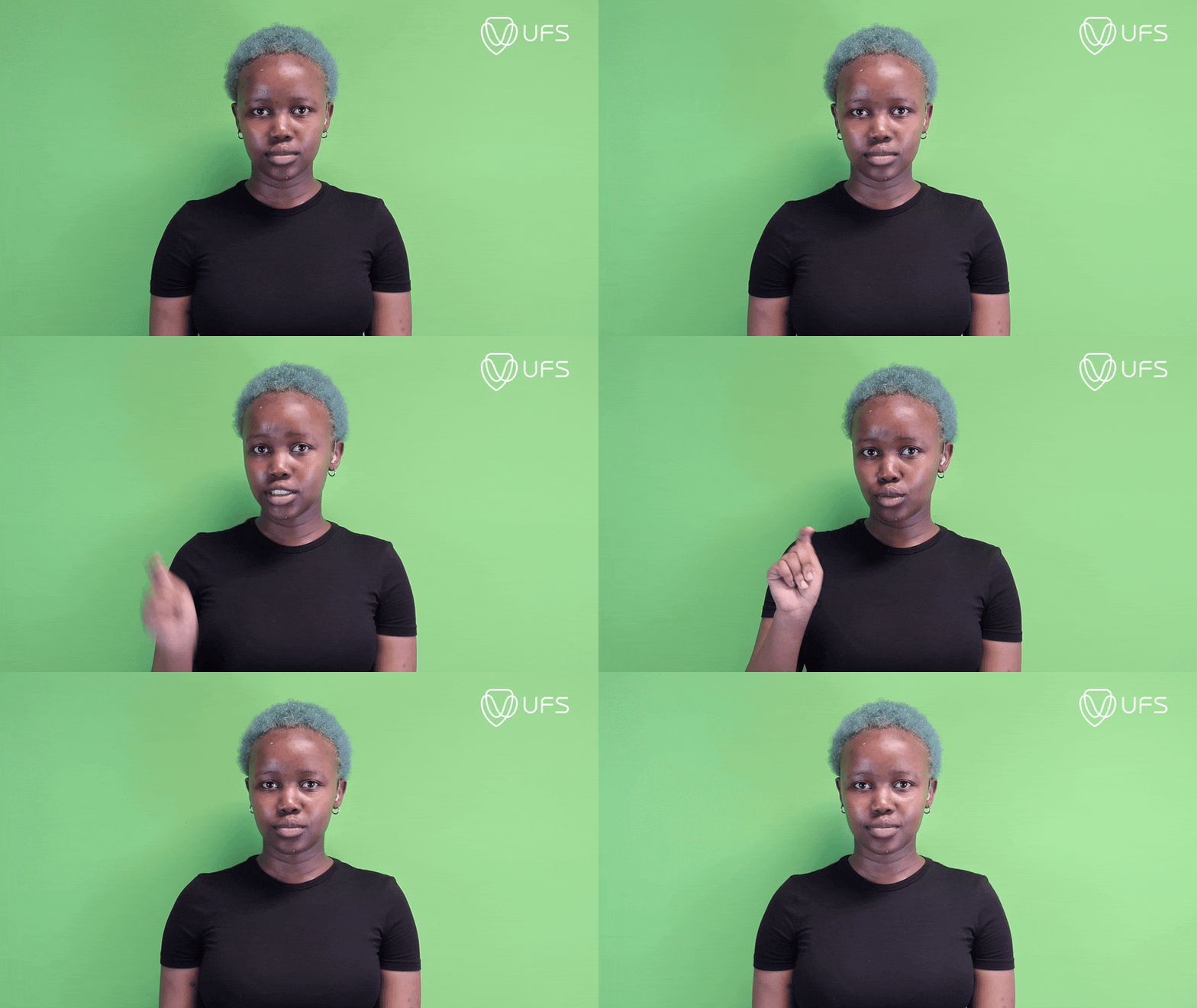 Thaba ‘Nchu 01Thaba ‘Nchu 01 is an initialised sign with the handshape T and added side-to-side wrist movement. The mouthing of ‘Thaba ‘Nchu’ differentiates this variant from other similar signs, such as Thiboloha 01.
 -
 Bartimea 03Bartimea 03 is an initialised sign with the handshape B. It differs from Bartimea 01 only terms of the parameter of movement (phonological variation). This variant has a circular movement with the palm facing away from the signer.
 -
 Bartimea 01Bartimea 01 is an initialised sign with the handshape B. It differs from Bartimea 03 only terms of the parameter of movement (phonological variation). This variant has a side-to-side movement from the signer’s wrist.
-
 Upington 05Upington 05 is a descriptive sign with the handshape C placed against the shoulder. We were unable to determine the meaning for this sign. However, the handshape could possibly refer to the previous number plate for Upington, which started with CAY.
 -
 Upington 04Upington 04 is a descriptive place-name sign that mimics the sign for BEARD. When the sign is flipped upside down, the shape could be a reference to the mountain passes in the Northern Cape province where Upington is situated.
 -
 Upington 03Upington 03 is an initialised sign with the handshape U and an added circular motion.
 -
 Upington 02Upington 02 is an initialised sign with the handshape U and then P, with no added movement.
-
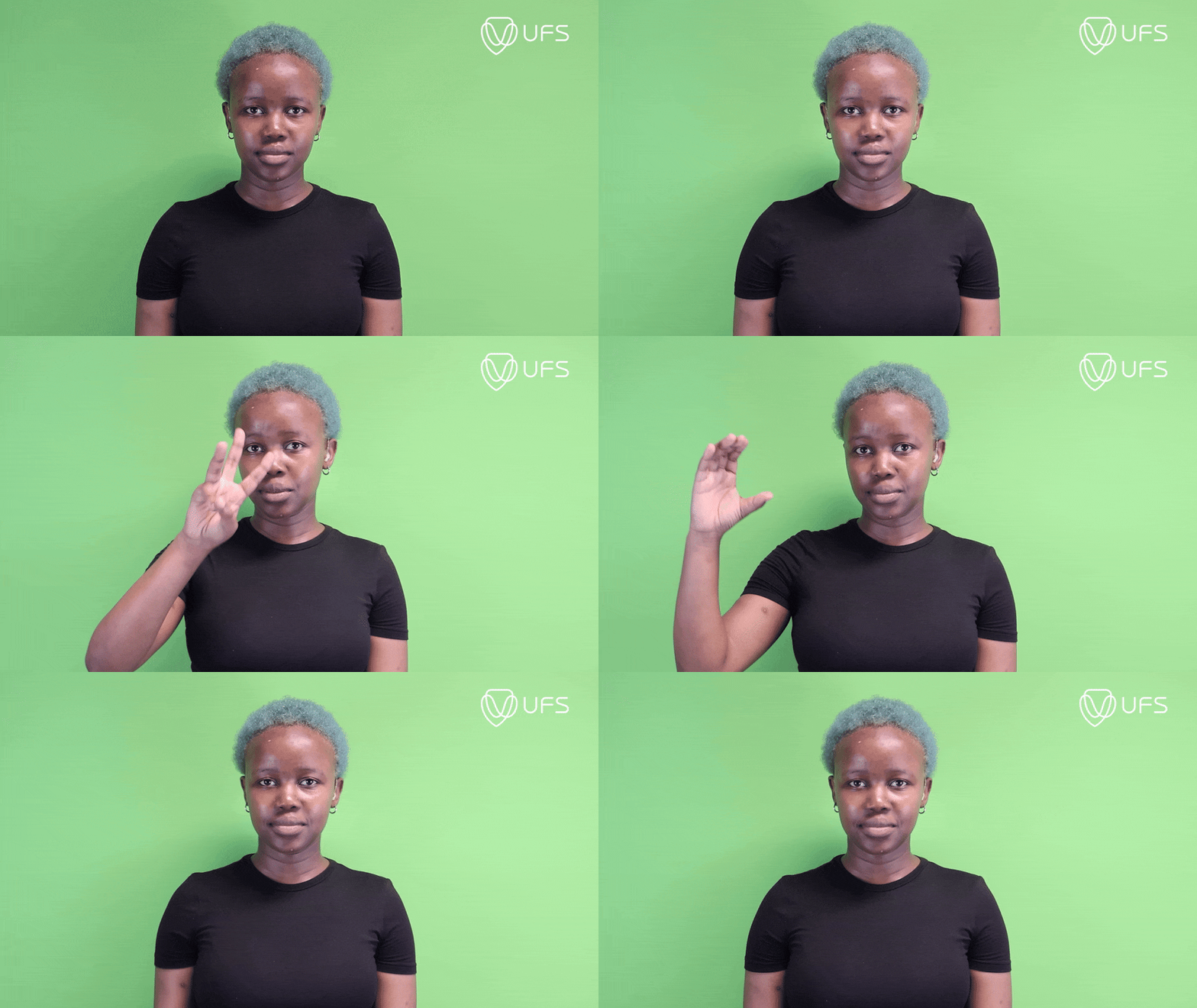 Western Cape 02Western Cape 02 is an initialised sign with the handshape W followed by C. There is noticeable phonological variation in terms of movement for the different variants, with a movement to the side being the most common.
-
 De La Bat 03De La Bat 03 is an initialised sign with both hands forming the handshape of D. This is from the old SASL alphabet, when SASL still used the two-handed alphabet. The mouthing of ‘De La Bat’ distinguishes this variant from other similar signs. It is a lexical variation from De La Bat 01.
 -
 De La Bat 01De La Bat 01 is a descriptive sign that is the same as the sign for HEARING. A possible explanation is that this school used oralism, whereby speech and lipreading was taught and used as the medium of instruction.