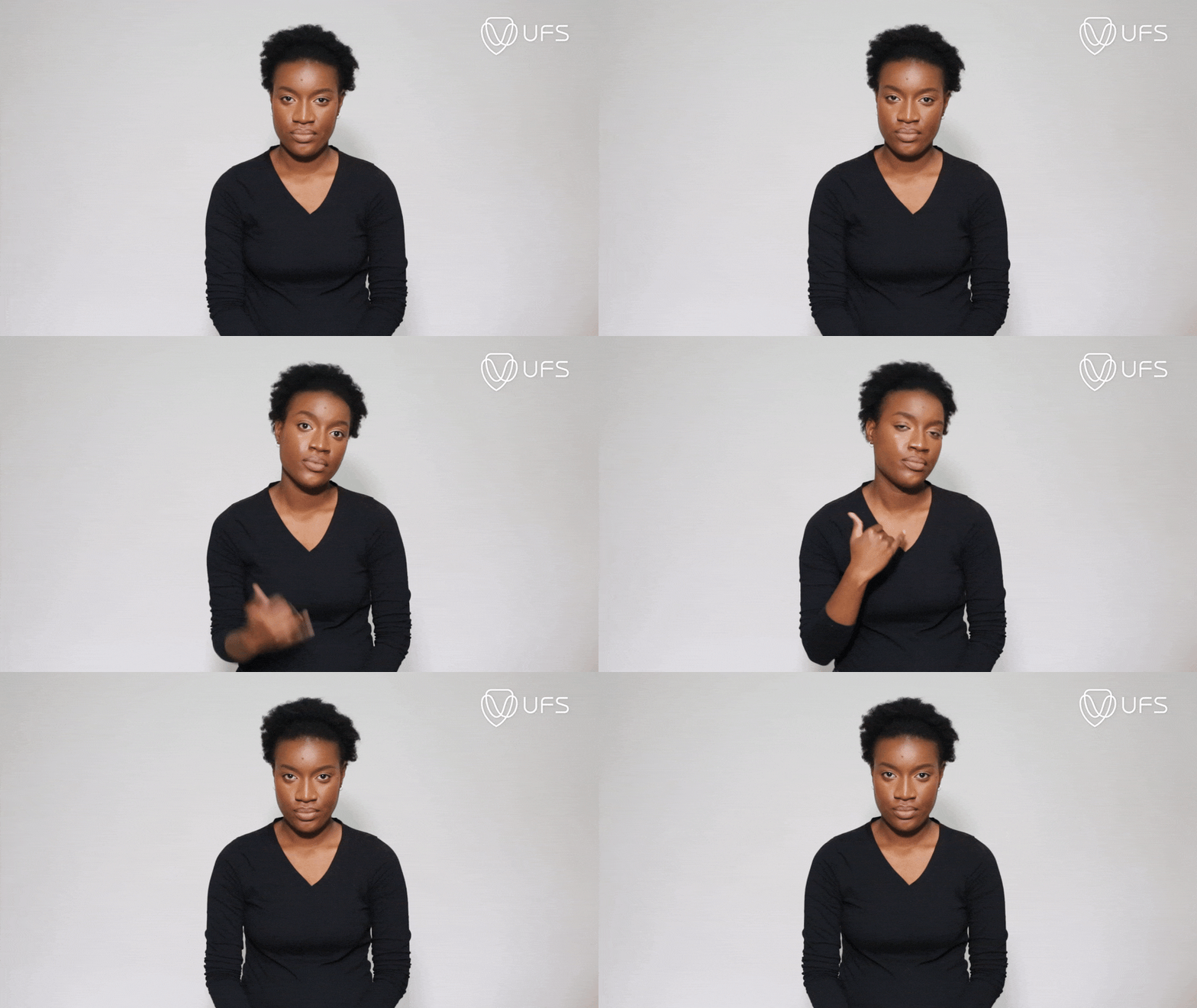
Northern Cape 01 is an initialised sign with the handshape N followed by C. This variant has no movement and is a phonological variation from Northern Cape 02.
North West 02 is an initialised sign with the handshape N followed by W. This variant has added movement to the side, which makes it a phonological variation from North West 01.
North West 01 is an initialised sign with the handshape N followed by W. This variant has no movement, and is a phonological variation from North West 02.
Mpumalanga 01 is a descriptive sign. The dominant hand mimics the sun rising. The meaning of ‘Mpumalanga’ is ‘the place where the sun rises’ in the Nguni language family. This indicates a loan sign from spoken language.
Limpopo 02 is an initialised-descriptive sign. Both hands are in the handshape L and move in a side-to-side forwards motion that mimics the flow of a river. The palms face to the side, which makes this variant a phonological variation from Limpopo 02.
Limpopo 01 is an initialised-descriptive sign. Both hands are in the handshape L and move in a side-to-side forwards motion that mimics the flow of a river. The palm orientation is down, which makes this variant a phonological variation from Limpopo 02.
KwaZulu-Natal 01 is an initialised sign with the handshape K and then N. This is followed by a zigzag inward motion towards the signer’s body that could be interpreted to mimic the handshape for Z.
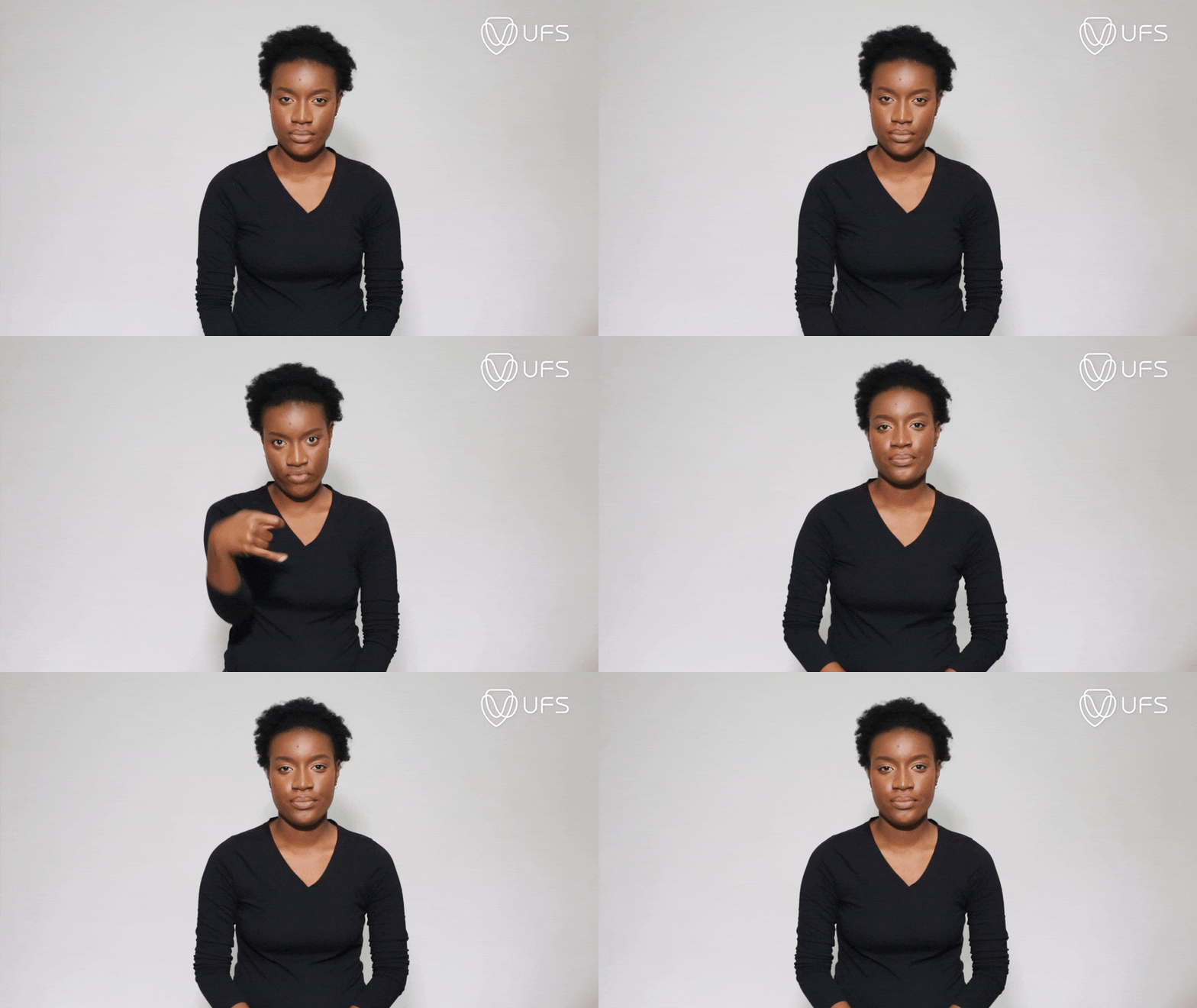
Kimberley 08 is an initialised-descriptive sign. The handshape Y is accompanied by a forward swiping motion on the signer’s neck. We were unable to determine the meaning of this sign. This variant is a lexical variation from Kimberley 01 and Kimberley 03.
Kimberley 03 is a descriptive sign with the handshape in lower-case C, which is the same is the British Sign Language alphabet letter C (same as Cape Town 07). The handshape most likely refers to the previous number plate for Kimberley, which started with CC. This variant is a lexical variation from Kimberley 01 and Kimberley 08.
Kimberley 01 is an initialised-descriptive sign. Both hands are in handshape K. They move down and inwards to indicate the Big Hole, an old mine that is a landmark of Kimberley. This variant is a lexical variation from Kimberley 03 and Kimberley 08.
Johannesburg 03 is a descriptive sign with the handshape T followed by J. The handshapes likely refer to the previous number plate for Johannesburg, which started with TJ. This variant is a lexical variation from Johannesburg 01.
Gqeberha 11 is a descriptive sign. The open hand moves in a brushing motion behind the head, possibly indicating hair blowing in the wind. This could be a reference to the Gqeberha’s colloquial name, the Windy City, which indicates a possible loan sign from spoken language. The mouthing of ‘PE’, a colloquial shortened version of Gqeberha’s previous name, Port Elizabeth, identifies this variant as a place-name sign.Gqeberha has two lexical variations. Gqeberha 01, Gqeberha 06 and Gqeberha 08 are all initialised signs that differ on phonological level from each other. Gqeberha 11 is a distinct descriptive variant.
Gqeberha 08 is an initalised sign with the handshape P in the two-handed British Sign Language alphabet. The previous name of Gqeberha was Port Elizabeth.Gqeberha has two lexical variations. Gqeberha 01, Gqeberha 06 and Gqeberha 08 are all initialised signs that differ on phonological level from each other. Gqeberha 11 is a distinct descriptive variant.
Gqeberha 06 is an initialised sign. It starts with the handshape P in the Irish Sign Language alphabet, followed by the SASL alphabet letter for E. The colloquial shortened version of Gqeberha’s previous name, Port Elizabeth, was PE. Movement to the side is added.Gqeberha has two lexical variations. Gqeberha 01, Gqeberha 06 and Gqeberha 08 are all initialised signs that differ on phonological level from each other. Gqeberha 11 is a distinct descriptive variant.
Gqeberha 01 is an initialised sign with the handshape P followed by E. The colloquial shortened version of Gqeberha’s previous name, Port Elizabeth, was PE. Gqeberha has two lexical variations. Gqeberha 01, Gqeberha 06 and Gqeberha 08 are all initialised signs that differ on phonological level from each other. Gqeberha 11 is a distinct descriptive variant.
Gauteng 03 is a descriptive sign with the hand in the S1 SASL handshape (finger extended) with an upward motion. This mimics the landmark tall Telkom Joburg Tower (also known as the Hillbrow Tower), which was until 2021 the tallest tower in Africa. It is a simplified version of Gauteng 01 (morphological variation).
Gauteng 01 is an initialised-descriptive sign. The sign starts with both hands in the handshape S with the fists atop each other, but this is similar to the British Sign Language alphabet letter G. The dominant hand then moves into the S1 SASL handshape (finger extended) with an upward motion. This mimics the landmark tall Telkom Joburg Tower (also known as the Hillbrow Tower), which was until 2021 the tallest tower in Africa. This variant is a morphological variation from Gauteng 03.
Free State 05 is an initialised two-handed sign with the handshape V, from the Afrikaans name from the province, ‘Vrystaat’. The dominant hand in the handshape V is placed in the flat open palm of the non-dominant hand, similar to the sign for LOCATION. This indicates that Free State 05 is a place-name sign. It is a lexical variation from both Free State 01 and Free State 02.
Free State 02 is an initialised sign, with the handshape F followed by D. This variation includes no movement. It is a lexical variation from both Free State 01 and Free State 05.
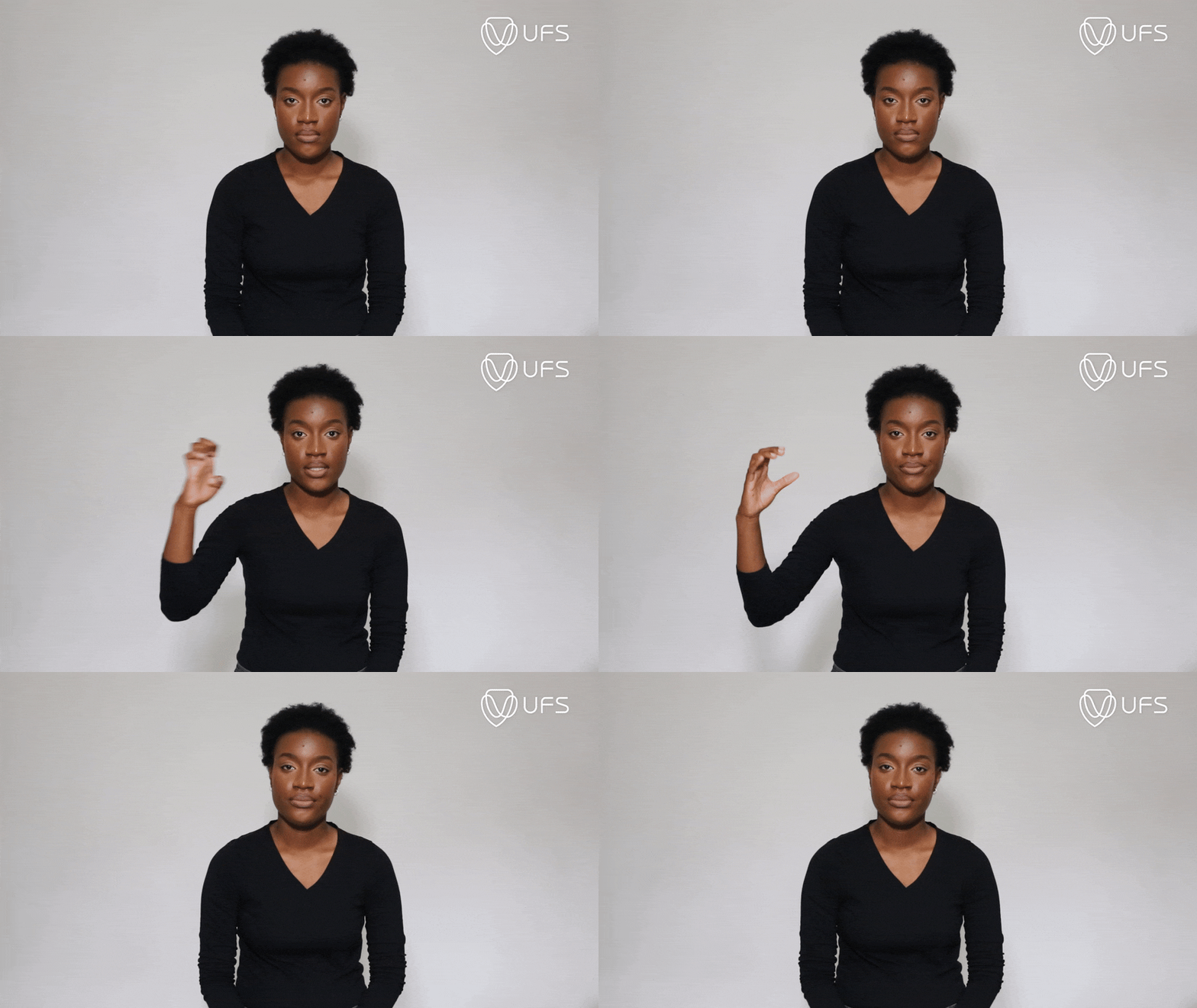
Free State 01 is a descriptive sign. The handshape is in the form of a ‘claw’ that mimics the sign for ORANGE. Most likely this is a reference to the previous name of the province, which was the Orange Free State. It is a lexical variation from both Free State 02 and Free State 05.
Eastern Cape 02 is an initialised sign with the handshape E followed by C. This variant includes movement to the side, making it a phonological variation from Eastern Cape 01.
Eastern Cape 01 is an initialised sign with the handshape E followed by C. This variant has no movement, making it a phonological variation from Eastern Cape 02.
East London 12 is an initialised two-handed sign that commences with the dominant hand in the handshape E, followed by L placed into the palm of the non-dominant hand. The latter half of the sign is similar to the sign for LOCATION, and thereby indicates that this is a place-name sign. This addition makes it a morphological variation from East London 02.